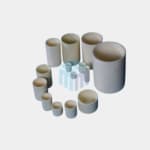

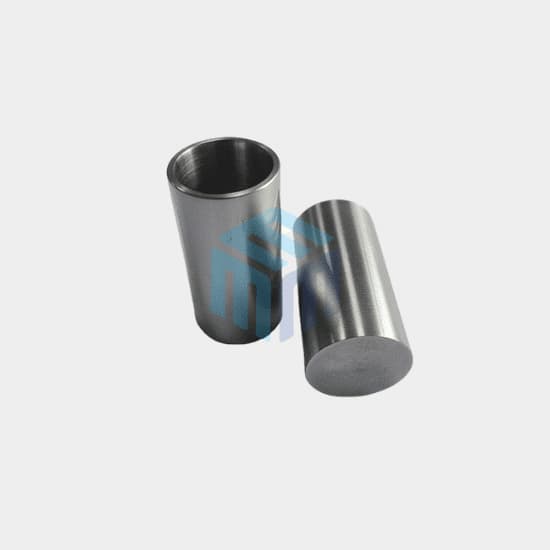
Molybdenum crucibles are indispensable tools in high-temperature industrial processes, especially where strength, durability, and resistance to extreme environments are critical. As a leading choice among refractory metals, molybdenum offers excellent thermal conductivity, corrosion resistance, and stability at temperatures exceeding 2,000°C. In this blog, we will explore the manufacturing process, major molybdenum crucible applications, handling and maintenance tips, and why molybdenum outperforms other crucible materials.
Whether you’re looking for molybdenum crucible suppliers, understanding the molybdenum crucible price, or evaluating specialized designs like cylindrical molybdenum crucibles and molybdenum boat crucibles, this guide will help you make informed decisions.
Key Features of Molybdenum Crucibles
Here’s a breakdown of the key features that make molybdenum crucibles ideal for demanding industrial applications:
High Melting Point
With a melting point of approximately 2620°C, molybdenum is one of the best crucible materials for high-temperature applications such as metal melting, sintering, and vacuum evaporation.
Thermal Conductivity
Molybdenum provides excellent thermal conductivity, allowing for uniform heat distribution. This minimizes the risk of hot spots and cracking, especially in sensitive operations like crystal pulling and precision alloy processing.
Corrosion Resistance
Molybdenum crucibles are highly resistant to chemical attack from acidic and basic environments, particularly in vacuum or inert gas atmospheres. This makes them suitable for use in environments involving aggressive chemicals or fluxes.
Purity and Strength
Thanks to its high density and purity, molybdenum retains structural integrity under mechanical and thermal stress. Its excellent creep resistance ensures dimensional stability even under prolonged high-temperature exposure.
How Molybdenum Crucibles Are Manufactured
The molybdenum crucible production process involves precision engineering to ensure optimal performance under high heat and vacuum conditions. The two primary manufacturing methods are:
- Sintering
- Sintered molybdenum crucibles are made by pressing high-purity molybdenum powder into shape and heating it just below its melting point.
- This method produces crucibles with excellent density and structural integrity, ideal for vacuum furnace operations.
- Forging
- Forged molybdenum crucibles undergo mechanical deformation at high temperatures to refine grain structure and enhance strength.
- This process improves thermal shock resistance and durability, making them suitable for repeated thermal cycling.
3. Surface Types
- Black Surface: Retains the oxide layer from sintering, offering natural protection.
- Cleaned Surface: Oxide layer removed for a smoother finish.
- Ground Surface: Precisely machined for exact dimensional accuracy.
Industrial Applications of Molybdenum Crucibles
Due to their unique material properties, molybdenum crucibles are used across multiple industries. Common industrial uses of molybdenum crucibles include:
- Vacuum Furnaces – Ideal for melting and refining metals in oxygen-free environments.
- UHV Evaporation – Crucial for ultra-high-vacuum coating and thin-film deposition.
- Crystal Growth – Widely used in producing synthetic crystals like single crystal diamonds (SCDs), sapphire and silicon.
- Metallurgy & Powder Metallurgy – Suitable for sintering, casting, and metal refining.
- Chemical Processing – Resistant to corrosion from acids, alkalis, and molten salts.
- Semiconductor & Nanotechnology – Ensures purity and performance in microfabrication processes.
Read also: Uses & Benefits of Molybdenum Crucibles
Why Choose Molybdenum Over Other Materials?
While graphite crucibles, tungsten crucibles, and ceramic crucibles have their own benefits, molybdenum offers a balanced solution between thermal performance, mechanical strength, and cost-effectiveness.
Compared to graphite, ceramic, and tungsten crucibles, refractory metal molybdenum crucibles offer:
- Higher Purity Melting – Minimal contamination for sensitive applications.
- Superior High-Temperature Strength – Retains structural stability beyond 2,000°C.
- Excellent Thermal Conductivity – Ensures uniform heat distribution.
- Resistance to Corrosion – Maintains integrity even in aggressive chemical environments.
For demanding applications where performance and longevity matter, Mo crucibles remain one of the most reliable choices.
Molybdenum Crucibles: Handling, Cleaning & Maintenance
Proper care ensures the longevity and performance of your crucible. Follow these molybdenum crucible cleaning and handling tips:
- Cleaning Methods: Use non-abrasive brushes and mild chemical cleaners. Avoid aggressive grinding that may damage the surface.
- Avoid Oxidation: Store crucibles in dry, oxygen-free environments when not in use.
- Prevent Thermal Shock: Preheat gradually to operating temperatures to avoid cracking.’
- Storage Recommendations: Keep crucibles covered, ideally using a molybdenum crucible with lid, to prevent contamination before use.
Conclusion:
Molybdenum crucibles are widely trusted across industries for their exceptional thermal stability, corrosion resistance, and mechanical strength under extreme conditions. These key properties make them ideal for high-temperature processes in sectors like metallurgy and electronics.
Looking for trusted molybdenum crucible suppliers in the USA?
M-Kube offers high-purity molybdenum crucibles, molybdenum boat crucibles, and cylindrical molybdenum crucibles at competitive prices. Contact us today to discuss your requirements and get the best molybdenum crucible price for your needs.
📞 Call: +1-732-808-1999
📧 Email: info@mkubeenterprise.com