

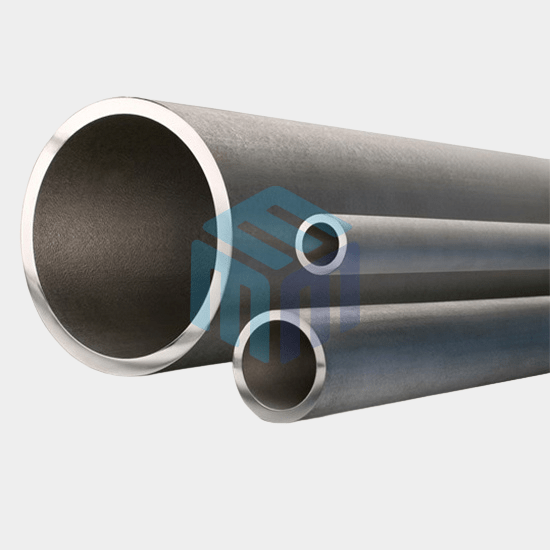
Silicon carbide (SiC) is one of the most widely used advanced ceramics in high-temperature and corrosive industrial environments. From SiC tubes and silicon carbide pipes to SiC rods and thermocouple protection tubes, this material is essential in heat-treating, metallurgy, chemical processing, energy systems, and semiconductor manufacturing.
But not all SiC is created equal.
Two of the most commonly used manufacturing routes are:
- Reaction-Bonded Silicon Carbide (RbSiC or SiSiC)
- Sintered Silicon Carbide (SSiC / pressureless sintered)
There is also recrystallized SiC (RSiC) and nitrogen-bonded SiC (NbSiC) used in specific cases.
Choosing the right one affects performance, lifespan, cost, and reliability.
This guide breaks down the key differences, strengths, and ideal applications, helping you decide which SiC tube type is best for your operation.
Common Applications of Reaction-Bonded Silicon Carbide Tubes
Reaction-Bonded Silicon Carbide (RbSiC) tubes are widely used in industrial applications that require excellent mechanical strength, wear resistance, and cost-effective performance. Their ability to be manufactured in complex shapes and larger sizes makes them suitable for a variety of high-temperature environments.
Common applications include:
- Furnace Components – Used in industrial furnaces for reliable performance at elevated temperatures.
- Kiln Furniture – Supports ceramic products during firing processes due to its strength and thermal stability.
- Burner Nozzles – Provides excellent resistance to heat, wear, and thermal cycling.
- Heat Treatment Equipment – Suitable for components exposed to repeated heating and cooling cycles.
- Wear-Resistant Liners – Protects equipment from abrasive materials in industrial processing systems.
- Structural Supports – Used in applications requiring high mechanical strength and dimensional stability.
RbSiC tubes are often selected when a balance between performance, durability, and cost-effectiveness is required.
Common Applications of Sintered Silicon Carbide Tubes
Sintered Silicon Carbide (SSiC) tubes are preferred for demanding applications that require superior corrosion resistance, high purity, low porosity, and exceptional thermal performance. Their advanced material properties make them ideal for harsh operating environments.
Common applications include:
- Thermocouple Protection Tubes – Protect temperature sensors in high-temperature and corrosive environments.
- Chemical Processing Equipment – Resists attack from aggressive chemicals, acids, and corrosive gases.
- Semiconductor Manufacturing – Provides the purity and contamination control required for sensitive processes.
- High-Temperature Furnace Systems – Performs reliably under extreme temperatures and thermal cycling conditions.
- Gas Distribution and Handling Systems – Suitable for transporting corrosive or reactive gases.
- Laboratory and Research Equipment – Used in applications requiring precise, contamination-free performance.
SSiC tubes are typically chosen for critical applications where maximum corrosion resistance, thermal stability, and long service life are essential.
Reaction-Bonded vs. Sintered Silicon Carbide: What’s the Difference?
Below is the most important comparison — especially if you’re selecting SiC tubes, silicon carbide thermocouple protection tubes, SiC rods, or silicon carbide pipes.
| Feature | RbSiC (Reaction-Bonded SiC) | SSiC (Pressureless Sintered SiC) |
|---|---|---|
| Material Purity | Contains residual free silicon | Ultra-high purity |
| Operating Temperature | Up to ~1350–1450°C | Up to ~1600–1700°C |
| Thermal Shock Resistance | Good | Excellent |
| Corrosion Resistance | Moderate (limited by free Si) | Outstanding (no free Si) |
| Mechanical Strength | High | Highest among SiC types |
| Density | Slightly lower | Very high, near-theoretical density |
| Porosity | Minimal | Fully dense |
| Cost | Lower | Higher |
| Best Applications | Furnace parts, kiln furniture, structural parts | Chemical processing, corrosive environments, high-precision protection tubes |
| SiC Tube Price Range | More economical | Premium pricing |
| Machinability / Customization | Excellent dimensional control | Customization available but costlier |
When Should You Choose Reaction-Bonded Silicon Carbide (RbSiC) Tubes?
Choose RbSiC tube for:
- High-precision shapes
- Large custom components
- Cost-sensitive applications
- High mechanical loads
- Moderate corrosive environments
RbSiC is ideal for:
- Kiln rollers and tubes
- Furnace burner nozzles
- Wear liners
- Thermal processing brackets and supports
- Customized silicon carbide parts where shape complexity matters
Industries often use RbSiC when they need strength, stiffness, and affordability without extreme corrosion exposure.
When Should You Choose a Sintered Silicon Carbide (SSiC) Tube?
Select SSiC for:
- High-corrosion or aggressive chemical atmospheres
- High-temperature stability beyond 1500°C
- Ultra-pure environments
- Long-term durability and consistent performance
- High-precision thermocouple protection tubes
SSiC is ideal for:
- Silicon carbide thermocouple protection tubes
- High-temperature gas or molten metal immersion
- Chemical processing equipment
- Semiconductor and solar industry
- High-purity furnace tubes and SiC rods
When reliability matters more than cost, SSiC is the preferred option. It has the longest service life and greatest structural stability across the SiC family.
Factors That Affect Silicon Carbide Tube Lifespan
The service life of a silicon carbide tube depends on several operating and environmental factors. Understanding these factors can help maximize performance, reduce maintenance costs, and extend component lifespan.
- Operating Temperature – Continuous exposure to temperatures beyond the material’s recommended limits can accelerate wear and degradation.
- Thermal Shock – Rapid heating and cooling cycles may cause cracking or reduce structural integrity over time.
- Chemical Exposure – Corrosive gases, acids, alkalis, and other aggressive chemicals can affect tube performance and longevity.
- Mechanical Stress – Excessive loads, vibration, or improper handling can lead to damage and premature failure.
- Abrasion and Wear – Applications involving abrasive particles may gradually erode the tube surface.
- Material Selection – Choosing the appropriate grade, such as Reaction-Bonded SiC or Sintered SiC, is essential for the operating environment.
- Installation Practices – Incorrect installation or inadequate support can create stress points and reduce service life.
- Maintenance and Inspection – Regular inspections help identify early signs of wear, cracking, or corrosion before major failures occur.
- Process Conditions – Factors such as pressure, atmosphere composition, and thermal cycling frequency can impact long-term performance.
By selecting the right silicon carbide tube and following proper operating and maintenance practices, users can significantly improve reliability and maximize component lifespan in high-temperature industrial applications.
How to Choose the Right SiC Tube for Your Application?
Selecting the right silicon carbide tube, SiC rod, or silicon carbide pipe comes down to a few key factors:
1. Operating Temperature – If you operate above 1500°C, SSiC is the safer choice.
2. Atmosphere Type -Corrosive, acidic, or aggressive? Choose SSiC. Neutral or slightly oxidizing? RbSiC may be sufficient.
3. Mechanical Shock & Loading – If the component experiences rapid thermal cycling, RSiC or SSiC performs better.
4. Dimensional Accuracy -RbSiC is excellent for precise, complex, or thin-walled shapes.
5. Budget – If cost is a primary factor, RbSiC or NbSiC offer savings.
Conclusion
Both reaction-bonded (RbSiC) and sintered silicon carbide (SSiC) offer excellent performance, but they serve different needs.
- Choose RbSiC for cost efficiency, complex shapes, and high mechanical strength.
- Choose SSiC for maximum corrosion resistance, high temperatures, and long-term durability.
- Consider RSiC for high thermal shock environments.
- Use NbSiC where cost efficiency matters more than extreme performance.
At M-Kube Enterprise LLC, we supply SiC tubes, SiC rods, silicon carbide pipes, thermocouple protection tubes, and custom SiC parts tailored for your application. Whether you need RbSiC, SSiC, RSiC, or NbSiC, our materials meet strict quality and performance standards.