

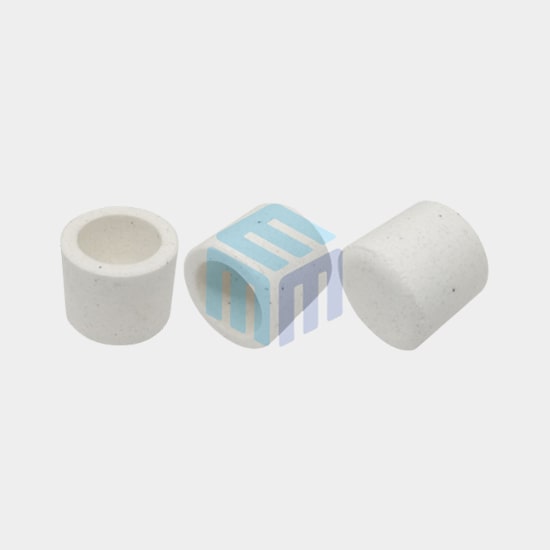
Mining laboratories rely heavily on accurate elemental analysis to evaluate ore composition, process efficiency, and material quality. One of the most widely used methods for this is fusion flux analysis, especially in XRF (X-ray fluorescence) sample preparation.In these high-temperature analytical processes, crucible selection plays a critical role. Even minor contamination or chemical interaction can affect test accuracy.That’s why many mining and analytical laboratories prefer magnesia crucibles for demanding fusion applications.
Known for their high purity, thermal stability, and resistance to aggressive fluxes, magnesia crucibles have become a trusted solution for accurate and repeatable laboratory analysis.
What Is Fusion Flux Analysis?
Fusion flux analysis is a sample preparation method commonly used before XRF analysis.
The process involves:
- Mixing powdered samples with a flux
- Heating the mixture at high temperatures
- Creating a homogeneous glass bead for analysis
This technique improves analytical accuracy by reducing mineralogical effects and sample inconsistencies.
However, the crucible material used during fusion directly affects:
- Sample purity
- Chemical stability
- Repeatability of results
Why Crucible Material Matters in Mining Labs
Mining samples often contain highly reactive oxides and minerals that can interact with lower-quality crucible materials.
A poor crucible choice may lead to:
- Sample contamination
- Crucible degradation
- Reduced analytical accuracy
- Shorter crucible lifespan
This is why laboratories prioritize high-performance ceramic materials like magnesium oxide.
Excellent Resistance to Basic Fluxes
One of the biggest advantages of a mgo crucible is its resistance to basic materials.
Mining laboratories frequently use fluxes containing:
- Lithium borate
- Sodium carbonate
- Basic oxides
Magnesia offers strong compatibility with these chemistries, helping reduce contamination during fusion analysis.
This makes magnesia crucibles for lab applications particularly valuable in geological and mining testing.
High Purity Improves Analytical Accuracy
In XRF and elemental analysis, purity matters significantly.
A high purity mgo crucible helps minimize:
- Trace contamination
- Chemical interference
- Unwanted reactions with samples
This is essential when laboratories require highly accurate compositional analysis for:
- Ore evaluation
- Precious metal testing
- Quality control
- Process optimization
Thermal Stability at High Temperatures
Fusion flux analysis often operates above 1000°C.
Magnesia crucibles USA laboratories use are valued because they maintain:
- Structural integrity
- Dimensional stability
- Reliable performance under thermal cycling
Longer Crucible Life Reduces Operating Costs
While initial pricing may be higher than lower-grade ceramic alternatives, magnesia crucibles often provide better long-term value.
For high-volume mining laboratories, this can significantly improve operational efficiency.
Applications Beyond Fusion Analysis
Although commonly used in mining labs, magnesia crucibles for melting metals are also used in:
- Metallurgical processing
- Precious metal refining
- High-temperature ceramic research
- Refractory testing
Their excellent thermal and chemical resistance makes them useful across multiple industries.
Choosing the Right Magnesia Crucible Supplier
Not all crucibles provide the same purity or manufacturing quality.
A reliable magnesia ceramic crucible supplier should offer:
- High-purity MgO materials
- Consistent density and porosity
- Precision manufacturing
- Reliable thermal performance
At M-Kube, we supply high-quality magnesia crucibles USA laboratories and industrial facilities rely on for accurate high-temperature analysis and processing applications.
Conclusion: Accurate Analysis Starts with the Right Crucible
In mining laboratories, precision matters. The accuracy of fusion flux analysis depends not only on instruments and procedures—but also on the crucible material used during sample preparation.
Magnesia crucibles provide:
- High thermal stability
- Excellent chemical resistance
- Reduced contamination risk
- Long service life
These advantages make them one of the preferred solutions for demanding analytical environments.
For laboratories seeking consistent and reliable fusion analysis results, a high purity mgo crucible remains a smart long-term investment.
Looking for High-Quality Magnesia Crucibles?
If you’re searching for a trusted magnesia crucible supplier or need high purity magnesia crucibles USA laboratories can rely on, we can help.
📞 Call us: +1-732-808-1999
📧 Email: info@mkubeenterprise.com
Contact M-Kube today to discuss your fusion analysis and high-temperature laboratory requirements.