

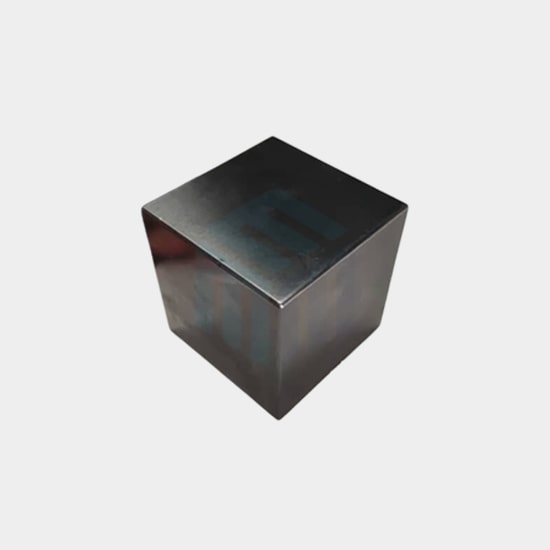
Radiation shielding is one of the most important safety requirements in nuclear facilities. Whether it’s protecting personnel, sensitive equipment, or experimental environments, choosing the right shielding material can make a significant difference in operational safety and efficiency. That’s why Tungsten Cubes are increasingly used in nuclear applications where high-density radiation protection is critical.
Known for their exceptional density and stability, tungsten cubes provide powerful shielding performance in a compact form—making them ideal for modern nuclear environments where space and reliability matter.
Why Density Matters in Radiation Shielding
Radiation shielding works by absorbing or attenuating harmful radiation before it reaches people or equipment.
The effectiveness of a shielding material largely depends on:
- Material density
- Atomic number
- Thickness
- Radiation type and energy level
Tungsten has a density of approximately 19.3 g/cm³, making it one of the densest commercially available metals.
This allows a pure tungsten cube to provide significant radiation protection while occupying less space than many alternative materials.
Why Tungsten Is an Effective Radiation Shielding Material
Tungsten is one of the most effective materials for radiation shielding because of its exceptional density, high atomic number, and outstanding mechanical properties. These characteristics enable tungsten to absorb and reduce ionizing radiation efficiently while maintaining structural integrity in demanding environments.
Key advantages of tungsten include:
- Exceptional Density – Provides superior radiation attenuation in a compact form.
- High Atomic Number – Effectively absorbs gamma rays and X-rays.
- Excellent Mechanical Strength – Resists deformation under heavy loads and harsh operating conditions.
- Non-Toxic Alternative to Lead – Offers a safer option for many radiation shielding applications.
- High Temperature Resistance – Performs reliably in demanding industrial and nuclear environments.
- Long Service Life – Maintains shielding performance with minimal maintenance over extended periods.
These properties make tungsten cubes an ideal choice for nuclear facilities, medical imaging equipment, research laboratories, and other applications where reliable radiation protection is essential.
Key Properties of Tungsten for Radiation Shielding Applications
Tungsten is an excellent radiation shielding material due to its unique combination of high density, high atomic number, and exceptional durability. Its key properties include:
- High Density (19.3 g/cm³): Provides effective absorption of X-rays and gamma rays while allowing compact shielding designs.
- High Atomic Number (Z=74): Enhances radiation attenuation by improving interaction with high-energy radiation.
- High Melting Point (3422°C): Maintains performance in extreme temperature environments.
- Strong Mechanical Properties: Offers excellent hardness, durability, and resistance to wear and deformation.
- Compact Shielding Capability: Provides effective protection with less material thickness compared to lower-density shielding materials.
- Non-Toxic Alternative to Lead: Delivers reliable radiation protection with fewer environmental and safety concerns.
- Customizable Design: Can be manufactured into tungsten cubes, plates, rods, and other custom shielding components for specialized applications.
These properties make tungsten a preferred choice for medical, nuclear, industrial, and research radiation shielding applications.
Pure Tungsten Cubes Compact Shielding for Nuclear Facilities
Space is often limited inside nuclear laboratories and reactor environments.
A 1 inch tungsten cube or 2 inch tungsten cube can provide substantial shielding capability in compact spaces where larger lead barriers may not be practical.
This is particularly useful for:
- Portable shielding systems
- Radiation source storage
- Shielding sensitive instruments
- Experimental nuclear setups
The high density of tungsten allows facilities to reduce shielding size without compromising protection.
Understanding Tungsten Cube Weight and Density
One reason tungsten cubes are popular is the impressive weight-to-size ratio.
Common Examples
- 1 inch tungsten cube weight → Approximately 0.7 kg (1.5 lbs)
- 2 inch tungsten cube weight → Approximately 5.6 kg (12.4 lbs)
- Tungsten cube 4 inch → Approximately 45–50 lbs depending on purity
A 45 lb tungsten cube demonstrates how much mass can be concentrated into a relatively small volume.
This extreme density is exactly what makes tungsten so effective for radiation shielding.
for more details: Tungsten Cube Sizes Explained: Perfect for Desk, Lab, and Educational Use
Handling and Structural Advantages
Unlike softer shielding materials, tungsten maintains its structural integrity under heavy loads and challenging conditions.
This provides several benefits:
- Longer service life
- Resistance to deformation
- Better dimensional precision
- Easier integration into engineered systems
A tungsten cube 50lb can withstand industrial handling conditions while maintaining consistent shielding performance.
Tungsten Cube Radiation Shielding Performance Comparison
Tungsten cubes are widely recognized for their outstanding radiation shielding capabilities due to their high density and atomic number. Compared with conventional shielding materials, tungsten provides excellent protection while requiring less space, making it ideal for compact shielding systems in nuclear facilities.
| Property | Tungsten | Lead | Steel |
|---|---|---|---|
| Density | ~19.3 g/cm³ | ~11.34 g/cm³ | ~7.85 g/cm³ |
| Radiation Shielding Efficiency | Excellent | Very Good | Moderate |
| Required Shield Thickness | Lower | Higher | Much Higher |
| Mechanical Strength | Excellent | Low | High |
| Toxicity | Non-toxic | Toxic | Non-toxic |
| Best Applications | Nuclear facilities, medical shielding, research laboratories | Traditional radiation barriers | Structural shielding support |
Tungsten’s superior density allows engineers to design smaller, lighter, and more durable radiation shielding systems without compromising protection.
Factors That Affect Tungsten Cube Radiation Shielding Performance
The effectiveness of tungsten cubes in radiation shielding depends on several important factors. Proper evaluation of these factors ensures optimal shielding performance and long-term reliability.
- Material Density – Higher-density tungsten provides greater radiation attenuation.
- Tungsten Purity – High-purity tungsten offers more consistent shielding performance.
- Cube Dimensions – Larger cubes or increased shielding thickness improve radiation absorption.
- Radiation Type – Shielding requirements vary for gamma rays, X-rays, and other forms of ionizing radiation.
- Radiation Energy Level – Higher-energy radiation may require thicker or multiple shielding layers.
- Shield Configuration – Proper placement and arrangement help minimize radiation leakage.
- Operating Environment – Temperature, mechanical stress, and surrounding conditions can influence long-term performance.
Selecting the appropriate tungsten cube size and configuration helps maximize protection while optimizing space and material usage.
How to Choose the Right Tungsten Cube Size for Radiation Protection
Choosing the correct tungsten cube size depends on the application’s shielding requirements and available installation space. Larger cubes provide greater radiation attenuation but also increase weight and handling requirements.
Consider the following factors when selecting a tungsten cube:
- Required level of radiation protection.
- Type and energy of the radiation source.
- Available installation or storage space.
- Weight limitations for equipment or shielding systems.
- Desired balance between shielding efficiency and portability.
- Custom size or machining requirements for specialized applications.
- Compliance with industry and facility safety standards.
Working with an experienced manufacturer can help ensure the tungsten cube is designed to meet your specific shielding requirements.
Custom Tungsten Cubes for Nuclear and Radiation Shielding Applications
Many nuclear facilities and research laboratories require tungsten cubes manufactured to custom sizes and specifications. Custom components provide greater flexibility for integrating shielding into specialized equipment and confined spaces.
Custom tungsten cubes can be produced with:
- Precision-machined dimensions.
- High-purity tungsten or tungsten heavy alloys.
- Tight dimensional tolerances.
- Custom weights and sizes.
- Special surface finishes.
- Application-specific designs for research, medical, and nuclear environments.
Custom manufacturing allows organizations to achieve effective radiation protection while meeting unique operational and engineering requirements.
What Affects Tungsten Cube Pricing?
When looking to buy tungsten cube products, pricing depends on:
- Purity level
- Cube dimensions
- Manufacturing precision
- Surface finish
- Market tungsten prices
Larger products such as a 4 inch tungsten cube or 45 lb tungsten cube naturally carry higher material costs due to tungsten’s density and raw material value.
Radiation Shielding Materials: Tungsten vs Steel vs Lead
Selecting the right radiation shielding material depends on factors such as shielding effectiveness, space constraints, durability, and environmental considerations. The table below compares three commonly used shielding materials.
| Property | Tungsten | Lead | Steel |
|---|---|---|---|
| Density | ~19.3 g/cm³ | ~11.34 g/cm³ | ~7.85 g/cm³ |
| Radiation Shielding Efficiency | Excellent | Very Good | Moderate |
| Required Shield Thickness | Lowest | Moderate | Highest |
| Mechanical Strength | Excellent | Low (soft material) | High |
| Durability | Excellent | Moderate | Excellent |
| Toxicity | Non-toxic | Toxic | Non-toxic |
| Space Efficiency | Excellent | Good | Limited |
| High-Temperature Performance | Excellent | Limited | Good |
| Environmental Impact | Low | Higher due to lead handling and disposal | Low |
Choosing a Reliable Tungsten Cubes Supplier
Not all tungsten products are manufactured to the same standards.
A trusted supplier should provide:
- Verified density specifications
- High material purity
- Precision machining
- Consistent quality control
At M-Kube Enterprise LLC, we supply high-quality Pure Tungsten Cubes for nuclear, industrial, research, and laboratory applications across the USA.
Conclusion: Compact Size, Exceptional Radiation Protection
In modern nuclear facilities, efficient radiation shielding is essential for both safety and operational performance.
Tungsten Cubes provide:
- Exceptional density
- Compact shielding capability
- Structural durability
- Long-term reliability
Whether it’s a 1 inch tungsten cube for laboratory shielding or a tungsten cube 50lb for industrial applications, tungsten continues to be one of the most effective shielding materials available today.
Looking to Buy High-Quality Tungsten Cubes?
If you’re searching for a pure tungsten cube, 2 inch tungsten cube, or 4 inch tungsten cube in the USA, we can help.
📞 Call us: +1-732-808-1999
📧 Email: info@mkubeenterprise.com
Contact M-Kube today to discuss your tungsten shielding requirements.