

In laboratories, every microliter can matter. Whether you’re analyzing DNA, measuring protein concentration, or testing a newly developed chemical formulation, using several milliliters of sample for one measurement may not always be practical. This is where micro volume cuvettes make a difference. They allow laboratories to perform UV-Vis absorbance measurements using smaller sample quantities while maintaining reliable results when properly selected and handled.
For US pharmaceutical laboratories, biotechnology companies, universities, and analytical testing facilities, choosing the right cuvette can help reduce sample waste, minimize preparation time, and improve laboratory efficiency.
However, smaller sample volume does not automatically guarantee accurate measurements. Optical path length, material quality, beam alignment, and handling procedures all influence performance.
Why Use Micro Volume Cuvettes for UV-Vis Analysis?
Traditional UV-Vis cuvettes often require approximately 2–3 mL of sample, depending on their design. A micro cuvette uses a narrower internal chamber to reduce the required liquid volume.
Some specialized designs operate with only a few microliters, although their actual filling requirements depend on the instrument and optical configuration.
Key advantages include:
- Reduced sample consumption: Useful when samples are expensive, limited, or difficult to prepare.
- Lower reagent waste: Minimizes the amount of chemicals required for routine measurements.
- Improved workflow efficiency: Reduces the need to prepare additional sample solely to fill a conventional cuvette.
- Versatile applications: Supports selected biological, pharmaceutical, and chemical analyses.
- Repeatable optical measurements: Maintains a defined light path when correctly designed and positioned.
The main benefit is simple: laboratories can analyze smaller quantities without unnecessarily sacrificing measurement quality.
How Do Micro Volume Cuvettes Maintain Measurement Accuracy?
UV-Vis spectroscopy measures how much light a sample absorbs at specific wavelengths.
The relationship between absorbance, concentration, and optical path length is described by the Beer-Lambert law:
A = ε × c × l
Where:
- A: Absorbance
- ε: Molar absorptivity
- c: Sample concentration
- l: Optical path length
Reducing sample volume does not necessarily reduce measurement accuracy because volume and optical path length are different parameters.
For example, a low volume cuvette may retain a 10 mm optical path while using a narrower internal chamber.
However, if the path length changes, the absorbance reading changes accordingly. Laboratories must use the correct path length when calculating concentration.
What Types of Micro Cuvettes Are Available?
Different cuvette designs support different sample volumes, measurement requirements, and instrument configurations.
Comparing Micro Volume Cuvette Designs
| Cuvette Type | Main Feature | Typical Application |
| Standard micro cuvette | Reduced internal chamber volume | Routine UV-Vis analysis |
| Ultra micro cuvette | Very small optical measurement chamber | Limited-volume biological samples |
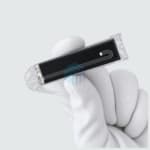
| Micro cell with black walls | Light-masking walls around the optical aperture | Small-beam or stray-light-sensitive measurements |
| Micro cell with PTFE stopper | Stoppered chamber designed for suitable sealing | Samples requiring reduced evaporation or exposure |
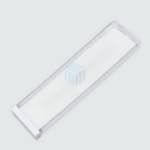
| Quartz micro sample cell | UV-transmitting optical windows | DNA, RNA, protein, and other UV measurements |
The appropriate design depends on the sample, wavelength range, instrument beam dimensions, and required optical path length.
How Do Black Walls Improve Measurement Reliability?
A micro cell with black walls is designed to restrict unwanted light transmission through areas outside the intended optical aperture.
This is particularly useful when the sample chamber is narrower than the instrument’s light beam.
Black walls can help:
- Reduce stray-light contributions from areas surrounding the sample.
- Define the optical measurement region.
- Improve consistency when the instrument beam and cell aperture are properly aligned.
- Support reliable measurements using smaller sample volumes.
However, black walls cannot compensate for poor beam alignment, bubbles, dirty windows, or an incompatible optical aperture.
Before purchasing, laboratories should confirm that the cuvette’s aperture matches the spectrophotometer’s beam geometry.
Why Choose a Micro Cell with PTFE Stopper?
A micro cell with PTFE stopper offers a practical option when samples need additional protection during measurement.
PTFE, or polytetrafluoroethylene, is valued for its chemical resistance and low reactivity with many laboratory chemicals.
Depending on the cell design, a suitable stopper may help reduce:
- Sample evaporation during measurements
- Exposure to airborne contamination
- Accidental liquid loss
- Changes in sample concentration during extended handling
This can be useful for certain volatile solvents, sensitive formulations, and research samples.
However, not every PTFE stopper provides a liquid-tight or vapor-tight seal. Laboratories should confirm sealing performance and chemical compatibility with the supplier.
How Do You Select the Correct Optical Path Length?
Optical path length directly influences absorbance.
A standard 10 mm path length is common in UV-Vis analysis, but shorter or longer paths may be appropriate for particular sample concentrations.
| Optical Path Length | Main Consideration | Suitable Situation |
| 1–2 mm | Lower absorbance for the same concentration | Concentrated samples |
| 5 mm | Intermediate absorbance response | Samples with relatively high absorbance |
| 10 mm | Common reference path length | Routine quantitative analysis |
| Longer than 10 mm | Higher absorbance for the same concentration | Dilute samples requiring greater sensitivity |
For example, reducing the path length from 10 mm to 2 mm reduces ideal Beer-Lambert absorbance to one-fifth at the same concentration.
Therefore, selecting an uv vis micro cuvette should involve evaluating sample concentration, instrument detection limits, and the required measurement range.
What Factors Can Affect Accuracy in Small-Volume Measurements?
Although micro cuvettes reduce sample consumption, improper handling can introduce measurement errors.
Common Challenges and Prevention Methods
Air bubbles: Small bubbles can obstruct the light path. Fill the chamber carefully and inspect it before measurement.
Insufficient filling: The liquid must completely cover the instrument’s optical beam.
Incorrect positioning: Confirm the cell’s optical center height and orientation.
Dirty optical windows: Clean compatible surfaces using approved procedures and lint-free materials.
Sample evaporation: Use suitable covers or stoppers when required.
Carryover contamination: Rinse and clean reusable cells according to validated laboratory procedures.
For accurate results, laboratories should also use appropriate blanks, calibration standards, and repeatability checks.
How Can Micro Cuvettes Reduce Laboratory Operating Costs?
Reducing sample volume can provide practical savings, especially when laboratories work with expensive reagents or limited biological materials.
Consider a laboratory comparing a conventional 3 mL filling volume with a 100 µL micro-volume design.
For 100 measurements:
- Conventional filling volume: 300 mL
- Micro-volume filling volume: 10 mL
- Potential reduction in liquid used: approximately 96.7%
This example assumes equal filling volumes per measurement and excludes rinsing, preparation losses, and sample recovery.
Actual savings depend on laboratory procedures and whether samples are reusable.
What Should You Check Before Purchasing?
Before selecting a micro sample cell, confirm the following specifications:
- Minimum recommended filling volume
- Optical path length and tolerance
- UV or visible wavelength compatibility
- Window material and optical quality
- Aperture dimensions and optical center height
- Instrument holder compatibility
- Stopper design and cleaning requirements
An ultra micro cuvette may be ideal for limited-volume samples, but it must be compatible with the spectrophotometer’s beam geometry.
Selecting the smallest available cell is not always the best choice. The goal is to use the lowest practical sample volume while maintaining reliable optical measurements.
Conclusion
Micro volume cuvettes help laboratories reduce sample consumption while supporting accurate UV-Vis measurements when optical and handling requirements are properly controlled.
The most important considerations include path length, optical material, filling volume, beam alignment, and instrument compatibility.
For US research laboratories, pharmaceutical manufacturers, and analytical testing facilities, selecting the right cuvette can improve sample efficiency without compromising measurement quality.
M-Kube Enterprise helps customers explore laboratory cuvette solutions for specialized analytical applications. Share your sample volume, wavelength range, optical path length, and instrument specifications to discuss suitable options.