
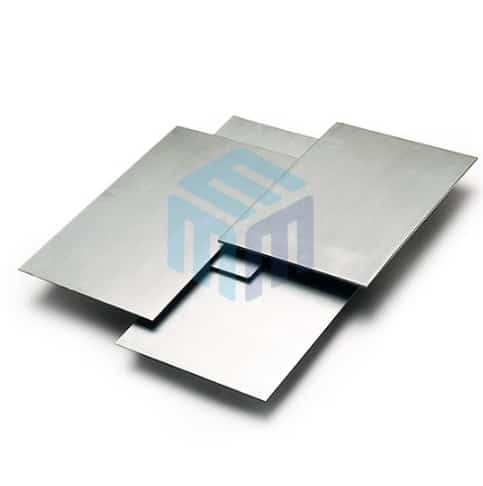
In high-temperature or high-stress applications, refractory metals like molybdenum and tungsten are essential materials. Known for their high melting points, excellent strength, and corrosion resistance, they’re widely used in medical, semiconductor, furnace, and defense industries. But which one should you choose—molybdenum plates or tungsten plates?
In this guide, we’ll compare molybdenum sheet & plate with tungsten sheet metal in terms of properties, performance, pricing, and applications, so you can make the best material choice for your project.
What Are Molybdenum and Tungsten Plates?
Molybdenum and tungsten plates are two of the most widely used refractory metal materials in high-temperature and demanding industrial environments. Known for their exceptional heat resistance, strength, and durability, these plates are commonly used in aerospace, furnace, semiconductor, medical, and radiation shielding applications.
Molybdenum Sheet & Plate
Molybdenum is a gray metal with a melting point of 2600°C. It offers excellent strength at high temperatures and good thermal conductivity. Molybdenum sheets and plates are widely used in furnace parts, electronics, and tooling components.
Tungsten Sheet & Plate
Tungsten has the highest melting point of any metal: 3422°C. It’s known for its incredible density, hardness, and thermal resistance. Tungsten plates are used in x-ray shielding and metal processing under extreme heat.
Key Differences Between Molybdenum and Tungsten Plates
| Feature | Molybdenum Plate | Tungsten Plate |
|---|---|---|
| Melting Point | 2600°C | 3422°C |
| Density | 10.2 g/cm³ | 19.15 g/cm³ |
| Thermal Conductivity | Moderate | High |
| Electrical Conductivity | High | High |
| Machinability | Easier | Difficult (very brittle) |
| Weight | Lightweight | Heavy |
| Price (approximate) | Moderate | High |
Applications of Molybdenum Sheets & Plates
- High-temperature furnace insulation and parts
- Semiconductor and electronics components
- Sputtering targets
- Medical equipment
- Aircraft and missile parts
Applications of Tungsten Sheets & Plates
- X-ray and radiation shielding
- High-voltage electrical contacts
- Rocket nozzles and space propulsion systems
- Vacuum furnaces
- Crystal growing crucibles
Advantages of Molybdenum Sheets and Plates
- Better machinability: Molybdenum is easier to cut, drill, and form.
- Lower cost: Molybdenum sheet price and molybdenum plate price are generally more affordable than tungsten.
- Lightweight alternative: Suitable when high strength is needed without added mass.
- Corrosion resistance: Especially in reducing or vacuum environments. Read also: The Properties and Advantages of Molybdenum Sheets & Plates
Advantages of Tungsten Sheets and Plates
- Extreme heat resistance: Ideal for thermal shielding and environments over 3000°C.
- Superior density: Great for radiation shielding and counterweights.
- Very low thermal expansion: Maintains dimensional stability under heat.
- Chemical inertness: Highly resistant to most acids and alkalis.
Available Options:
- Pure Tungsten Sheet: High purity (≥99.95%) for demanding industries
- Tungsten Steel Sheet: Alloyed for strength and wear resistance
- Tungsten Sheet Metal Sizes: From ultra-thin foils to thick plates
- Tungsten Plate Suppliers often offer both raw and custom-machined forms
How to Choose Between Molybdenum and Tungsten Plates
Choose Molybdenum if:
- You need high strength with reduced weight
- Boiling point at 4639°C
- Budget is a concern
- You require easy machining or forming
Choose Tungsten if:
- You’re working in ultra-high-temperature or radiation-heavy environments
- You need extreme density or shielding
- Minimal thermal expansion is critical
- You don’t mind higher machining difficulty or cost
What to Look for in a Molybdenum or Tungsten Sheet Supplier
- Material Purity: Ensure purity certifications (≥99.95%) for sensitive applications
- Dimensional Accuracy: Tightly controlled thickness tolerances
- Machining Services: Suppliers offering custom cuts or CNC shaping save time
- Inventory Options: Look for both standard sheets and custom-sized plates
- Support & Lead Times: A responsive supplier reduces project delays
Top molybdenum plate suppliers and tungsten sheet suppliers will also offer datasheets and technical guidance to help you select the right grade and form.
Conclusion
Both molybdenum and tungsten sheets and plates offer unmatched performance in demanding environments. The right choice depends on your application requirements, budget, and operating conditions.
If you’re looking for high strength at elevated temperatures with easier handling and lower cost, molybdenum sheet or plate is ideal. But if you’re dealing with extreme heat or radiation, and you need unmatched durability, pure tungsten sheet or tungsten plate is worth the investment.
Still unsure? Contact a reliable molybdenum or tungsten sheet supplier to discuss your exact needs—they’ll help you match the right metal to your next high-performance project.