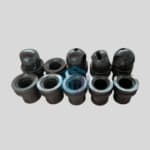

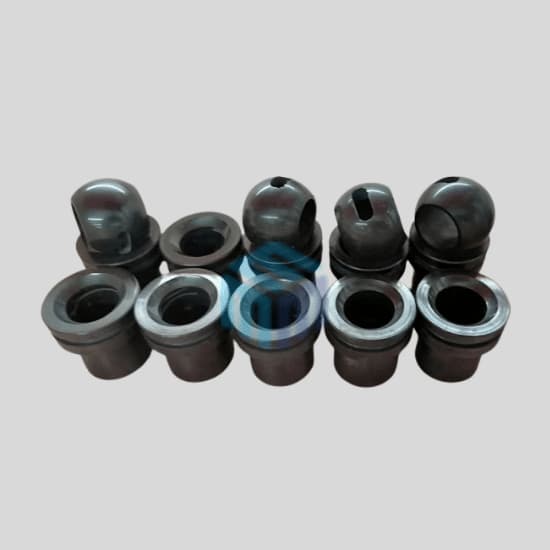
Choosing the right crucible for aluminum alloy melting involves more than selecting a container that withstands high temperatures. Material grade, wall thickness, capacity, and geometry all influence melting efficiency, metal quality, and operating costs. For US foundries, automotive manufacturers, aerospace suppliers, and metal casting facilities, silicon nitride crucibles offer excellent thermal shock resistance, mechanical strength, and resistance to molten aluminum alloys.
However, different aluminum alloys have different processing requirements. Understanding how alloy composition affects crucible selection helps manufacturers improve performance and reduce unnecessary replacements.
Why Choose Silicon Nitride Crucibles for Aluminum Alloy Melting?
Silicon nitride (Si₃N₄) is an advanced technical ceramic known for its high-temperature stability and low thermal expansion.
Its main advantages include:
- Thermal shock resistance: Helps withstand controlled heating and cooling cycles.
- Molten aluminum resistance: Suitable grades resist chemical interaction and corrosion.
- Mechanical strength: Supports structural stability during repeated melting operations.
- Low thermal expansion: Helps minimize thermal stress and cracking.
- Reduced metal adhesion: Can limit aluminum buildup and simplify maintenance.
These properties make silicon nitride a valuable option for manufacturers processing aluminum casting alloys under demanding conditions.
How Do You Select the Right Silicon Nitride Crucible Grade?
Silicon nitride ceramics are produced using different manufacturing methods. Each grade offers different levels of density, porosity, mechanical strength, and corrosion resistance.
Common Silicon Nitride Grades
| Silicon Nitride Grade | Key Characteristics | Selection Considerations |
| Reaction-Bonded Silicon Nitride (RBSN) | Lower processing shrinkage; porosity varies | Evaluate metal penetration and alloy compatibility |
| Gas-Pressure-Sintered Silicon Nitride (GPSN) | High density and good mechanical strength | Candidate for demanding aluminum alloy melting |
| Hot-Pressed Silicon Nitride (HPSN) | High density and strong mechanical properties | Consider for demanding thermal and corrosion conditions |
| Hot-Isostatically-Pressed Silicon Nitride (HIPSN) | Highly densified structure | Consider where demanding service requirements justify additional cost |
For aluminum alloy melting, prioritize density, open porosity, and chemical compatibility. Higher open porosity may allow molten metal penetration, increasing the risk of material degradation.
How Does Aluminum Alloy Composition Affect Crucible Selection?
Not all aluminum alloys behave identically during melting. Alloying elements such as silicon, magnesium, copper, and zinc influence processing temperatures, oxidation behavior, and potential reactions with ceramic materials.
Crucible Selection for Different Aluminum Alloys
| Aluminum Alloy | Common Applications | Crucible Selection Considerations |
| Aluminum-Silicon (Al-Si), including A356 and A380 | Automotive castings, engine components, die casting | Thermal cycling, molten-metal resistance, and repeated holding |
| Aluminum-Magnesium (Al-Mg), including 5xxx series | Marine and structural components | Magnesium-related oxidation and chemical compatibility |
| Aluminum-Copper (Al-Cu), including 2xxx series | Aerospace and high-strength components | Temperature control, corrosion resistance, and contamination |
| Aluminum-Zinc-Magnesium (Al-Zn-Mg), including 7xxx series | Aerospace and structural applications | Alloy chemistry, temperature exposure, and ceramic compatibility |
Note: The 2xxx, 5xxx, and 7xxx series primarily identify wrought alloys; melting practices vary by grade and manufacturing process.
For example, magnesium-containing alloys require careful attention to melt chemistry, while aluminum-silicon casting alloys often undergo repeated melting and holding cycles.
Always communicate the exact alloy designation and operating conditions to your silicon nitride crucible supplier before finalizing material specifications.
How Does Wall Thickness Affect Crucible Performance?
Wall thickness influences mechanical durability, heating response, and thermal stress.
Thicker walls may provide additional structural support but increase thermal mass. Thinner walls may respond faster to heating, although insufficient thickness can compromise strength.
Consider the following factors:
- Operating temperature: Higher temperatures and longer holding periods require appropriate material stability.
- Alloy charge weight: Larger molten-metal loads require careful structural evaluation.
- Thermal cycling: Frequent heating and cooling increase thermal stress.
- Handling requirements: Repeated lifting and pouring can introduce mechanical loads.
There is no universal wall thickness for every aluminum alloy. The appropriate specification depends on crucible dimensions, material grade, heating method, and operating conditions.
How Do You Determine the Correct Crucible Capacity?
Crucible capacity should match the aluminum alloy charge weight, furnace dimensions, and production requirements.
Molten aluminum alloys typically have densities around 2.3–2.4 g/cm³ near common melting temperatures, although exact values vary with composition and temperature.
For example, a 5 kg aluminum alloy charge requires approximately 2.1–2.2 liters of molten-metal volume.
Additional capacity is necessary to maintain adequate free board for safe handling, skimming, and pouring.
Before choosing a crucible, confirm:
- Maximum alloy charge weight
- Molten alloy density
- Required operating free board
- Furnace chamber dimensions
- Charging and pouring methods
The supplier should confirm both nominal internal volume and recommended working capacity.
How Does Silicon Nitride Crucible Geometry Influence Aluminum Alloy Melting?
Crucible geometry affects heating behavior, metal handling, pouring efficiency, and furnace compatibility.
Comparing Crucible Geometries
| Crucible Geometry | Main Advantage | Typical Application |
| Cylindrical | Straightforward design and consistent internal volume | General alloy melting and holding |
| Tapered | May simplify metal removal and handling | Batch melting operations |
| Wide-Mouth | Easier charging, inspection, and skimming | Foundries with frequent alloy handling |
| Deep, Narrow | Accommodates specific furnace configurations | Space-constrained heating systems |
| Custom Geometry | Matches specialized equipment requirements | Automated casting and specialized manufacturing |
For aluminum alloy casting, geometry should also accommodate dross removal, molten-metal transfer, and any specialized pouring arrangements.
Rounded corners and appropriate wall transitions can help reduce localized stress concentrations.
Read also: Why Do Crucibles Crack During Aluminum Melting? How Silicon Nitride Improves Reliability
What Determines Silicon Nitride Crucible Price?
When comparing silicon nitride crucible price options, consider both initial purchase cost and long-term operating value.
Pricing depends on:
- Silicon nitride grade and material composition
- Manufacturing and densification methods
- Crucible capacity and wall thickness
- Custom dimensions and machining
- Order quantity and inspection requirements
Higher-density grades or custom geometries may increase initial costs. However, longer service life and fewer replacements can improve overall value.
For US manufacturers, evaluating cost per successful melting cycle provides a useful purchasing comparison.
What Should You Ask Before Purchasing?
When evaluating a silicon nitride crucible for sale, ask your supplier:
- Which material grade is recommended for my aluminum alloy?
- What are the density and open porosity?
- What operating temperature and thermal cycling limits apply?
- Can wall thickness and geometry be customized?
- What quality inspection documents are available?
- What are the expected lead time and replacement considerations?
Providing alloy composition, furnace specifications, and operating conditions helps suppliers recommend an appropriate design.
Conclusion
Selecting the right silicon nitride crucible for aluminum alloy melting requires evaluating material grade, alloy composition, wall thickness, capacity, and geometry together.
For US foundries and manufacturers, choosing an appropriately engineered crucible can support reliable melting, consistent metal quality, and efficient production.
M-Kube Enterprise LLC helps customers explore silicon nitride crucible solutions for industrial and specialized applications. Share your aluminum alloy designation, operating temperature, required capacity, and furnace specifications to discuss suitable options.