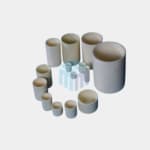

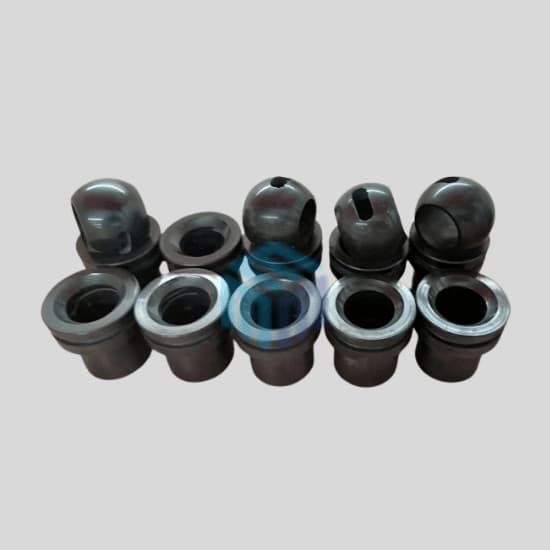
Melting aluminum may appear straightforward, but the crucible holding the molten metal is exposed to a combination of high temperature, thermal cycling, chemical attack, wetting, mechanical stress, and repeated heating and cooling. Over time, these conditions can cause conventional crucibles to develop surface degradation, distortion, microcracks, and eventually catastrophic failure. For laboratories, foundries, and aluminum-processing operations, crucible reliability is therefore directly connected to productivity, melt quality, maintenance requirements, and operating safety. Silicon nitride crucibles have attracted considerable attention for aluminum melting because silicon nitride can provide strong resistance to molten aluminum while maintaining good mechanical performance at elevated temperatures.
Research comparing several technical ceramics found that dense hot-pressed and hot-isostatically pressed silicon nitride materials showed almost no corrosion attack under severe molten-aluminum exposure, while more porous reaction-bonded materials were considerably more vulnerable.
This makes silicon nitride an important material to consider when conventional crucibles experience premature cracking or corrosion.
Why Do Crucibles Crack During Aluminum Melting?
Cracking is rarely caused by a single factor. In most applications, several mechanisms act simultaneously.
Thermal Shock
One of the most common causes of ceramic crucible failure is thermal shock.
When a cold crucible is heated rapidly, its outer surface can become hot before the interior reaches the same temperature. During cooling, the reverse temperature gradient can occur.
These temperature differences create thermal stresses within the crucible.
Repeated cycles can gradually cause:
- Microcracking
- Crack propagation
- Edge chipping
- Structural weakening
- Sudden fracture
This is especially important when crucibles are repeatedly taken from room temperature to aluminum-melting temperatures and then cooled again.
Thermal Expansion and Temperature Gradients
Ceramic materials expand when heated and contract when cooled.
If heating is uneven, different sections of the crucible may attempt to expand at different rates. Mechanical stresses can develop as a result.
Factors that can increase thermal stress include:
- Rapid furnace heating
- Uneven furnace temperature
- Localized heating
- Uneven metal loading
- Sudden cooling
- Excessively thick crucible walls
- Mechanical restraint
Therefore, choosing a crucible based only on its maximum temperature rating is not enough.
The material’s thermal properties and the actual heating cycle must also be considered.
Molten Aluminum Can Chemically Attack Crucible Materials
Thermal stress is only part of the problem.
Molten aluminum can react with or penetrate certain refractory materials. The interaction depends on:
- Crucible composition
- Porosity
- Surface condition
- Aluminum alloy composition
- Temperature
- Exposure time
- Wetting behavior
Research published several non-oxide ceramics in molten aluminum and found major differences in corrosion behavior between silicon nitride and silicon carbide materials. Dense HIPRBSN and HPSN silicon nitride showed nearly no corrosion under the most severe test conditions, while porous RBSN was attacked much sooner.
This demonstrates why the microstructure and density of a crucible are important, not simply the fact that it is made from silicon nitride.
Why Silicon Nitride Is Suitable for Aluminum Melting
Silicon nitride (Si₃N₄) combines several properties that are valuable in aluminum-processing environments.
These include:
- High-temperature strength
- Good thermal shock resistance
- Low wetting tendency with molten aluminum under appropriate conditions
- Strong corrosion resistance
- Good mechanical durability
- Resistance to thermal deformation
- Low tendency toward molten-metal penetration when properly manufactured
A study of the interaction between liquid aluminum and silicon nitride found limited interfacial corrosion and identified the formation of a protective dense aluminum nitride layer at the interface. The researchers concluded that silicon nitride is a good candidate for corrosion-resistant handling and melting of liquid aluminum.
How Silicon Nitride Reduces Crucible Degradation
Excellent Resistance to Molten Aluminum
One of the biggest advantages of a silicon nitride crucible is its resistance to molten aluminum.
In comparative testing, dense silicon nitride materials demonstrated significantly better corrosion resistance than several other technical ceramics.
The study found that HIPRBSN and HPSN materials exhibited almost no corrosion after exposure to aluminum melts at 1000°C for 750 hours under the test conditions.
This level of resistance can help reduce:
- Crucible wall thinning
- Surface deterioration
- Material contamination
- Premature replacement
- Maintenance interruptions
Reduced Wetting by Molten Aluminum
Wetting is another important factor.
If molten aluminum readily wets a crucible surface, it can spread across the material and potentially promote chemical interaction or penetration.
The interaction between molten aluminum and silicon nitride has been studied using contact-angle measurements. The research found limited interfacial corrosion and a protective aluminum nitride layer, supporting silicon nitride’s suitability for molten-aluminum handling and melting.
Reduced wetting can help limit direct interaction between the molten aluminum and the crucible surface.
Dense Silicon Nitride Matters
Not every silicon nitride crucible will perform identically.
This is a particularly important consideration when comparing silicon nitride crucibles from different manufacturers.
The 1992 corrosion study found that relatively porous reaction-bonded silicon nitride was attacked considerably faster than dense hot-pressed and hot-isostatically pressed silicon nitride materials.
Porosity can provide pathways for molten metal to penetrate the ceramic.
Therefore, when selecting a silicon nitride crucible supplier, buyers should ask about:
- Material density
- Open porosity
- Manufacturing method
- Sintering process
- Mechanical properties
- Surface finish
- Chemical composition
These factors can have a major influence on service life.
Silicon Nitride and Thermal Cycling
A crucible may be exposed to hundreds or thousands of heating and cooling cycles during its service life.
Silicon nitride is attractive for these conditions because its mechanical properties and thermal behavior can provide better resistance to thermal cycling than many conventional ceramic materials.
However, this does not mean that a silicon nitride crucible is immune to thermal shock.
Rapid temperature changes can still generate stresses.
For best performance:
- Avoid unnecessary rapid heating
- Control cooling rates
- Avoid sudden temperature changes
- Preheat the crucible when appropriate
- Avoid direct flame impingement
- Follow the manufacturer’s recommended operating procedure
The goal is to reduce the temperature difference between different parts of the crucible.
Aluminum Alloy Composition Also Matters
The aluminum being melted is not always pure aluminum.
Industrial operations may process alloys containing elements such as:
- Silicon
- Magnesium
- Copper
- Zinc
- Manganese
These alloying elements can influence the interaction between the molten metal and ceramic.
The research on ceramic corrosion specifically evaluated both pure aluminum and an Al-Zn-Mg-Cu alloy and found that corrosion behavior depended on ceramic type, interface processes, and wetting effects.
Therefore, when choosing silicon nitride crucibles, it is useful to provide the supplier with the actual aluminum alloy composition whenever possible.
Why Porosity Can Reduce Crucible Reliability
Porosity is an important material characteristic for molten-metal applications.
Open pores can potentially allow molten aluminum to enter the ceramic structure.
Once penetration occurs, chemical reactions and thermal stresses can contribute to material degradation.
The comparative silicon nitride study specifically observed substantially greater attack in reaction-bonded silicon nitride with relatively high open porosity.
This is why a dense, properly manufactured silicon nitride crucible can offer significant advantages over a porous ceramic alternative.
Silicon Nitride Crucibles for Repeated Aluminum Melting
For production environments, the ability to reuse a crucible is an important economic consideration.
A crucible that must be replaced frequently can increase:
- Consumable costs
- Furnace downtime
- Maintenance labor
- Production interruptions
- Risk of contamination
A 2007 investigation of highly dense Si₃N₄ crucibles used for aluminum casting reported high corrosion resistance during aluminum exposure and examined the aluminum–ceramic interface at high temperature.
The results support the potential of dense silicon nitride materials for aluminum-processing applications.
Actual service life, however, depends on the crucible design, alloy, temperature, atmosphere, thermal cycling, handling, and operating procedure.
How to Prevent Silicon Nitride Crucible Cracking
Even high-quality silicon nitride crucibles require proper handling.
- Control the Heating Rate
- Avoid Sudden Cooling
- Inspect Before Each Use
- Avoid Mechanical Shock
- Prevent Uneven Heating
- Avoid Overloading
- Follow the Supplier’s Preheating Procedure.
Conclusion
Crucible cracking during aluminum melting is a complex problem involving thermal shock, temperature gradients, molten-metal interaction, wetting, porosity, and mechanical stress.
Silicon nitride provides an attractive solution because appropriately manufactured Si₃N₄ materials can offer excellent resistance to molten aluminum. Research has demonstrated that dense silicon nitride materials can exhibit very low corrosion under severe aluminum exposure, while porosity and material structure can significantly influence degradation.
The key is not simply choosing “silicon nitride,” but selecting a dense, application-appropriate silicon nitride grade and crucible design.
For aluminum melting operations that demand repeatability, reduced contamination, longer component life, and reliable thermal cycling performance, a properly specified silicon nitride crucible can be a valuable alternative to conventional crucible materials.
Looking for High-Quality Silicon Nitride Crucibles?
M-Kube Enterprise LLC supplies silicon nitride crucibles for high-temperature laboratory, aluminum melting, foundry, and industrial processing applications.
Whether you are comparing silicon nitride crucible price, looking for a silicon nitride crucible for sale, or need technical assistance from a reliable silicon nitride crucible supplier, M-Kube Enterprise can help you identify the appropriate configuration for your application.
📞 Call us: +1-732-808-1999
📧 Email: info@mkubeenterprise.com today for silicon nitride crucible specifications, custom sizes, availability, and pricing for your USA application.