
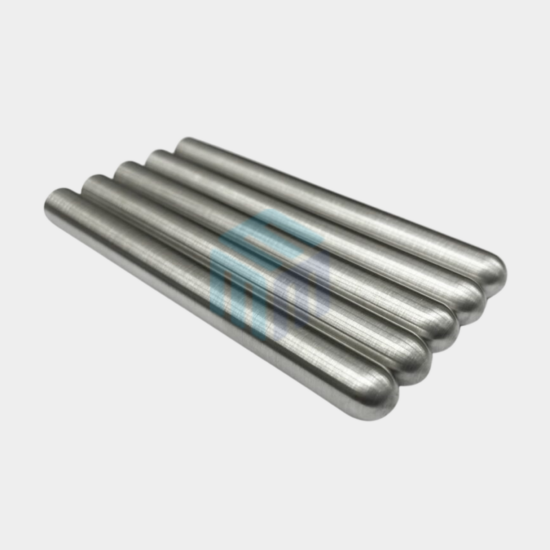
Selecting the right platinum material for catalyst and electrode research involves more than choosing a metal with excellent electrical conductivity. Material purity, chemical stability, surface area, dimensions, and operating conditions all influence experimental performance and reproducibility. For universities, research laboratories, electrochemical testing facilities, and industrial R&D teams, platinum rods are widely used in electrochemical studies, catalyst investigations, and specialized laboratory applications.
However, platinum is not automatically the best choice for every experiment. Understanding when platinum rods offer advantages over other electrode materials helps researchers improve experimental consistency, manage material costs, and select appropriate configurations.
Why Choose Platinum Rods for Catalyst and Electrode Studies?
Platinum is a noble metal known for its chemical stability, electrical conductivity, and catalytic activity in numerous electrochemical reactions.
Its main advantages include:
- High electrical conductivity: Supports efficient current transfer during electrochemical experiments.
- Catalytic activity: Suitable for studying hydrogen-related reactions and other electrochemical processes.
- Corrosion resistance: Offers stability in many acidic and aqueous environments.
- High melting point: Approximately 1,768°C (3,214°F), supporting selected high-temperature applications.
- Surface modification: Can be polished, cleaned, or electrochemically treated for specific experimental requirements.
These properties make platinum a valuable material for researchers studying electrode kinetics, electrochemical reactions, and catalyst behavior.
When Should Researchers Choose Platinum Rods for Electrochemical Studies?
Platinum rods are commonly selected when an experiment requires a conductive, chemically stable electrode with defined dimensions.
They may serve as working electrodes or counter electrodes, depending on the electrochemical system and research objective.
Common Electrochemical Applications
| Research Application | Role of Platinum Rod | Selection Considerations |
| Cyclic Voltammetry | Working electrode | Surface preparation and exposed area |
| Hydrogen Evolution Studies | Catalytically active electrode | Electrolyte compatibility and surface condition |
| Electrochemical Kinetics | Electrode for reaction measurements | Purity and reproducibility |
| Corrosion Research | Electrode in selected test configurations | Potential range and electrolyte composition |
| Electrochemical Synthesis | Working or counter electrode | Reaction products and possible contamination |
For experiments involving hydrogen evolution or oxidation, platinum provides high catalytic activity under suitable conditions.
However, platinum counter electrodes may dissolve or release platinum species at certain potentials. These species can deposit on working electrodes and influence experimental results.
Researchers should evaluate potential ranges, electrolyte composition, and possible cross-contamination before selecting platinum.
How Does Platinum Purity Affect Catalyst and Electrode Performance?
Material purity is an important consideration when selecting platinum for scientific research.
Trace metallic impurities can influence electrochemical behavior, surface reactions, and the interpretation of experimental results.
A High purity platinum rod is particularly useful when experiments require controlled material composition and repeatable surface characteristics.
Comparing Platinum Purity Levels
| Platinum Purity | General Characteristics | Research Considerations |
| 99.9% | High-purity commercial platinum | Suitable for selected laboratory applications |
| 99.95% | Lower total impurity content | Consider for controlled electrochemical testing |
| 99.99% | Very high purity | Suitable for impurity-sensitive research |
| 99.999% | Ultra-high purity | Consider for specialized analytical and materials research |
Higher purity can reduce uncertainty associated with bulk material impurities, although it does not guarantee a contamination-free electrode surface.
For sensitive experiments, researchers should also evaluate surface cleaning procedures, electrolyte purity, and handling conditions.
How Do Platinum Rod Diameter and Length Influence Experimental Results?
Platinum rod dimensions influence electrode surface area, current distribution, mechanical stability, and compatibility with laboratory equipment.
For a cylindrical rod, the exposed surface area depends on its diameter, immersed length, and whether the rod ends are exposed.
Consider the following factors:
- Rod diameter: Influences geometric surface area and mechanical rigidity.
- Exposed length: Determines the portion of the electrode contacting the electrolyte.
- Surface finish: Affects surface roughness and experimental reproducibility.
- Electrical connection: Must provide stable conductivity without introducing unwanted reactions.
- Cell geometry: Influences electrode spacing and current distribution.
For electrochemical studies, researchers should distinguish between geometric surface area and electrochemically active surface area.
A smooth platinum rod and a roughened platinum electrode may have similar dimensions but significantly different active surface areas.
When Are Platinum Rods Preferred for Catalyst Research?
Platinum is widely investigated as a catalyst because its surface can facilitate several important chemical and electrochemical reactions.
Platinum rods are useful when researchers need a solid, reusable electrode or a defined platinum surface for comparative testing.
Platinum Rod Applications in Catalyst Research
| Research Area | Potential Application | Important Considerations |
| Hydrogen Evolution Reaction (HER) | Evaluating hydrogen production kinetics | Surface cleanliness and electrolyte conditions |
| Hydrogen Oxidation Reaction (HOR) | Studying hydrogen electro-oxidation | Platinum surface condition |
| Oxygen Reduction Reaction (ORR) | Investigating catalytic activity | Surface oxides and mass transport |
| Electrocatalyst Benchmarking | Comparing experimental electrode behavior | Consistent surface preparation |
| Surface Chemistry | Studying adsorption and reaction mechanisms | Surface structure and contamination |
Platinum rods are particularly useful for controlled bulk-electrode studies.
However, when maximum catalytic surface area is required, platinum nanoparticles, supported catalysts, or platinum-coated electrodes may be more appropriate.
The final choice depends on whether the research focuses on intrinsic surface behavior, catalytic activity, or practical catalyst utilization.
Read also: How Platinum Rods Help Reduce Contamination in High-Temperature Analytical Testing
When Should Researchers Consider Platinum Tubes or Pipes Instead of Rods?
Although platinum rods are suitable for many electrode studies, other platinum forms may be better suited to specialized experimental setups.
Platinum Pipes and platinum tube products offer hollow geometries that can accommodate particular equipment designs or process requirements.
Comparing Platinum Product Forms
| Platinum Form | Main Advantage | Typical Research Considerations |
| Platinum Rod | Solid structure and defined electrode geometry | Electrochemical testing and model electrodes |
| Platinum Tube | Hollow geometry | Specialized laboratory assemblies |
| Platinum Pipe | Hollow construction for larger assemblies | Custom process equipment |
| Platinum Wire | Flexible, small-diameter geometry | Electrical connections and counter electrodes |
| Platinum Sheet | Flat surface with configurable exposed area | Surface studies and electrode fabrication |
Researchers should select the material form according to cell geometry, required surface area, mechanical support, and experimental conditions.
Also read: How Do Platinum Rods Improve Glass Quality and Reduce Contamination During Melting?
What Determines Platinum Rod Price?
When comparing platinum rod price options, consider material purity, dimensions, manufacturing tolerances, and certification requirements.
Pricing depends on:
- Platinum purity and material certification
- Rod diameter, length, and total weight
- Precision machining and dimensional tolerances
- Surface finishing requirements
- Custom fabrication and order quantity
- Platinum market prices and supplier lead times
Because platinum is a precious metal, material weight significantly influences purchasing costs.
For US laboratories, comparing price per usable electrode and expected experimental requirements can provide a more meaningful purchasing assessment than initial cost alone.
What Should You Ask Before Purchasing Platinum Rods?
When evaluating a platinum rod for sale, ask your platinum rod supplier:
- What platinum purity levels are available?
- Can diameter, length, and tolerances be customized?
- What material certificates or inspection reports are available?
- What surface finish is supplied?
- Are the rods suitable for the intended electrolyte and operating temperature?
- What are the estimated lead times and shipping options within the United States?
Providing the intended research application, electrode dimensions, and experimental conditions helps suppliers recommend an appropriate platinum product.
Conclusion
Selecting platinum rods for catalyst and electrode studies requires evaluating material purity, electrode geometry, surface condition, chemical compatibility, and experimental objectives together.
For universities, research laboratories, and industrial R&D facilities, platinum rods can support electrochemical testing, catalyst investigations, and controlled electrode studies.
However, platinum is not suitable for every experimental configuration. Researchers should consider potential contamination, operating conditions, and alternative electrode materials before finalizing their selection.
M-Kube Enterprise helps customers explore platinum rod solutions for laboratory, research, and specialized industrial applications. Share your required purity, diameter, length, quantity, and intended application to discuss suitable options.
Phone: +1-732-808-1999
Email: info@mkubeenterprise.com