
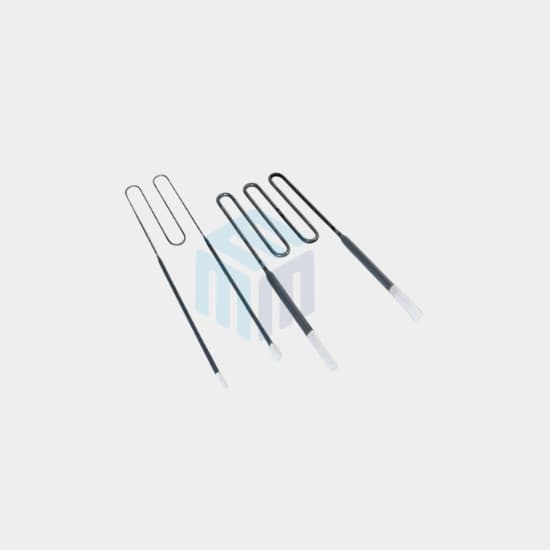
Laboratories that depend on high-temperature furnaces—whether for sintering, crystal growth, ceramics, or materials testing—often rely on molybdenum disilicide heating elements. These elements, known for their ability to operate at temperatures up to 1800°C, offer excellent oxidation resistance and stable performance in demanding environments.
Despite MoSi₂ heating element advantages, failure can disrupt research, delay production, and increase maintenance costs. Worse, sudden breakdowns can damage samples, overheat equipment, or compromise experiment results. Understanding what causes failure and how to prevent it—can significantly improve reliability and reduce lab downtime.
What are MoSi₂ Heating Elements?
MoSi₂ (molybdenum disilicide) is a ceramic-like compound that behaves as a metal at high temperatures and forms a protective silicon dioxide (SiO₂) layer in oxidizing environments. This makes it ideal for long-term use in electric furnaces reaching 1300–1800°C.
Types of MoSi₂ Heating Elements Used in Laboratories
Labs use several configurations depending on the furnace type:
- MoSi₂ Rod Heater – Most common form, with “U” or “straight” shapes, ideal for box or tube furnaces
- MoSi₂ Furnace Element – Custom-designed for large-scale or specialty furnaces
- MoSi₂ Electric Heating Element – Available in different diameters, shapes, and power ratings
Early Signs of MoSi₂ Heating Element Failure
Identifying early warning signs of MoSi₂ heating element failure can help prevent unexpected downtime and costly damage. These elements typically degrade gradually, so recognizing the symptoms early is key to maintaining furnace performance.
1. Formation of Hot Spots
Uneven glowing or localized bright areas on the element indicate non-uniform heating.
This usually happens due to:
- Material degradation
- Changes in electrical resistance
- Surface damage
2. Visible Cracks or Physical Damage
Cracks, chips, or broken sections are clear indicators of failure.
These can result from:
- Thermal shock (rapid heating/cooling)
- Mechanical stress during handling or operation
3. Thinning of the Element Surface
Over time, oxidation and material loss can cause the element to become thinner.
This weakens the structure and increases the risk of breakage during operation.
4. Increased Electrical Resistance
A noticeable rise in resistance means the element is aging.
This leads to:
- Reduced heating efficiency
- Higher power consumption
- Inconsistent temperature control
5. Difficulty in Reaching Target Temperature
If the furnace takes longer than usual to reach set temperatures, it may indicate:
- Degraded heating elements
- Reduced heat output due to wear
6. Surface Discoloration
Unusual discoloration (beyond normal aging) can signal:
- Contamination
- Improper atmosphere conditions
- Early-stage oxidation issues
MoSi₂ heating elements rarely fail suddenly—they show clear warning signs over time. Regular inspection for hot spots, physical damage, and performance changes can help you take corrective action early and extend element life.
Mechanical Causes of MoSi₂ Heating Element Failure
Molybdenum disilicide (MoSi₂) heating elements are robust but can fail mechanically due to several factors:
-
Thermal Shock and Rapid Temperature Changes: Sudden heating or cooling causes stress in the brittle MoSi₂ material, leading to cracks or fractures. Lab furnaces must follow gradual ramp-up and cool-down cycles to minimize thermal shock risks.
-
Physical Damage During Handling and Installation: Improper handling, dropping, or striking the element during installation or maintenance can create micro-cracks or surface defects that propagate under heat stress, causing premature failure.
Ensuring careful handling and controlled temperature cycling is essential to prolong the mechanical integrity of MoSi₂ elements in lab environments.
Electrical Causes of MoSi₂ Heating Element Failure
Electrical issues can also cause MoSi₂ heating element malfunction:
-
Overcurrent and Voltage Fluctuations: Excessive current or unstable voltage supply leads to overheating and localized hotspots, causing the element to burn out or deform. Using properly rated power supplies and stabilizers can prevent such damage.
-
Poor Electrical Connections and Contacts: Loose or corroded electrical contacts increase resistance and heat generation at connection points, accelerating element degradation and failure. Regular inspection and secure fastening of terminals are essential maintenance steps.
Reliable electrical infrastructure and routine checks help avoid these common electrical failure modes.
Common MoSi₂ Heating Element Failure Mechanisms and Prevention Methods
When a mosi2 element shows signs of degradation or failure, several root causes are often responsible. Below are key failure modes, symptoms, and mitigation tips.
1. Oxidation & Protective Silica Layer Depletion
- MoSi₂ elements form a protective silicon dioxide (SiO₂) glassy layer on their surface at high temperatures, which helps inhibit further oxidation.
- Over time, that silica layer can thin, crack, or even melt (especially above ~1700 °C), exposing fresh MoSi₂ to oxidation.
- In cyclic or fluctuating environments (switching between oxidizing and reducing atmospheres), the silica layer can be damaged or stripped away, accelerating thinning of the element.
Symptom: Gradual reduction in cross-sectional area (thinning), reduced current capacity, “hot spots” forming where material is thinner.
Mitigation:
- Operate in stable oxidizing (or inert) atmospheres, avoiding frequent switches between reducing and oxidizing conditions.
- Avoid prolonged operation in the mid-temperature range (400–900 °C), where oxidation is more aggressive.
- Limit maximum operating temperature and ensure proper insulation to reduce stress on the element.
2. Grain Growth and Embrittlement
- At high temperatures over time, the grains within the MoSi₂ can grow, reducing the mechanical strength and increasing brittleness.
- Grain coarsening makes the element more susceptible to crack initiation under thermal or mechanical stress.
Symptom: Cracking, spalling, or sudden fractures in otherwise visually intact sections.
Mitigation:
- Use higher-grade or doped MoSi₂ formulations that resist grain growth (manufacturers often add stabilizing elements).
- Minimize large temperature swings (rapid heating/cooling), which exacerbate internal stresses.
3. Mechanical Stress, Thermal Shock, & Constrained Expansion
- MoSi₂ is brittle at room temperature; any mechanical shock, vibration, or mishandling can cause microcracks.
- During heating and cooling cycles, thermal expansion and contraction can place tensile stress on the element, leading to fractures—especially where the element is constrained by mounts or furnace geometry.
- In addition, high current or “surface load” (power density stresses) over time can fatigue or fracture the element, especially in narrow or heavily loaded segments.
Symptom: Cracks at support points, broken ends, segments failing prematurely, fractures even when the element appears mostly intact.
Mitigation:
- Allow for free expansion when mounting; avoid tight clamping that restricts movement.
- Avoid rapid temperature ramp-up or ramp-down — a common rule is to limit heating/cooling rates (e.g. ≤10 °C/min) in many cases.
- Balance the load along the element to avoid localized overheating.
- Use proper support insulators and avoid mechanical contact between element and furnace walls.
4. Terminal & Connection Failures
- Poor or loose electrical connections at terminal clamps generate local overheating, leading to failure near the ends or contacts.
- Heat losses in the terminal or lead regions can stress the element and degrade performance.
Symptom: Element failure near terminal ends, discoloration, burn-through at contact points.
Mitigation:
- Use robust conductor/terminal clamps, ensure tight and clean connections.
- Protect terminal areas with proper insulation or cooling.
- Monitor voltage and current near terminal zones for hot spots.
5. Chemical Attack & Contamination
- Exposure to reactive gases (e.g. H₂, Cl₂, SO₂, water vapor) may strip or damage the silica layer and promote oxidation or corrosion.
- Contaminants (dust, particles, debris) can adhere to the element surface, creating localized hot spots or interfering with the protective layer. This is especially relevant in sintering furnaces (e.g. zirconia dust).
Symptom: Localized erosion, discoloration, pitting, deposition or localized burnouts.
Mitigation:
- Use clean atmospheres, filters, and purge programs.
- Regenerate or “burn off” contaminant deposits when possible (e.g. controlled oxidation cycles).
- Avoid aggressive reactive gases unless element is rated for them.
MoSi₂ Heating Element Failure Modes and Root Causes
MoSi₂ heating elements can fail due to thermal, electrical, mechanical, and environmental factors during furnace operation. Identifying the failure mode and its root cause helps prevent unexpected downtime and improves element lifespan.
| Failure Mode | Root Cause | Impact |
|---|---|---|
| Cracking and Fracture | Thermal shock, rapid heating or cooling | Element breakage and heating failure |
| Surface Thinning | Oxidation, contamination, prolonged high-temperature exposure | Reduced load-bearing capacity |
| Hot Spots and Local Overheating | Uneven temperature distribution, electrical imbalance | Reduced efficiency and premature burnout |
| Terminal Failure | Loose connections, poor contact resistance, overheating | Power loss and element damage |
| Embrittlement | Thermal aging and grain growth | Increased brittleness and sudden failure |
Understanding these failure modes helps optimize operating conditions, maintenance practices, and furnace performance for longer MoSi₂ element life.
Terminal and Connection Failures in MoSi₂ Heating Elements
Terminal and connection failures are a common cause of MoSi₂ heating element damage in furnaces. Loose or poorly connected terminals increase electrical resistance, which generates excess heat at the connection point. This can lead to overheating, uneven current flow, hot spots, and premature element failure.
Oxidized or damaged contacts may also reduce electrical conductivity and affect furnace heating performance. In multi-element systems, resistance imbalance between elements can create localized overheating and shorten service life.
Regular inspection, proper tightening, clean contact surfaces, and resistance monitoring help prevent terminal-related failures and improve the reliability of MoSi₂ heating elements.
How to Prevent MoSi₂ Element Failure in Labs
- Ensuring Proper Heating and Cooling Ramp Rates: Always follow manufacturer-recommended ramp-up and ramp-down rates. For most elements, a rate of 5–10°C/min is ideal until ~1000°C, after which faster heating is usually safe.
- Controlling Furnace Atmosphere and Avoiding Contaminants: Use MoSi₂ only in oxidizing or neutral atmospheres like air or nitrogen. If using in reducing or vacuum environments, ensure:
-A protective oxidizing purge is applied periodically
-Proper coatings or shields are used
-Avoid introducing materials that off-gas corrosive chemicals
- Using Correct Power Settings and Voltage Stabilization: Confirm the rated voltage and current for your specific MoSi2 electric heating element. Use a voltage stabilizer or power controller to prevent surges. Avoid connecting different element types in parallel unless matched properly.
- Best Practices for Mounting MoSi2 Rod Heaters and Electric Heating Elements
-Always use ceramic support holders to allow for thermal expansion
-Avoid excessive tightening—leave room for element movement
-Don’t apply mechanical force during installation
-Maintain proper terminal spacing to prevent electrical arcing
- Routine Inspection and Predictive Maintenance: Perform regular checks for:
-Surface cracks or hotspots
-Terminal discoloration (may indicate arcing)
-Oxide buildup that might affect performance
Replace aging elements before they fail—predictive maintenance saves downtime.
Environmental Factors That Affect MoSi₂ Heating Element Lifespan
The operating environment plays a significant role in MoSi₂ element durability:
-
Humidity and Moisture Exposure: Moisture ingress can cause oxidation acceleration and short-circuiting risks. Lab furnace chambers should be well-sealed and kept dry to protect elements.
-
Improper Atmosphere Control in Furnaces: Incorrect gas mixtures or insufficient purging lead to the presence of oxygen or reactive species that degrade the element’s protective oxide layer, shortening its life.
Optimizing furnace atmosphere conditions with controlled inert or reducing gases extends MoSi₂ element longevity.
When Should You Replace a MoSi₂ Heating Element?
Knowing when to retire your mosi2 heating element is as important as trying to extend its life. Here are clear criteria and guidelines to help you decide:
Replacement Causes & Indicators
- Significant Thinning
If cross-sectional thickness is reduced vs. original by more than ~10–20%, the element’s power capacity and mechanical integrity are compromised. - Visible Cracks or Fractures
Any crack—especially near supports or terminal ends—is a red flag. Even hairline cracks can propagate and lead to sudden failure. - Drastic Increase in Electrical Resistance or Drop in Output
A measurable change in resistance beyond normal aging suggests the element is degrading. - Terminal or End Failures
Failure localized near terminals may be repaired in some cases, but repeated failures suggest end-of-life. - Frequent Failures under Normal Use
If the element fails repeatedly despite correct usage, it may be worth replacing entirely and upgrading to a higher grade. - Age / Service Life Limits
In cyclic service, many MoSi₂ elements might last 2–3 years; in stable, continuous use they sometimes reach 3–5 years or more.
Preventive Maintenance Schedule for MoSi₂ Heating Elements
Regular preventive maintenance helps maximise the lifespan of MoSi₂ heating elements, maintain consistent furnace performance, and minimise unexpected downtime.
| Maintenance Frequency | Recommended Task |
|---|---|
| Before Each Use | Visually inspect the heating element for cracks, chips, or signs of damage. |
| Weekly | Check terminal connections for looseness, corrosion, or overheating. |
| Monthly | Inspect the element surface for oxidation, contamination, or abnormal wear. Measure electrical resistance if required. |
| Every 3–6 Months | Clean the furnace chamber and remove dust or debris that may affect heating performance. |
| Every 6–12 Months | Perform a comprehensive inspection of heating elements, insulation, thermocouples, and electrical connections. Replace worn or damaged components. |
| As Required | Replace elements showing excessive wear, deformation, or unstable heating performance. |
Following a preventive maintenance schedule improves temperature uniformity, reduces repair costs, and extends the operational life of MoSi₂ heating elements.
Troubleshooting Common MoSi₂ Heating Element Problems
Identifying problems early helps prevent furnace downtime and ensures reliable heating performance. The table below outlines common issues, possible causes, and recommended solutions.
| Problem | Possible Cause | Recommended Solution |
|---|---|---|
| Slow or uneven heating | Element ageing or increased electrical resistance | Inspect the element and replace if necessary. |
| Hot spots on the element | Uneven temperature distribution or contamination | Clean the furnace and inspect the element for damage. |
| Element cracking | Thermal shock or mechanical impact | Follow gradual heating and cooling procedures and replace cracked elements. |
| Terminal overheating | Loose or corroded electrical connections | Tighten and clean all terminal connections. |
| Frequent element failure | Operating above the recommended temperature or incorrect furnace atmosphere | Verify operating conditions and use the correct furnace atmosphere. |
| Increased power consumption | Worn heating elements or poor electrical connections | Inspect the electrical system and replace ageing elements. |
| Oxidation or surface deterioration | Contaminated furnace atmosphere or prolonged exposure to extreme conditions | Improve atmosphere control and inspect the furnace regularly. |
Routine inspections and prompt corrective actions help maintain stable furnace operation and reduce maintenance costs.
Safety Precautions When Handling MoSi₂ Heating Elements
MoSi₂ heating elements are designed for high-temperature operation but require careful handling to prevent damage and ensure operator safety.
- Allow the Furnace to Cool Completely before inspecting or replacing heating elements.
- Handle Elements Carefully to avoid cracks or fractures caused by impact or excessive force.
- Wear Appropriate Personal Protective Equipment (PPE), including heat-resistant gloves and safety glasses, during maintenance.
- Avoid Touching the Hot Zone with bare hands, as oils and contaminants may affect element performance.
- Use Proper Lifting and Support Techniques during installation to prevent bending or mechanical stress.
- Inspect Electrical Connections before energising the furnace to ensure secure and safe operation.
- Keep the Furnace Chamber Clean to minimise contamination that could reduce heating efficiency.
- Follow the Manufacturer’s Installation and Operating Guidelines for safe handling and maximum service life.
- Replace Damaged Elements Immediately if cracks, severe oxidation, or deformation are detected.
- Disconnect the Power Supply before performing any inspection, maintenance, or replacement work.
Following these safety precautions helps protect personnel, extend the service life of MoSi₂ heating elements, and ensure reliable furnace performance in laboratory and industrial heating applications.
Best Practices for Replacement
- When replacing one element in an element bundle, consider replacing all in that zone to maintain balanced resistance and load.
- Ensure the new element is matched in watt density, geometry, and grade to minimize mismatches.
- Inspect and upgrade supporting components (terminals, clamps, insulators) along with the element.
- After installation, run a “burn-in” or stabilization cycle to re-establish uniform oxide layers and flush contaminants.
Tips on Choosing a Reliable MoSi₂ Heating Element Supplier
When selecting a MoSi₂ heating element supplier, look for proven industry experience, quality certifications, and positive client testimonials. Ensure they offer technical support and customizable solutions to meet your specific lab or industrial needs. A reliable supplier will also provide clear warranties and prompt delivery.
Why Quality Matters for Molybdenum Disilicide Heating Elements
Not all MoSi₂ elements are created equal. Inferior products may have:
- Poor oxidation resistance
- Inconsistent resistance values
- Lower mechanical integrity
Always choose high-quality MoSi₂ heating elements from a trusted source to ensure consistent lab performance.
What to Look for in a MoSi2 Heating Element Supplier
- Material certifications confirming MoSi₂ purity
- Clear datasheets on resistance, operating temps, and installation guides
- Customer support for sizing and furnace integration
- Proven track record in scientific or industrial settings
Considering Replacement Cycles and After-Sales Services
Ask suppliers about:
- Lead time for replacements
- Custom configurations for unique furnace geometries
- Warranty or failure support
Some vendors even offer predictive replacement plans based on your usage pattern.
Read also: Molybdenum Disilicide vs Silicon Carbide Heating Elements: How to Choose the Right One?
Conclusion
MoSi₂ heating elements are the backbone of many high-temperature lab furnaces. While they offer incredible performance, they’re also vulnerable to a range of preventable failures. By understanding common failure modes—like thermal shock, chemical attack, or mechanical stress—and adopting best practices for operation and maintenance, labs can significantly extend the life and reliability of their MoSi2 rod heaters and electric heating elements.
When selecting new elements or replacements, always partner with a trusted MoSi₂ heating element supplier who understands lab-specific requirements and offers robust technical support.