
In semiconductor manufacturing, even small material inconsistencies can impact wafer quality, thermal stability, and process reliability. That’s why choosing the right ceramic tube material is critical. Two of the most commonly compared options are alumina and aluminum nitride tubes (AlN tubes). Both are advanced ceramics capable of operating in demanding environments, but they perform very differently depending on the application.
So which one performs better for semiconductor systems?
The answer depends on thermal conductivity, purity requirements, plasma exposure, and process temperature. Let’s compare them in practical terms.
Understanding Alumina Tubes
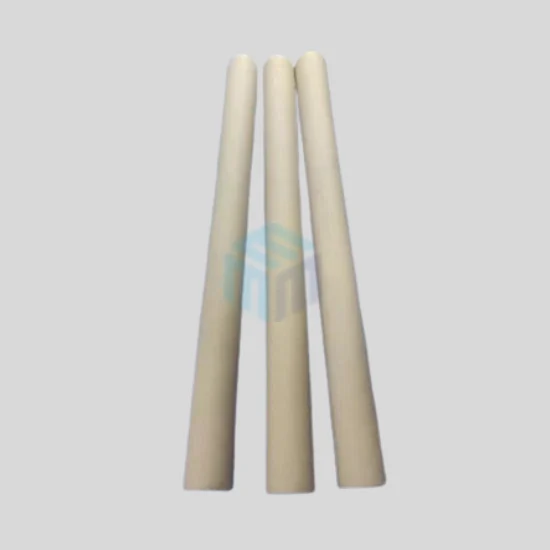
Alumina (Al₂O₃) is one of the most widely used industrial ceramics.
Key Advantages of Alumina
- Excellent electrical insulation
- High hardness and wear resistance
- Good chemical stability
- Lower cost compared to AlN
- Reliable high-temperature performance
Alumina tubes are commonly used in:
- General furnace systems
- Thermocouple protection
- Insulating components
- Standard semiconductor processing equipment
Because alumina is cost-effective and mechanically strong, it remains a popular baseline material.
Read also: Application of Alumina Tubes
What Makes Aluminum Nitride Tubes Different?
Aluminum nitride tubes offer one major advantage over alumina: exceptionally high thermal conductivity.
Why That Matters
Semiconductor systems often require rapid heat dissipation and uniform thermal control. AlN transfers heat far more efficiently than alumina while still maintaining electrical insulation.
Key Benefits of AlN Tubes
- Very high thermal conductivity
- Excellent thermal shock resistance
- Strong electrical insulation
- Low thermal expansion
- High purity compatibility
This makes ALN tubes ideal for advanced semiconductor applications where thermal management is critical.
Thermal Conductivity: The Biggest Difference
This is where the performance gap becomes most noticeable.
Alumina
- Thermal conductivity: ~34 W/m·K
Aluminum Nitride
- Thermal conductivity: ~180–190 W/m·K
That means aluminum nitride tubes can transfer heat several times faster than alumina.
Practical Benefits in Semiconductor Systems
- Better temperature uniformity
- Faster thermal response
- Reduced hot spots
- Improved process consistency
For precision semiconductor manufacturing, this can significantly improve yield and process stability.
Which Material Handles Thermal Shock Better?
Thermal shock occurs when materials experience rapid temperature changes.
Alumina performs well at high temperatures but can crack under aggressive thermal cycling.
In comparison, aluminum nitride rods and tubes generally provide:
- Better thermal shock resistance
- Lower thermal stress buildup
- Improved durability during rapid heating and cooling cycles
This is especially important in advanced wafer processing systems.
Mechanical Strength and Durability
Alumina offers higher hardness and wear resistance in many mechanical environments.
However, aluminum nitride rods provide better thermal performance while maintaining strong structural integrity.
If your system prioritizes thermal management over abrasion resistance, AlN often becomes the better choice.
Which One Performs Better Overall?
Choose Alumina If You Need:
- Cost-effective ceramic performance
- General high-temperature insulation
- Standard semiconductor furnace components
- Strong wear resistance
Choose Aluminum Nitride If You Need:
- Superior thermal conductivity
- High thermal shock resistance
- Precision temperature uniformity
- Advanced semiconductor process control
For cutting-edge semiconductor systems, aluminum nitride tubes often outperform alumina where heat management is critical.
Choosing the Right Aluminum Nitride Tube Supplier
When sourcing AlN products, supplier quality matters significantly.
A reliable aluminum nitride tube supplier should provide:
- High-purity materials
- Precision machining
- Consistent thermal properties
- Tight dimensional tolerances
At M-Kube Enterprise LLC, we supply high-performance aluminum nitride tubes and rods for semiconductor, laboratory, and high-temperature industrial applications across the USA.
Conclusion: Performance Depends on Your Semiconductor Process
Both alumina and aluminum nitride tubes are valuable ceramic materials—but they solve different problems.
Alumina offers dependable, cost-effective performance for general high-temperature systems. Aluminum nitride delivers superior thermal conductivity and process precision for advanced semiconductor applications.
If your process demands:
- Faster heat dissipation
- Better thermal uniformity
- Reduced thermal stress
then ALN tubes are often the better long-term solution.
Looking for High-Quality Aluminum Nitride Tubes?
If you’re planning to buy aluminum nitride tubes or need a trusted aluminum nitride rod supplier in the USA, we can help to get aluminium nitride price
📞 Call us: +1-732-808-1999
📧 Email: info@mkubeenterprise.com
Contact M-Kube Enterprise LLC today to find the right ceramic solution for your semiconductor application.