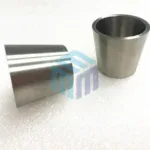

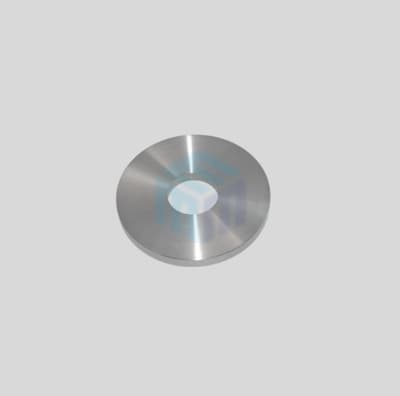
Tungsten heavy alloys — known for their remarkable density, strength, and thermal stability — are a go-to material in demanding industries like radiation shielding, and kinetic energy penetrators. These alloys (often called tungsten heavy metal, heavy metal tungsten alloy, or tungsten heavy alloys) combine tungsten with metallic binders to deliver performance that pure tungsten alone can’t match.
Despite their advantages, tungsten heavy alloy components can still fail under certain conditions. Understanding common failure modes and how to prevent or mitigate them is essential to ensure reliability and performance — especially when ordering from a heavy tungsten alloy supplier or investing in tungsten heavy alloy additive powders for manufacturing.
Let’s walk through the most common failure mechanisms in tungsten heavy alloys and the practical steps engineers and designers can take to prevent them.
What Are Tungsten Heavy Alloys? Properties & Characteristics
Tungsten heavy alloys are typically composed of very high tungsten content (85–99%) mixed with binder metals like Nickel (Ni), Iron (Fe), Cobalt (Co), or Copper (Cu). This structure gives them high density, excellent thermal conductivity, and good weldability or machinability compared to pure tungsten. However, this two-phase microstructure also introduces potential weaknesses if not correctly processed or specified.
Because the tungsten grains and the binder phase have very different mechanical characteristics, the interfaces between them become critical locations where stress can concentrate and failure can initiate.
How Thermal and Mechanical Stress Affect Tungsten Heavy Alloy Components
Tungsten heavy alloy (WHA) components are often used in high-load and high-stress environments, where both thermal and mechanical forces significantly influence performance and failure behavior.
Thermal stress effects:
- Rapid temperature changes can create internal expansion mismatch
- Localized heating leads to uneven stress distribution
- Repeated thermal cycling promotes microcrack formation
Mechanical stress effects:
- High impact or shock loading can trigger brittle fracture
- Continuous compressive loads may cause plastic deformation in the binder phase
- Stress concentration at sharp geometries increases crack initiation risk
Combined thermal and mechanical stress accelerates fatigue damage and reduces overall service life if not properly managed through design and material optimization.
Common Failure Modes in Tungsten Heavy Alloy Components(WHA)
- Interfacial Debonding Between Tungsten and Matrix
One of the most common failure mechanisms in tungsten heavy alloys occurs at the interface between tungsten particles and the binder phase. When the tungsten particles are not well bonded to the matrix — whether from poor sintering, inadequate wetting, or incorrect binder composition — cracks can initiate and propagate along these weak interfaces under load.
How to Prevent It:
- Use optimized sintering parameters to improve matrix infiltration and particle bonding.
- Consider hot isostatic pressing (HIP) and appropriate heat treatments that reduce porosity and strengthen interfaces.
- Tungsten Grain Cleavage and Brittle Fracture
At elevated temperatures or under high strain rates, tungsten heavy alloys may fracture through the tungsten grains themselves — a phenomenon known as grain cleavage. This brittle failure mode reduces toughness and ductility and is influenced by grain size and tungsten content.
How to Prevent It:
- Control grain size through manufacturing techniques like spark plasma sintering or thermo-mechanical processing. Smaller, uniform grains can help shift failure toward more ductile modes.
- Matrix Overload and Plastic Deformation
The binder matrix (e.g., Ni-Fe or Ni-Co alloys) in tungsten heavy alloys carries a significant portion of applied loads. If this phase is not strong enough, the part may fail due to matrix overload before the tungsten particles themselves suffer damage.
How to Prevent It:
- Choose a binder composition that balances strength and ductility for your application.
- Use alloying elements and heat treatments that promote a stronger, more resilient matrix.
- Porosity and Microstructural Defects
Porosity left over from powder metallurgy processes can act as stress concentrators that accelerate crack initiation and propagation. Higher porosity typically correlates with lower tensile strength and reduced impact toughness.
How to Prevent It:
- Control powder quality and compaction techniques.
- Use proper sintering cycles and post-sintering densification treatments (e.g., HIP).
- Thermal Fatigue and Wear in High-Temperature Service
In high-temperature industrial applications — such as die casting molds or tooling — tungsten heavy alloy components can face cyclic thermal stresses and wear. Thermal fatigue cracks can initiate where rapid temperature changes occur, especially if alloy composition and heat-treatment are not optimized.
How to Prevent It:
- Design components with adequate thermal gradients in mind.
- Consider surface treatments or coatings that resist oxidation and thermal fatigue.
How Application Conditions Affect Tungsten Heavy Alloy Failure
WHA components behave differently depending on their application environment, loading conditions, and functional requirements.
- Aerospace and defense applications:
High-velocity impact and shock loading can cause sudden brittle fracture or interfacial debonding. - Radiation shielding systems:
Long-term exposure to heat and mechanical load may result in thermal fatigue and gradual deformation. - Industrial counterweights and balance systems:
Continuous static loading can lead to creep, densification-related defects, or slow structural distortion.
Understanding application-specific failure behavior helps in selecting appropriate alloy grades and improving design reliability.
Early Warning Signs of Tungsten Heavy Alloy Failure
Identifying early indicators of WHA degradation helps prevent unexpected failure and system downtime.
Common warning signs include:
- Formation of microcracks on the surface
- Localized deformation or dimensional change
- Surface roughening or material fatigue marks
- Unusual density variation in critical regions
- Edge wear or stress concentration damage
- Loss of structural integrity under normal load
Early detection through inspection and monitoring allows timely maintenance or replacement before catastrophic failure occurs.
Service Life Extension Strategies for WHA Components
Extending the service life of tungsten heavy alloy components requires careful control of design, processing, and operating conditions.
Key strategies include:
- Optimize microstructure through controlled sintering and HIP processing
- Reduce stress concentration by improving component geometry design
- Improve grain size uniformity for better fracture resistance
- Apply suitable surface treatments to enhance wear resistance
- Avoid excessive thermal cycling and uncontrolled temperature gradients
- Select alloy composition based on specific application requirements
Proper implementation of these strategies significantly improves durability and long-term performance.
Common Design Mistakes That Cause Tungsten Heavy Alloy Failure
Poor design choices can significantly increase the likelihood of tungsten heavy alloy failure in service.
Common mistakes include:
- Ignoring thermal expansion mismatch in assembly design
- Using sharp corners or abrupt geometry transitions that create stress concentration
- Selecting inappropriate alloy composition for high-impact environments
- Underestimating shock and dynamic loading conditions
- Insufficient consideration of porosity and densification limits during manufacturing
- Overlooking long-term creep behavior under constant load
Avoiding these design errors improves structural reliability and extends the operational life of WHA components.
Best Practices for Designing Durable Tungsten Heavy Alloy Components
Start With Proper Specification
When ordering from a heavy tungsten alloy supplier or selecting tungsten heavy alloy additive powder for manufacturing:
- Specify tungsten content and binder ratios based on mechanical and thermal requirements.
- Define target density, porosity limits, and grain size.
- Include mechanical property goals (e.g., tensile strength, ductility).
Clear specifications ensure your component is engineered for success.
Validate With Testing
It’s essential to validate prototype components under expected service conditions:
- Mechanical testing (tensile, impact)
- Thermal cycling
- Fatigue and fracture toughness evaluation
This helps identify weak points before full production.
Testing and Inspection Methods for Tungsten Heavy Alloy Components
Ensuring the reliability of tungsten heavy alloy (WHA) components requires systematic testing, inspection, and process validation to detect defects and confirm performance.
Mechanical testing such as tensile, hardness, and impact tests verifies strength, ductility, and fracture resistance. Inconsistent results often indicate poor interfacial bonding or residual porosity.
Microstructural analysis using optical microscopy or SEM helps evaluate grain distribution, binder continuity, and common failure mechanisms like grain cleavage or interfacial debonding.
Non-destructive testing (NDT) methods including ultrasonic testing and X-ray inspection are used to detect internal cracks, voids, and density variations without damaging the component.
Thermal and fatigue testing validates performance under cyclic loads and elevated temperatures, ensuring resistance to thermal fatigue and service-related stresses.
Finally, process validation and quality control—from raw material inspection to final certification—ensure consistent manufacturing quality and long-term component reliability.
How to Select the Right Tungsten Heavy Alloy Grade
Selecting the appropriate tungsten heavy alloy (WHA) grade is essential for achieving the required performance, durability, and reliability in your application. Consider the following factors before choosing a grade:
- Define the Application Requirements – Determine whether the component will be used for radiation shielding, aerospace counterweights, vibration damping, defence, or industrial tooling.
- Choose the Required Density – Higher-density grades provide better radiation shielding and weight efficiency, while lower-density grades may offer improved machinability.
- Evaluate Mechanical Properties – Consider the required tensile strength, hardness, ductility, and impact resistance based on the operating conditions.
- Select the Appropriate Binder System – W-Ni-Fe alloys are commonly used for high-strength structural applications, while W-Ni-Cu alloys are preferred where non-magnetic properties are required.
- Consider Operating Temperature – Ensure the selected alloy grade can maintain its mechanical properties under the expected temperature range.
- Assess Corrosion Resistance – For harsh environments, choose a grade with suitable corrosion resistance to maximise service life.
- Review Machining Requirements – If precision machining or complex geometries are needed, select a grade with good machinability and dimensional stability.
- Check Industry Standards – Verify that the material meets relevant ASTM, AMS, or customer-specific specifications for quality and performance.
- Balance Performance and Cost – Select a grade that provides the required performance without exceeding the application’s budget.
- Consult an Experienced Supplier – Working with a trusted tungsten heavy alloy manufacturer helps ensure the correct grade, composition, and manufacturing process are selected for your specific application.
Choosing the right tungsten heavy alloy grade improves component performance, extends service life, and ensures reliable operation in demanding industries such as aerospace, medical radiation shielding, defence, oil and gas, and industrial engineering.
Conclusion
Tungsten heavy alloys offer unmatched performance for heavy-duty industrial applications — but only when processed and specified correctly. By understanding common failure modes — from interfacial debonding to brittle grain cleavage — and taking proactive steps in material selection, processing, and testing, engineers can maximize reliability and performance.
Correct specification and collaboration with experienced suppliers are key to preventing issues before they occur.
M-Kube Enterprise LLC delivers premium tungsten heavy alloy solutions tailored to performance and durability.
📞 Call us: +1-732-808-1999📧 Email: info@mkubeenterprise.com
👉 Contact us today to discuss your application and get expert guidance on tungsten heavy alloys that stand up to real-world demands.
References:
1) Failure Mechanism of Tungsten Heavy Alloy for Mould (Scientific.Net)