
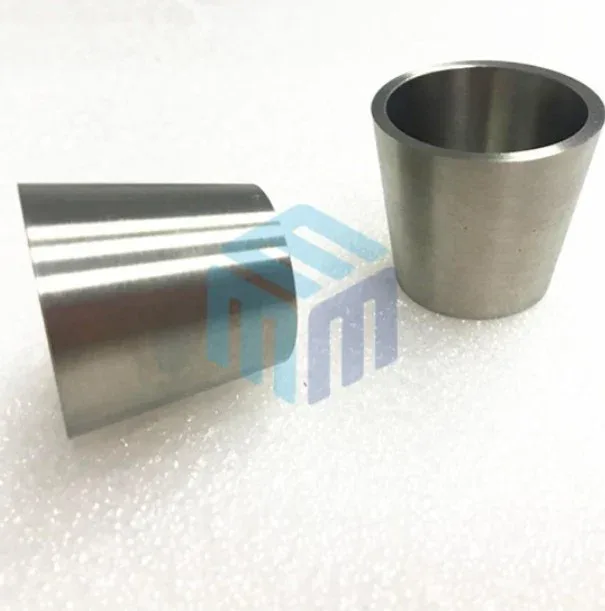
High-temperature processing plays a vital role in industries such as semiconductor manufacturing, crystal growth, metallurgy, aerospace, chemical processing, and advanced materials research. In these demanding environments, selecting the right crucible material is critical for maintaining product purity, process efficiency, and equipment longevity. Among the various refractory metals available, tantalum crucible products are widely recognized for their exceptional resistance to chemical attack, outstanding corrosion resistance, and excellent performance at elevated temperatures.
Whether used in vacuum furnaces, laboratory research, or single-crystal growth, tantalum offers a unique combination of durability and chemical stability that makes it an ideal choice for highly reactive processing environments.
Why Are Tantalum Crucibles Highly Resistant to Chemical Attack?
Stable Protective Oxide Layer
One of tantalum’s greatest advantages is its ability to form a dense, stable oxide layer when exposed to oxygen.
This protective film helps:
- Resist corrosion
- Prevent chemical attack
- Extend service life
- Protect the base metal
Unlike many conventional metals, tantalum maintains excellent corrosion resistance across a wide range of chemical environments.
Resistance to Aggressive Chemicals
A high purity tantalum crucible performs exceptionally well when exposed to many corrosive substances.
It offers excellent resistance to:
- Strong mineral acids
- Organic acids
- Chloride-containing solutions
- Corrosive chemical vapors
- Reactive molten materials
This makes tantalum one of the preferred materials for chemical processing and high-purity laboratory applications.
Minimal Material Contamination
Many advanced manufacturing processes require ultra-high purity.
Because tantalum exhibits low chemical reactivity under controlled atmospheres, a tantalum crucible helps reduce:
- Metal contamination
- Chemical reactions
- Impurity transfer
- Product defects
This is particularly important for semiconductor manufacturing and specialty alloy production.
How Do Tantalum Crucibles Perform at High Temperatures?
Outstanding Thermal Stability
Tantalum maintains excellent mechanical strength even during prolonged exposure to elevated temperatures.
Advantages include:
- High melting point
- Excellent dimensional stability
- Reduced deformation
- Long service life
These characteristics make tantalum crucibles suitable for continuous high-temperature operation.
Excellent Vacuum Furnace Compatibility
A tantalum crucible for vacuum furnace applications performs exceptionally well because tantalum exhibits:
- Low vapor pressure
- High purity
- Excellent structural integrity
- Stable performance under vacuum conditions
These properties help maintain clean processing environments while reducing contamination risks.
Superior Thermal Shock Resistance
Although careful temperature control is always recommended, tantalum offers excellent resistance to thermal stress when properly operated under suitable process conditions.
This helps reduce the likelihood of:
- Surface cracking
- Mechanical distortion
- Premature crucible failure
Tantalum Crucible Applications by Industry
Semiconductor Manufacturing
Semiconductor fabrication requires materials that provide:
- Ultra-high purity
- Excellent corrosion resistance
- Stable thermal performance
A high purity tantalum crucible is commonly used in:
- Thin-film deposition
- Electronic material processing
- Vacuum evaporation systems
- Semiconductor research
Crystal Growth
A tantalum crucible for crystal growth is widely used in manufacturing:
- Sapphire crystals
- Optical crystals
- Specialty oxide crystals
- Electronic materials
Its chemical stability helps maintain crystal purity throughout the growth process.
Vacuum Furnace Processing
A tantalum crucible for vacuum furnace applications supports:
- Vacuum melting
- Heat treatment
- Powder metallurgy
- Advanced material synthesis
Low vapor pressure makes tantalum especially valuable for vacuum environments.
Laboratory Research
A tantalum lab crucible is frequently used in:
- Chemical analysis
- Materials science research
- High-temperature testing
- Sample preparation
Researchers value tantalum for its excellent corrosion resistance and low contamination characteristics.
Common Causes of Tantalum Crucible Failure
Although tantalum offers excellent high-temperature and chemical resistance, incorrect operating conditions or handling can lead to premature failure. Common causes include:
- Excessive Temperature – Operating beyond the recommended conditions can cause deformation or accelerated material degradation.
- Unsuitable Furnace Atmosphere – Exposure to oxygen or other incompatible gases at elevated temperatures can damage tantalum.
- Chemical Attack – Certain chemicals, molten materials, or process contaminants may react with tantalum under specific conditions.
- Thermal Cycling – Repeated heating and cooling can introduce thermal stresses and contribute to deformation or cracking.
- Mechanical Damage – Dropping, bending, scratching, or improper handling can compromise the crucible.
- Overloading – Excessive material weight can place unnecessary mechanical stress on the crucible walls and bottom.
- Incorrect Wall Thickness – A crucible that is too thin for the application may deform more easily under thermal or mechanical loads.
- Improper Installation – Misalignment or contact with incompatible furnace components can create localised stress.
- Contamination – Residues from previous processes can affect material purity and potentially cause unwanted chemical reactions.
- Incorrect Crucible Selection – Choosing the wrong size, purity, construction, or material specification can significantly reduce service life.
Regular inspection, proper atmosphere control, and selection of a tantalum crucible matched to the process conditions can help minimise premature failure and maintain consistent high-temperature performance.
Seamless vs Welded Tantalum Crucibles: Which Should You Choose?
A seamless tantalum crucible is manufactured without welded joints.
Advantages include:
- Greater structural integrity
- Reduced leakage risk
- Improved corrosion resistance
- Longer operational life
For highly demanding applications, seamless construction is often preferred.
A welded tantalum crucible is manufactured by joining tantalum sheets using precision welding techniques.
Benefits include:
- Greater flexibility for custom dimensions and geometries
- Cost-effective production for larger crucibles
- Suitable for a wide range of laboratory and industrial applications
- Reliable performance when manufactured to high-quality standards
Factors That Affect Tantalum Crucible Price
Several factors influence tantalum crucible price, including:
- Material purity
- Crucible size
- Wall thickness
- Manufacturing complexity
- Seamless or welded construction
- Custom machining
- Order quantity
Although tantalum typically has a higher initial cost than conventional ceramic materials, its long service life and outstanding corrosion resistance often reduce overall operating costs.
Conclusion
As high-temperature manufacturing processes become increasingly demanding, selecting the right crucible material is essential for achieving superior performance and product quality.
A tantalum crucible combines exceptional corrosion resistance, excellent thermal stability, low vapor pressure, and outstanding compatibility with aggressive chemical environments. These characteristics make it an excellent choice for laboratory research, vacuum furnaces, crystal growth, semiconductor manufacturing, and advanced metallurgy.
Whether you require a small tantalum crucible, a high purity tantalum crucible, a tantalum crucible for crystal growth, or a tantalum crucible for vacuum furnace applications, investing in premium-quality tantalum products can improve operational reliability while reducing long-term maintenance costs.