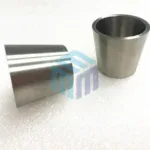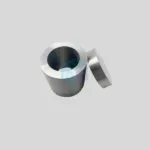


Alumina crucibles are essential tools in both industrial and laboratory environments due to their exceptional thermal and chemical stability. Made from high-purity aluminum oxide, these crucibles can withstand extremely high temperatures, making them ideal for processes like metal melting, ceramic sintering, and chemical analysis. Whether you’re conducting high-temperature research or manufacturing advanced materials, alumina crucibles offer the reliability and performance needed for precise, contamination-free results. In this blog, we’ll explore the diverse key properties, uses and practical applications of alumina crucible across various industries.
What Are Alumina Crucibles and Their Key Features?
Alumina crucibles are high-performance ceramic containers primarily made from aluminum oxide (Al₂O₃), a refractory material prized for its exceptional thermal stability, chemical inertness, and mechanical strength. These crucibles are engineered to withstand extreme temperatures and harsh chemical environments, making them indispensable in industries requiring high-temperature melting, heating, and reaction containment.
Composition and Manufacturing Process
Alumina crucibles are typically produced from high-purity alumina powders—often above 95% Al₂O₃ content—with the balance comprising minor additives to enhance sintering and mechanical properties. The manufacturing process involves:
-
Powder Preparation: High-quality alumina powder is precisely blended and granulated to ensure uniform particle size.
-
Shaping: The powder is formed into crucible shapes via pressing methods such as isostatic or uniaxial pressing.
-
Sintering: The shaped bodies are sintered at temperatures exceeding 1600 °C, where the alumina densifies, achieving its characteristic hardness and thermal resistance.
-
Finishing: Some crucibles receive machining or surface treatments to meet precise dimensional and surface quality requirements.
Thermal and Chemical Stability
Alumina crucibles exhibit a high melting point (~2050 °C) and excellent thermal shock resistance, allowing them to endure rapid temperature changes without cracking or deformation. Their low thermal expansion coefficient contributes to this durability, making them ideal for cyclic heating applications.
Chemically, alumina is highly inert; it resists corrosion and reaction with most acids, bases, and molten metals, which prevents contamination of samples or melts. This chemical stability, combined with high purity, ensures alumina crucibles are frequently used in analytical laboratories, metallurgy, glass production, and advanced material synthesis where contamination-free processing is critical.
Key Properties That Make Alumina Crucibles Ideal
Alumina crucibles are one of the most widely used materials in high-temperature applications due to its exceptional thermal and chemical properties. With a high melting point of over 2000°C and excellent resistance to corrosion and thermal shock, ceramic alumina crucibles are essential for laboratories, metal processing, glass manufacturing, and materials science research.
Common Uses and Applications of Alumina crucibles:
Alumina crucible find extensive use across various industries and laboratories due to their excellent thermal and chemical properties.
- Melting and Heating: Alumina crucibles are widely used for melting and heating processes in the metallurgy, ceramics, and glass industries. They can withstand high temperatures, making them suitable for melting metals, alloys, and ceramic materials.
- Sample Preparation: In laboratories, alumina crucible are used for sample preparation in analytical techniques such as gravimetric analysis, fusion, and ashing. They provide a stable and inert environment for sample decomposition and analysis.
- Chemical Reactions: Alumina crucibles are employed in chemical laboratories for conducting various chemical reactions, including synthesis, decomposition, and combustion reactions. Their chemical inertness and resistance to corrosive chemicals make them ideal for such applications.
- High-Temperature Furnaces: Alumina crucibles are compatible with high-temperature furnaces used in research and industrial settings. They can withstand temperatures up to several thousand degrees Celsius, making them suitable for sintering, annealing, and heat treatment processes.
- Casting and Molding: In foundries and casting operations, alumina crucibles are used for casting and molding metals and alloys. They provide a stable and refractory container for molten metal during the casting process.
- Semiconductor Manufacturing: Alumina crucible are utilized in semiconductor manufacturing processes for growing single crystals, such as silicon and gallium arsenide. They provide a controlled environment for crystal growth at high temperatures.
- Laboratory Research: Alumina crucible are essential in scientific research for various applications, including materials science, chemistry, geology, and environmental analysis. They are used for experiments involving high temperatures, corrosive substances, and thermal stability.
- Thermal Analysis: Alumina crucibles are employed in thermal analysis techniques such as differential scanning calorimetry (DSC), thermogravimetric analysis (TGA), and thermal conductivity measurements. They help in studying the thermal properties and phase transitions of materials.
Overall, alumina crucibles play a vital role in diverse industries and laboratories where high-temperature, chemical-resistant containers are needed for processing, analysis, and research purposes.
Read also: Factors to Consider When Choosing Alumina Crucible for Your Lab
Factors to Consider When Choosing Alumina Crucibles
The shape, size, and design of your alumina crucible matter depending on your application. Some popular options include:
- Alumina cylindrical crucibles: Ideal for even heat distribution in vertical furnaces or tube setups
- Alumina boat crucibles: Best for horizontal furnaces, sample drying, and evaporative processes
- Tall-form or wide-form crucibles: Used depending on sample volume and required surface area exposure
- Customized alumina crucible: For your unique laboratory needs, based on your design or drawing
When choosing a cylindrical crucible in the USA, consider:
- Operating temperature range
- Load capacity and volume
- Compatibility with your furnace or heating system
- Required purity (typically 99%–99.8% alumina)
At M-Kube Enterprise LLC, we offer a wide range of alumina ceramic crucibles, including custom and standard sizes to match your thermal processing needs.
Alumina Crucibles Care and Maintenance for Long-Term Use
To extend the life of your ceramic alumina crucibles, follow these best practices:
- Preheat gradually to avoid thermal shock—especially in the first 300–500°C range.
- Do not quench a hot crucible in water or cool air rapidly.
- Clean after each use with non-abrasive tools to remove residues.
- Avoid sudden temperature changes and always store in dry, stable environments.
- Use compatible tongs or holders to prevent chipping.
Proper maintenance ensures that your alumina cylindrical crucibles and alumina boat crucibles deliver consistent results and remain free from contamination or cracking.
Conclusion:
Alumina crucibles play a vital role in high-temperature and chemically demanding environments, making them indispensable in laboratories, metallurgy, ceramics, and chemical processing industries. Their excellent thermal resistance, mechanical strength, and chemical inertness ensure consistent performance and long service life. Whether you require a reliable container for melting, sintering, or analytical procedures, alumina crucibles deliver dependable results across a wide range of applications. For quality and precision, choosing the right alumina crucible can significantly enhance the efficiency and accuracy of your processes.