
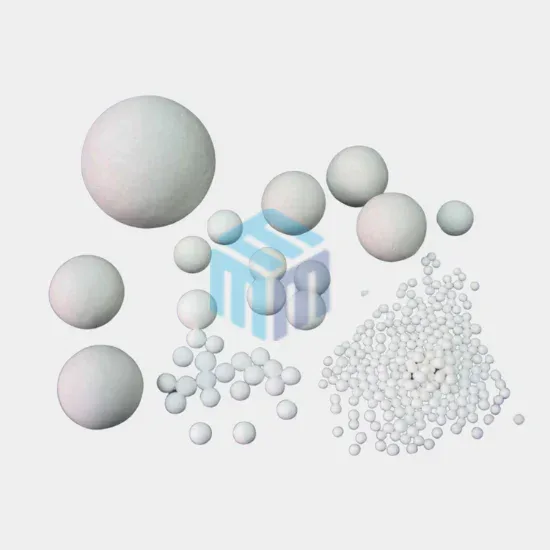
If you’re running high-energy milling operations—whether for ceramics, advanced materials, battery precursors, or other sensitive applications—you probably know how critical the choice of grinding media is. One big factor that’s often underestimated? Purity of the alumina grinding balls. Using low-purity alumina balls may seem cost-saving upfront, but it can lead to serious long-term consequences that affect efficiency, product quality, and even the integrity of your final material.
In this blog, I’ll walk you through what happens when you use low-purity alumina media in high-energy mills, why it’s risky, and how choosing high-purity Al₂O₃ grinding balls makes all the difference.
Why Purity Matters in Grinding Media
To understand the stakes, let’s first look at how contamination enters during milling.
- Wear and Abrasion
During high-energy milling, the balls (media) collide and rub against each other and the walls of the vessel. This wear is inevitable, and any impurities in the balls themselves can shed into the milled material. According to Union Process, up to 90% of powder contamination can originate from the wear of the grinding media. - Chemical Stability
Low-purity alumina often contains impurities such as MgO, SiO₂, or even trace metals. These can react with your milled powder under aggressive mechanical or chemical environments, affecting downstream processes or final performance. - Structural Integrity
Impurities can weaken the microstructure of the balls, lowering their wear resistance or toughness. This not only increases contamination but shortens media life as well.
What Actually Happens When You Use Low-Purity Alumina Balls
Here are some of the key problems you might face:
- Product Contamination
- Chemical contamination: Impurities from the balls transfer into the milled powder. For example, research has shown that alumina contamination from ball milling can change mechanical properties — in fused silica ceramics, increasing alumina content from 8 to 12 wt% drastically reduced flexural strength.
- Thermal behavior shifts: These added impurities don’t just stay inert. They might alter crystallization behavior during sintering or thermal treatments, leading to unexpected phases or structure changes.
- Reduced Mechanical Performance of the Milled Material
- When contamination builds up, your final sintered material may end up with lower strength, poorer density, or inconsistent microstructure.
- Impurities and inhomogeneities introduced from low-purity media can lead to abnormal grain growth or defects during sintering. This is especially true if impurities disrupt grain boundary mobility.
- Accelerated Media Wear & Breakage
- Low-purity alumina may have lower hardness or microstructural defects that make the balls more prone to chipping or fracturing.
- More fragments from broken balls only worsen contamination and reduce the lifespan of your grinding media.
- Higher Operating Costs
- Increased contamination means more cleaning, more rejects, and potentially rework, raising operational costs.
- If your balls wear out faster, your media consumption goes up, and you might end up replacing them more frequently.
- Some industries need ultra-pure powders (electronics, battery materials, pharmaceuticals), so contamination can even cost you in terms of failing quality control or certification.
- Process Inefficiency
- Impurities can affect the grinding kinetics. For instance, if the media’s wear behavior changes, the energy transfer in the mill could become less efficient.
- In stirred or attrition mills, inefficient grinding may result in slower particle size reduction and poor process control.
Why High-Purity Alumina Grinding Media (Al₂O₃) Is a Better Choice
Given the risks, here’s why using high-purity alumina grinding balls or beads makes sense:
- Lower Contamination
- High-purity (e.g., ≥ 99%) Al₂O₃ balls shed far fewer impurities, preserving the chemical and physical integrity of your milled powder.
- Better Wear Resistance
- With higher density and superior microstructure, high-purity alumina media resist abrasion, chipping, and breakdown, reducing media consumption and downtime.
- Stable Milling Process
- Since contamination is minimized, you get more consistent performance, better reproducibility, and fewer surprises downstream.
- Long-Term Cost Efficiency
- While premium alumina balls cost more up-front, their longevity and low wear rate often lead to a lower total cost of ownership—especially when factoring in the cost of contamination, reject material, and rework.
- Compatibility for Sensitive Applications
- For industries like electronics, lithium-ion battery materials, pharma, or advanced ceramics, purity is not just nice-to-have — it’s critical. Ultra-pure alumina media help maintain the integrity of high-value materials.
Best Practices to Avoid Issues from Low-Purity Alumina Media
Here are some practical recommendations:
- Choose the Right Purity Grade
- Buy media with ≥ 99% Al₂O₃ if your application is sensitive to contamination.
- If you have less stringent purity needs, lower-grade alumina might work — but be aware of the trade-offs.
- Inspect Media Regularly
- Check for signs of wear, cracks, or chipping. Replace media proactively before heavy contamination occurs.
- Monitor Milling Conditions
- Optimize milling parameters (speed, time, ball-to-powder ratio) to minimize unnecessary abrasion.
- Use the correct milling jar/vial material that is compatible with the media and the powder.
- Clean and Purge Between Runs
- After critical or purity-sensitive batches, do a “dummy” run or a cleaning cycle to remove wear debris.
- Use proper cleaning protocols to prevent cross-contamination.
- Work With Trusted Suppliers
- Use a reliable Al₂O₃ Grinding Balls Supplier who provides detailed purity, wear-rate, and compositional data.
- Confirm that the media meets specs (e.g., by requesting material certificates).
Conclusion
Using low-purity alumina balls in high-energy mills might seem like a cost-saving shortcut — but the hidden costs quickly add up. From product contamination and weaker mechanical performance to frequent media replacement and lower yields, the risks can undermine your entire milling process.
On the other hand, investing in high-purity Al₂O₃ grinding balls or beads delivers real benefits: lower contamination, better durability, more predictable performance, and a lower total cost of ownership. For critical or purity-sensitive applications, this isn’t just an optimization — it’s essential.
If you want to discuss which purity grade of alumina grinding media is best suited for your milling setup, or want help finding a reliable Al₂O₃ Grinding Balls Supplier, we at M-Kube Enterprise LLC are here to help. Let me know if you’d like to dive deeper into specifications or compare media options.
References:
1) The effect of alumina contamination from the ball-milling of fused silica on the high temperature properties of injection moulded silica ceramic components (ScienceDirect)
2) Wear Resistance Mechanism of Alumina Ceramics Containing Gd2O3 (mdpi.com)