
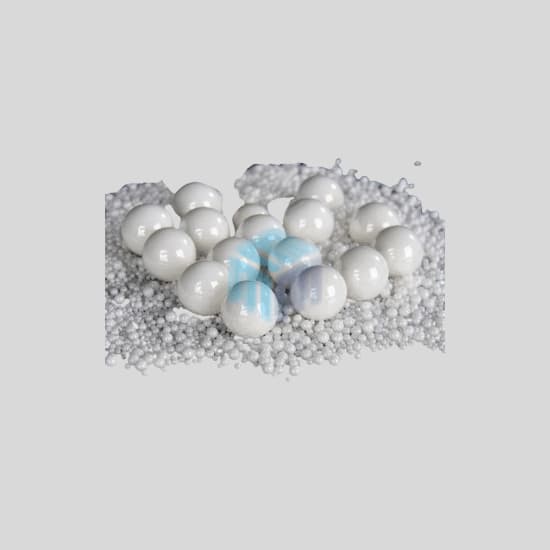
Choosing the right grinding media is crucial for achieving high milling efficiency, product consistency, and contamination control—especially in industries such as pharmaceuticals, electronics, ceramics, and paints. Among the most common choices are zirconia grinding media, alumina grinding media, and stainless steel grinding media. Each type brings distinct performance characteristics and cost factors to the table.
Whether you’re looking for zirconia milling beads, alumina grinding balls, or stainless steel media, understanding the differences can help optimize your process and minimize costs.
Why Grinding Media Selection Matters for Milling Performance
Grinding media play a critical role in milling operations because their material composition directly affects efficiency, product quality, and operating cost. The hardness, density, and wear resistance of the grinding media determine how effectively energy is transferred to the material being milled, influencing both particle size reduction and throughput. Selecting the wrong material can lead to excessive wear, contamination of the final product, or increased power consumption.
For example, steel media offer high impact strength for coarse grinding, while ceramic or alumina media are preferred for fine grinding where purity and minimal contamination are essential. Therefore, understanding the relationship between grinding media material and milling requirements is vital for optimizing performance, extending equipment life, and ensuring consistent, high-quality results.
Role in Milling Processes of Grinding Media
Grinding media are the materials used inside ball mills, bead mills, and attritors to facilitate particle size reduction, dispersion, and homogenization.
They play a critical role across sectors like:
- Pharmaceuticals
- Paints and coatings
- Ceramics
- Electronics
- Mining and metallurgy
Factors Affecting Grinding Media Selection
Choosing the ideal media involves considering:
- Hardness and density
- Wear rate
- Risk of contamination
- Cost-effectiveness
- Compatibility with the powder or slurry
Types of Grinding Media Used in Milling
Grinding media are available in different materials, each offering unique properties for specific milling applications. The choice of media affects grinding efficiency, contamination levels, wear resistance, and product quality.
Ceramic Grinding Media
Ceramic media are widely used for precision milling applications due to their low contamination and high wear resistance. They are suitable for ceramics, pigments, and advanced materials processing.
Zirconia Grinding Media
Zirconia media provide high density, excellent toughness, and very low wear rates. They are ideal for high-purity applications such as pharmaceuticals, battery materials, and nanomaterials.
Alumina Grinding Media
Alumina media offer a cost-effective balance between performance and durability. They are commonly used in ceramics, paints, coatings, and mineral processing.
Stainless Steel Grinding Media
Stainless steel media are preferred for heavy-duty milling because of their high strength and impact resistance. They are widely used in mining and industrial-scale applications.
Glass Grinding Media
Glass media are lightweight and suitable for low-energy milling, mixing, and dispersion processes used in paints, inks, and cosmetics.
Selecting the right grinding media depends on factors such as material hardness, contamination requirements, milling intensity, and budget.
Zirconia Grinding Media: Properties, Benefits and Applications
Zirconia grinding media deliver premium performance due to their high density, exceptional hardness, and chemical inertness. They provide superior grinding efficiency, minimal contamination, and extended lifespan, making them ideal for pharmaceuticals, ceramics, pigments, and high-precision industrial applications.
What Is YSZ Zirconia Grinding Media?
Yttria-stabilized zirconia (YSZ) is a dense, extremely tough ceramic with a fine microstructure. It exhibits:
- Superior wear resistance
- High fracture toughness
- Excellent chemical inertness
Yttria-Stabilized vs. Ceria-Stabilized Zirconia: What’s the Difference?
Yttria-stabilized (YSZ) and ceria-stabilized (CSZ) zirconia are the two most widely used variants in high-energy milling. While both offer exceptional hardness, density, and wear resistance, their internal structures behave differently under impact.
YSZ grinding media provides maximum mechanical strength and fracture toughness, making it ideal for continuous milling, nano-grinding, and aggressive dispersion work. Its microstructure remains stable at high RPMs and shows the lowest wear rate among ceramic media.
CSZ grinding media, on the other hand, offers slightly higher density and improved surface smoothness. This results in more efficient kinetic energy transfer during milling and reduced heat generation. CSZ is often preferred for pigment dispersion, ink production, and applications where consistent particle size reduction is needed without excessive heat buildup.
In short:
YSZ = maximum durability and longevity
CSZ = higher density + smoother surfaces for faster grinding
Contamination Risk of Zirconia Grinding Media
One of the major advantages of zirconia is its extremely low contamination potential. High-purity YSZ and CSZ beads typically leach less than 0.01% material during extended milling, making them suitable for:
- pharmaceutical API grinding
- battery cathode/anode materials
- high-purity oxides
- electronic ceramics
- food-grade dispersions
Low contamination is critical when trace metals or foreign oxides can alter a formulation’s performance. Zirconia’s combination of hardness, wear resistance, and chemical inertness makes it one of the cleanest media choices available today.
Benefits of Zirconia Milling Media
- Minimal contamination, making it perfect for sensitive materials
- High density = better energy transfer and faster milling
- Low wear rate = longer life and less replacement cost
Applications: Zirconia Milling Media
- Nano-powder production
- Pharmaceuticals
- Electronic ceramics
- High-energy ball milling
- Wet and dry dispersion processes
Alumina Grinding Media: Features, Benefits, and Applications
Alumina grinding media offer a cost-effective balance of hardness, wear resistance, and chemical stability. Widely used in ceramics, paints, and chemical processing, they provide reliable grinding performance while minimizing contamination and operational costs.
What Are Alumina Grinding Balls?
Alumina (Al₂O₃) grinding media come in various purity levels and are widely used due to their balance of performance and price.
Benefits and Limitations: Alumina Grinding Balls
- Good hardness and corrosion resistance
- More affordable than zirconia
- Moderate wear rate – potential contamination in ultra-pure processes
Alumina Purity Levels: 92%, 95%, and 99% — Which Is Best?
Alumina grinding media is available in multiple purity grades, and the right selection depends heavily on the application.
92% Alumina:
Suitable for bulk grinding, general mineral processing, and cost-sensitive applications. Good hardness but not ideal for ultra-pure dispersions.
95% Alumina:
A balanced option offering higher wear resistance and reduced contamination. Commonly used in paint and coating industries, ceramics, and chemical milling.
99% Alumina:
The premium grade, delivering outstanding chemical inertness, hardness, and minimal leaching. Recommended for ultra-clean dispersions, electronic materials, and fine ceramic powders.
If purity, reduced metal contamination, and clean milling are priorities, 99% alumina offers the best long-term performance.
When to Use Alumina Instead of Zirconia Milling Media
While zirconia delivers superior density and grinding efficiency, alumina remains the preferred choice in several situations:
- Cost-sensitive production lines that still require good hardness and chemical stability
- Large-volume milling where bead consumption is high
- Processes involving mild to medium-abrasive materials
- Applications where ultra-high density is not required, such as glass frits, feldspar, clays, and general ceramic materials
Alumina offers excellent wear resistance at a fraction of zirconia’s cost, making it a smart choice for mid-grade milling operations and mass-production environments.
Applications of Alumina Grinding Media
- Pigments and paints
- General ceramic processing
- Glass polishing compounds
- Planetary and vibratory ball mills
Stainless Steel Grinding Media: Tough and Economical
Stainless steel grinding media are valued for their toughness, corrosion resistance, and affordability. Ideal for mineral processing, cement, and chemical industries, they deliver consistent grinding performance and long service life at a lower cost compared to ceramic alternatives.
What Is Stainless Steel Media?
Typically made from 304 or 316 stainless steel, this media is:
- Highly durable
- Cost-effective
- Magnetically responsive (if 400-series)
304 vs. 316 Stainless Steel: Key Performance Differences
Both 304 and 316 stainless steel media are used in high-impact milling applications, but the alloy composition determines corrosion and chemical resistance.
304 Stainless Steel:
- Most economical stainless option
- Good hardness and toughness
- Suitable for water-based slurries and non-corrosive materials
316 Stainless Steel:
- Contains molybdenum, boosting corrosion resistance
- Performs better in chlorides, acids, and aggressive chemical blends
- Preferred for pharmaceuticals, food processing, and corrosive slurries
If your milling involves salt solutions, acidic formulations, or long-term contact with moisture, 316 stainless steel provides superior reliability.
Advantages and Limitations of Stainless Steel Grinding Media
- Long-lasting and impact-resistant
- Inexpensive, ideal for bulk grinding
- Risk of metal contamination in sensitive processes
- Not suitable for strong acid or alkali environments
Applications of Stainless Steel Media
- Mining and mechanical alloying
- Cement and paint processing
- Coarse milling or bulk material grinding
Zirconia vs Alumina vs Stainless Steel: Side-by-Side Performance Comparison
| Feature | Zirconia (YSZ) | Alumina | Stainless Steel |
|---|---|---|---|
| Hardness | Very High | High | Moderate |
| Density | ~6.0 g/cm³ | ~3.6 g/cm³ | ~7.8 g/cm³ |
| Contamination Risk | Very Low | Medium | High (Fe-based) |
| Wear Resistance | Excellent | Good | Very Good |
| Cost | High | Medium | Low |
| Best Use Case | Nano-pure materials | General ceramics | Heavy-duty milling |
Magnetic vs. Non-Magnetic Media in Milling
Stainless steel grinding media is available in both magnetic and non-magnetic versions, and the choice depends on your process requirements.
Magnetic Media (typically 400-series stainless):
- Easily separated using magnetic traps
- Ideal for automated recovery systems
- Good for wet milling with rapid changeover
Non-Magnetic Media (such as 304 or 316):
- Higher corrosion resistance
- Better suited for mixing chemicals, pharmaceuticals, and food-grade slurries
- Prevents unintended interactions with magnetic separation systems
Choose magnetic media when easy recovery and clean-up matter; choose non-magnetic when corrosion and contamination are the primary concerns.
Contamination Risk in Grinding Media: Ceramic vs Stainless Steel
-
Wear-related contamination: Ceramic media exhibit extremely low wear rates, reducing the risk of particles entering the final product, while stainless steel can shed metal fines during prolonged or high-energy milling.
-
Product purity: Ceramic grinding media are preferred for high-purity applications such as pharmaceuticals, food, and advanced ceramics due to their non-metallic nature.
-
Chemical reactivity: Stainless steel may react with acidic, alkaline, or reactive materials, increasing the chance of chemical contamination; ceramic media are largely inert.
-
Corrosion resistance: Ceramic media are immune to corrosion, whereas stainless steel can corrode under certain conditions, leading to additional contamination.
-
Regulatory compliance: Ceramic media are often better suited for industries with strict contamination and regulatory requirements.
-
Application suitability: Stainless steel is effective for robust, coarse grinding where minor metal contamination is acceptable, while ceramic media are ideal for sensitive and precision milling processes.
Grinding Media Wear Rate and Service Life Comparison
Wear rate and service life are important factors when selecting grinding media because they directly affect milling efficiency, contamination levels, replacement frequency, and operating costs. Grinding media with lower wear rates generally provide longer service life and better process stability.
| Grinding Media | Wear Rate | Service Life | Performance |
|---|---|---|---|
| Zirconia | Very Low | Longest | High wear resistance and minimal contamination |
| Alumina | Moderate | Medium | Balanced performance and cost |
| Stainless Steel | Higher | Medium | Durable but higher contamination risk |
Overall, zirconia offers the best longevity, alumina provides a cost-performance balance, and stainless steel is preferred for robust industrial grinding.
Common Mistakes When Choosing Grinding Media
Focusing only on price instead of material quality and durability can reduce efficiency and increase long-term costs. Overlooking factors like media size, hardness, and compatibility with the application often leads to poor grinding performance and contamination.
- Choosing the cheapest option without evaluating performance
- Lower-cost media often wears out faster
- Leads to higher replacement frequency and downtime
- Ignoring contamination risks
- Using steel media in high-purity applications
- Causing product contamination and quality issues
- Not matching media to the application
- Using the same media type across different processes
- Ignoring material hardness, size, and purity requirements
- Overlooking wear rate and lifespan
- Selecting media that degrades quickly
- Increasing operational and maintenance costs
- Ignoring density and grinding efficiency
- Choosing media without considering impact energy
- Resulting in poor milling performance and lower throughput
- Not considering chemical compatibility
- Media reacting with the material being processed
- Leading to contamination or reduced efficiency
- Failing to evaluate total cost of ownership (TCO)
- Focusing only on upfront cost instead of lifecycle cost
- Missing the true ROI of high-performance media
- Skipping real-world testing
- Relying only on supplier specifications
- Not validating performance in actual operating conditions
- Using incorrect media size and shape
- Poor size selection affecting grinding efficiency
- Inefficient energy transfer in the mill
- Ignoring mill type and operating conditions
- Not aligning media with ball mill, bead mill, or attritor
- Leading to suboptimal performance and higher wear
How Grinding Media Size Affects Milling Efficiency
The size of grinding media plays a critical role in determining milling efficiency, particle size distribution, and overall process performance. Selecting the appropriate media size helps achieve consistent grinding results while minimizing energy consumption and wear.
- Small Grinding Media – Ideal for ultrafine grinding and producing smaller particle sizes with a smoother finish.
- Large Grinding Media – Better suited for coarse grinding and breaking down larger particles efficiently.
- Material Hardness – Harder materials often require larger or denser grinding media for effective impact.
- Mill Type – The optimum media size varies depending on whether a ball mill, bead mill, or attritor mill is used.
- Grinding Time – Using the correct media size can reduce milling time and improve productivity.
- Energy Efficiency – Properly sized grinding media transfer energy more effectively, reducing power consumption.
- Product Quality – The right media size helps achieve a uniform particle size distribution and consistent product quality.
Choosing the correct grinding media size improves milling performance, extends media service life, and enhances overall process efficiency.
How to Choose the Right Grinding Media for Your Application
- Zirconia grinding media – for electronics, pharmaceuticals, and nanotechnology
- Alumina grinding media – for pigment dispersion, ceramic blending, and cost-sensitive jobs
- Stainless steel balls – for large-scale, robust mechanical grinding
Factors to Consider
- Desired final particle size
- Contamination tolerance
- Milling speed and time
- Budget and volume needs
When Should You Replace Grinding Media?
Grinding media should be replaced when wear or damage begins to reduce milling efficiency or compromise product quality. Regular inspection helps prevent unexpected downtime and ensures consistent grinding performance.
Replace your grinding media if you notice:
- Excessive Wear – Significant reduction in bead or ball size decreases grinding efficiency.
- Cracks or Fractures – Damaged grinding media can break apart and contaminate the product.
- Irregular Shapes – Flattened or uneven media affect energy transfer during milling.
- Increased Product Contamination – Worn media may release particles that contaminate the final product.
- Reduced Milling Performance – Longer grinding times or inconsistent particle sizes indicate media deterioration.
- Higher Energy Consumption – Worn grinding media often require more energy to achieve the same milling results.
- Visible Surface Damage – Chips, pitting, or severe abrasion are signs that replacement is necessary.
- Manufacturer’s Recommended Service Life – Replace grinding media according to maintenance schedules and operating conditions.
Timely replacement of grinding media helps maintain consistent particle size, improve production efficiency, reduce contamination risks, and extend the lifespan of milling equipment.
Sourcing and Pricing Information: Zirconia vs. Alumina vs. Stainless Steel Grinding Media
Here’s a concise overview of sourcing and pricing trends for zirconia, alumina, and stainless steel grinding media:
Zirconia Milling Beads and Their Price Factors
Prices for zirconia milling media vary based on:
- YSZ purity and stabilization percentage
- Bead size and shape
- Batch quality and volume
Stainless Steel and Alumina Media Prices
- Stainless steel grinding media are the most affordable per kilogram
- Alumina media offer middle-ground pricing with high performance
- Zirconia is the most expensive but pays off in high-purity or high-efficiency setups
Tips for Buying Milling Beads
- Ask for material data sheets and compatibility charts
- Look for batch consistency and tech support
- Compare bulk order discounts and delivery timelines
Conclusion
Each type of grinding media serves different industrial needs:
- Zirconia (YSZ) – best for ultra-fine milling and contamination-sensitive materials
- Alumina – a reliable, mid-range option
- Stainless Steel – for aggressive or large-scale mechanical grinding
There’s no universal best—match the media to your material, method, and budget. Consult with your zirconia or alumina grinding media supplier for technical guidance or product trials. Contact us at 📧 info@mkubeenterprise.com or 📞+1-732-808-1999to get expert advice.