
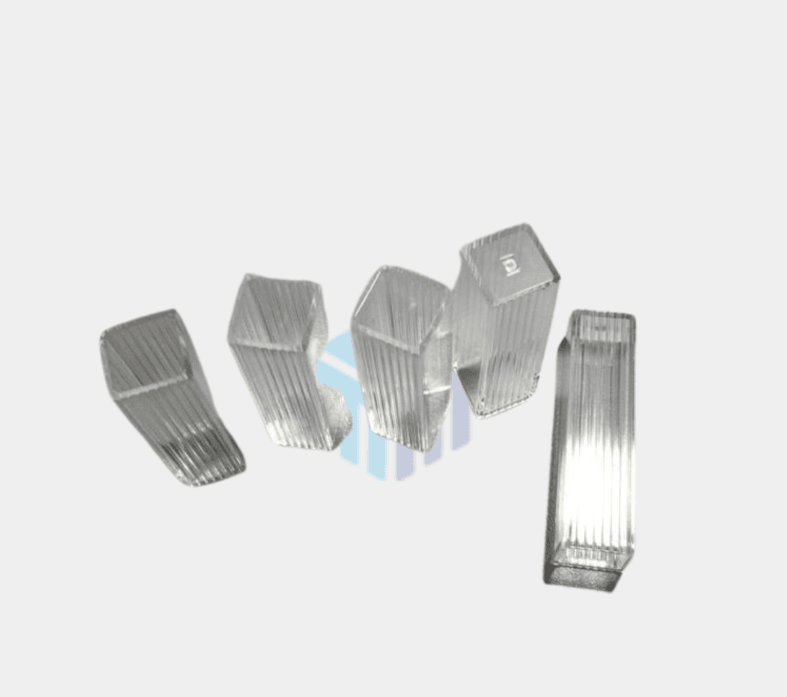
Spectrophotometry is a fundamental analytical technique used to measure how much light a chemical substance absorbs or transmits. From DNA quantification to drug analysis, its accuracy depends heavily on the quality of components—especially the cuvette used. In UV-Visible (UV-Vis) spectrophotometry, the quartz cuvette has emerged as the gold standard. Unlike plastic or glass cuvettes, quartz cuvettes offer unmatched optical clarity, chemical resistance, and durability, making them essential for high-precision measurements across research, pharma, and industrial labs.
What Are Quartz Cuvettes and How Do They Work?
Quartz cuvettes are made from fused quartz or synthetic quartz, which allows for excellent light transmission from UV (190 nm) through the visible (400–700 nm) and near-infrared (NIR) spectrum. This makes them ideal for:
- UV absorbance assays
- DNA/RNA quantification
- Kinetic enzyme studies
Compared to glass or plastic, quartz provides:
- Higher optical purity
- Better thermal and chemical resistance
- Lower background noise in UV ranges
Quartz Cuvette Sizes, Path Lengths & Standard Dimensions (1 cm, 10mm, 1 mL)
Quartz cuvettes come in various path lengths and volumes to suit different lab needs:
- Quartz cuvette 1 ml – ideal for small sample volumes
- 1 cm quartz cuvette – standard optical path length
- Quartz cuvette 10mm / 10mm quartz cuvette – industry-standard dimension for spectrophotometric assays
These dimensions directly affect how much light passes through the sample and thus influence measurement sensitivity and accuracy.
Why Quartz Cuvettes Are Essential for UV-Vis Spectrophotometry
Quartz cuvettes are precision sample holders used in UV-Vis spectrophotometry for accurate measurement of light absorbance and transmittance. Unlike plastic or glass cuvettes, high-quality fused quartz allows excellent transmission across a broad wavelength range, including deep ultraviolet (190–250 nm), where other materials absorb strongly. Their chemical resistance ensures compatibility with acidic, basic, and organic solvents, while their optical clarity minimizes signal distortion. Available in various path lengths and configurations (single-use or reusable), quartz cuvettes are essential for high-precision analytical work in chemistry, biochemistry, environmental testing, and materials research.
Why Quartz Cuvettes Are Best for UV-Vis Spectroscopy (190–2500 nm Performance)
UV-Vis quartz cuvettes are essential for accurate readings in the 190–2500 nm wavelength range. Key benefits include:
- Transmission down to 190 nm — crucial for nucleic acid analysis
- Chemical inertness — resists reaction with solvents or samples
- Thermal stability — allows heating for kinetic and denaturation studies
How Quartz Cuvettes Improve Spectrophotometer Accuracy & Results
Each quartz cuvette for spectrophotometer is designed to precisely fit standard sample holders. This ensures:
- Accurate light path alignment
- Minimal stray light interference
- Reliable, repeatable measurements
Key Benefits of Quartz Cuvettes in Spectrophotometric Analysis
High Optical Accuracy
Quartz cuvettes offer:
- Low autofluorescence
- Minimal signal distortion
- High transmission rates
These features make UV Vis quartz cuvettes suitable for even the most sensitive applications where precision is non-negotiable.
Reusability and Cost-Effectiveness
While quartz cuvettes are more expensive than plastic or glass, they offer:
- Longer lifespan with proper care
- Scratch resistance due to superior surface hardness
- Consistent performance over hundreds of uses
Quartz Cuvette Sizes, Path Lengths and Design Configurations
Standard Path Lengths
The 10mm (1 cm) path length is the industry standard in UV-Vis spectroscopy.
- 1 cm quartz cuvette, quartz cuvette 10mm, and 10mm quartz cuvette are interchangeable terms referring to the same optical path.
- This length offers optimal sensitivity for most assays.
Volume Options
For microvolume work:
- Quartz cuvette 1 ml and smaller micro-volume variants allow for accurate results even with limited samples.
- Used in clinical diagnostics, biotech, and pharma QC labs.
How to Handle and Clean Quartz Cuvettes
Proper handling and cleaning of quartz cuvettes are essential to maintain accurate optical measurements and prolong their lifespan. Careful techniques prevent scratches, contamination, and residue buildup that can interfere with experimental results.
Do’s and Don’ts
Do:
- Use lint-free wipes for drying
- Clean with ethanol or mild detergent
- Store in a dust-free case
Don’t:
- Touch optical surfaces with bare hands
- Use abrasive materials or scrubbers
- Stack cuvettes on top of each other
Preventing Contamination and Scratches
Maintaining quartz cuvette clarity requires:
- Immediate cleaning after use
- Proper storage to avoid physical damage
- Rinse thoroughly to remove chemical residues
How to Choose the Right Quartz Cuvette (Buyer’s Guide)
Choosing the right quartz cuvette depends on wavelength range, path length, and chemical compatibility requirements. For UV measurements below 300 nm, high-quality fused quartz ensures maximum light transmission and minimal signal interference.
Application-Based Selection of Quartz Cuvette
Quartz cuvettes are used in a wide range of applications:
- DNA/RNA quantification in molecular biology
- Protein assays in biochemistry
- Photometric measurements in environmental testing
Each application may demand specific path lengths, volumes, or cap types.
What to Consider When Buying: Quartz Cuvette
When evaluating quartz cuvette price, consider:
- Path length
- Volume
- Optical polish
- Window configuration (2-sided or 4-sided)
- Lid or stopper options
There’s a trade-off between price and quality—higher-purity quartz and better polishing yield more reliable data.
Common Sources of Spectrophotometer Measurement Errors
Accurate spectrophotometric analysis depends not only on the instrument itself but also on proper sample handling and cuvette condition. Even minor issues can lead to inaccurate absorbance readings and unreliable results.
Dirty or Contaminated Cuvettes
Fingerprints, dust, residue, or chemical contamination on the optical windows can scatter light and affect absorbance measurements. Quartz cuvettes should always be cleaned thoroughly and handled by the frosted sides to avoid contaminating the optical surfaces.
Scratched Optical Surfaces
Scratches on a quartz cuvette can alter light transmission and introduce measurement errors. Regular inspection of cuvette surfaces helps ensure consistent and accurate UV-Vis analysis.
Air Bubbles in the Sample
Air bubbles can obstruct the light path and cause fluctuations in absorbance readings. Before measurement, ensure samples are properly mixed and free from visible bubbles.
Incorrect Blank Calibration
Using an incorrect blank solution or failing to recalibrate the instrument can result in baseline errors. Always use a blank that matches the sample matrix and verify calibration before testing.
Mismatched or Inconsistent Cuvettes
Using cuvettes with different path lengths, optical properties, or manufacturing tolerances can affect result consistency. For comparative measurements, use matched quartz cuvettes whenever possible.
Incorrect Sample Volume
Insufficient sample volume may prevent the light beam from passing completely through the solution, leading to inaccurate readings. Ensure the cuvette contains enough sample to fully cover the instrument’s optical path.
Sample Contamination
Impurities introduced during sample preparation, storage, or handling can interfere with absorbance measurements. Maintaining clean laboratory practices helps minimise contamination risks and improve data reliability.
Instrument and Environmental Factors
Improper instrument calibration, lamp ageing, temperature fluctuations, and stray light can also contribute to measurement errors. Routine maintenance and calibration are essential for maintaining spectrophotometer accuracy.
By understanding and controlling these common sources of error, laboratories can improve measurement precision, reduce variability, and obtain more reliable spectrophotometric results.
Common Mistakes When Using Quartz Cuvettes
Even though quartz cuvettes are designed for high-precision spectrophotometric analysis, small handling errors can significantly impact your results. Below are the most common mistakes and how to avoid them.
1. Touching the Optical Surfaces
One of the most frequent mistakes is handling cuvettes by their clear sides. Fingerprints, smudges, and oils can scatter light and distort absorbance readings.
What to do instead:
Always hold cuvettes by the frosted sides or edges, and consider using lint-free gloves for sensitive measurements.
2. Inadequate Cleaning Between Samples
Residual chemicals or previous samples can contaminate new readings, leading to inaccurate or inconsistent data.
Best practice:
Rinse thoroughly with the appropriate solvent (often deionized water or the sample solvent) and dry using lint-free wipes or air drying.
3. Using the Wrong Cuvette for the Wavelength Range
Quartz cuvettes are ideal for UV-Vis measurements, but using glass or plastic cuvettes for UV applications (or vice versa) can block or distort light transmission.
Tip:
Ensure you’re using quartz cuvettes specifically when working in the UV range (typically below 320 nm).
4. Incorrect Orientation in the Spectrophotometer
Cuvettes are designed with specific optical paths. Placing them incorrectly can lead to inconsistent absorbance values.
How to avoid this:
Insert the cuvette in the same orientation every time, usually aligning the clear sides with the light path.
5. Not Matching Cuvettes for Blank and Sample
Using different cuvettes for blank and sample measurements can introduce variation due to slight differences in optical properties.
Best practice:
Use the same cuvette for both blank and sample when possible, or use matched cuvette pairs.
6. Overfilling or Underfilling the Cuvette
Improper sample volume can affect the light path and lead to unreliable readings.
Guideline:
Fill the cuvette so that the light beam passes completely through the liquid, typically about 2/3 to 3/4 full.
7. Ignoring Scratches or Damage
Quartz cuvettes are durable but not immune to scratches. Even minor surface damage can scatter light and reduce accuracy.
Recommendation:
Regularly inspect cuvettes and replace any that show visible wear or scratches on the optical faces.
8. Improper Storage
Storing cuvettes loosely or in contaminated environments can lead to dust accumulation and physical damage.
Solution:
Store cuvettes in protective cases and keep them in a clean, dry environment.
9. Using Harsh Cleaning Agents
Strong acids or abrasive cleaning methods can damage the quartz surface over time.
Safe approach:
Use recommended cleaning solutions and avoid abrasive materials that could scratch the cuvette.
10. Skipping Calibration and Blank Measurements
Failing to properly blank the spectrophotometer before measurements can lead to baseline errors.
Reminder:
Always calibrate the instrument and run a blank before measuring your sample.
By avoiding these common mistakes, you can ensure more accurate, reliable, and reproducible results when working with quartz cuvettes in spectrophotometric analysis.
Quartz Cuvette Price Guide: Factors, Cost & Where to Buy
Here’s an overview of Quartz Cuvette Pricing and Market Availability, combining general market insights with specific product offerings:
Factors Affecting Quartz Cuvette Price
- Quartz purity (fused vs. synthetic)
- Manufacturing precision (handcrafted vs. molded)
- Special coatings or caps
- Single-use vs. reusable
Higher-quality UV-Vis quartz cuvettes generally offer better longevity and precision but come at a premium price.
Where to Buy High-Quality UV-Vis Quartz Cuvettes
Look for:
- Lab-certified suppliers
- Warranty or performance guarantee
- Dimensional standards compatible with your spectrophotometer
We supply high-grade quartz cuvettes with a variety of volumes and path lengths—including quartz cuvette 1 ml, 10mm quartz cuvette, and more.
Conclusion
Quartz cuvettes have transformed the accuracy and consistency of spectrophotometric analysis, especially in UV-Vis applications. Their unmatched optical clarity, chemical resistance, and long-term durability make them the preferred choice for labs that demand precision.
Whether you’re analyzing proteins, monitoring reaction kinetics, or measuring DNA purity, investing in the right quartz cuvette enhances both data reliability and operational efficiency.
📞 Looking for Lab-Grade Quartz Cuvettes?
Contact us at 📧 info@mkubeenterprise.com or 📞 +1-732-808-1999 for pricing, product recommendations, and supply support. We offer UV-Vis quartz cuvettes, 10mm quartz cuvettes, and quartz cuvette 1 ml options to suit all spectrophotometric needs.