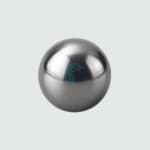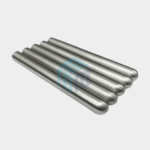

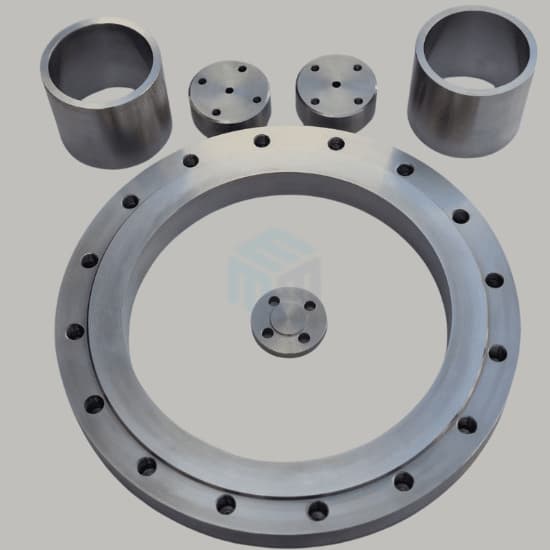
Seawater is one of the most demanding environments for metal components. High chloride levels, moisture, temperature changes, marine organisms, and contact with other metals can all affect long-term performance. Titanium is widely considered for marine and seawater applications because it combines low density, high strength, and excellent corrosion resistance. However, choosing titanium alone is not enough. The grade, geometry, manufacturing method, and surface finish can all influence how a component performs in an actual seawater environment. This is particularly important when purchasing Custom Titanium Parts for pumps, heat exchangers, desalination equipment, offshore systems, marine instrumentation, and other specialized applications.
Whether you need Titanium Custom Parts, Custom Titanium Products, or complete Custom Titanium Alloy Fabrications, this guide explains the main factors to consider before ordering.
Why Is Titanium Used in Seawater Applications?
Titanium naturally forms a thin, protective oxide layer when exposed to air and many aqueous environments. This passive surface film is a major reason titanium performs well in seawater.
Unlike many conventional metals, titanium can provide excellent resistance to general corrosion in chloride-containing environments. This makes it useful in demanding marine applications where reducing maintenance and extending component service life are important.
However, titanium is not immune to every type of corrosion. Conditions such as elevated temperature, restricted areas, aggressive chemistry, crevices, mechanical wear, and contact with other materials can change performance.
For this reason, material selection should always be based on the actual operating environment.
How to Choose the Right Titanium Grade
The titanium grade should be selected according to the combination of corrosion resistance, mechanical requirements, temperature, fabrication method, and budget.
Common grades considered for marine and seawater applications include:
| Titanium Grade | General Characteristics | Potential Applications |
| Grade 2 | Commercially pure titanium with excellent corrosion resistance and good formability | Heat exchangers, piping, marine equipment |
| Grade 5 (Ti-6Al-4V) | High strength and good corrosion resistance | Structural and mechanically loaded components |
| Grade 7 | Palladium-alloyed titanium with enhanced corrosion resistance | More demanding chemical and seawater environments |
| Grade 12 | Titanium alloy with added molybdenum and nickel | Higher-temperature and more demanding corrosion applications |
The best grade depends on the application rather than simply choosing the strongest material.
For example, commercially pure Grade 2 can be attractive when corrosion resistance and fabrication are primary considerations, while Grade 5 may be selected when higher mechanical strength is required.
In certain high-temperature seawater environments, research has shown that titanium grades can behave differently, particularly regarding crevice corrosion. This is an important reminder that grade selection should account for actual service conditions rather than relying on general corrosion-resistance ratings.
Why Geometry Matters for Seawater Components
When designing Custom Titanium Parts, geometry is more than a dimensional requirement. The shape of a component can influence fluid flow, stress concentration, accessibility for cleaning, and the possibility of creating stagnant or confined areas.
Avoid Unnecessary Crevices
Tight gaps, sharp internal corners, overlapping surfaces, and poorly designed joints can create areas where seawater becomes trapped.
These locations may have different oxygen and chemistry conditions from the surrounding seawater. Under certain conditions, this can increase the risk of localized corrosion.
A good custom design should therefore consider:
- Smooth transitions between sections
- Appropriate wall thickness
- Reduced unnecessary crevices
- Proper drainage
- Accessible cleaning areas
- Suitable radii at corners
- Consistent dimensions
- Compatibility with mating components
For marine systems, the goal is not simply to manufacture the requested shape but to ensure the geometry is appropriate for the operating environment.
Surface Finish: Why It Matters
Surface finish is often overlooked when ordering titanium custom parts, but it can be important in seawater applications.
A rough or damaged surface can contain machining marks, scratches, embedded particles, or irregularities that may affect cleaning and surface behavior.
Research on titanium alloys in saline environments has shown that surface condition and roughness can influence corrosion performance. A more compact surface condition can perform differently from a porous or rougher surface.
Depending on the application, available finishes may include:
- Machined
- Ground
- Polished
- Fine polished
- Brushed
- Passivated or chemically treated, where applicable
The required finish should be specified based on the application rather than automatically selecting the smoothest possible surface.
For components exposed to flowing seawater, surfaces may also experience erosion, wear, or tribocorrosion. In these situations, surface engineering may be considered in addition to basic machining.
Custom Titanium Parts for Different Marine Applications
One advantage of working with custom titanium is the ability to design the component around the actual equipment.
Custom Titanium Products may be manufactured for applications such as:
- Desalination systems
- Seawater heat exchangers
- Marine pumps
- Offshore equipment
- Shipboard systems
- Chemical processing
- Oceanographic equipment
- Cooling systems
- Marine instrumentation
- Water treatment equipment
Depending on the application, components may include tubes, rings, brackets, shafts, fasteners, plates, fittings, housings, sleeves, and other specialized geometries.
For OEM customers, custom manufacturing can also help match an existing assembly without making unnecessary changes to the complete system.
Custom Titanium Alloy Fabrications: What to Specify
When requesting Custom Titanium Alloy Fabrications, provide as much technical information as possible.
Important specifications include:
Titanium grade:
Specify Grade 2, Grade 5, Grade 7, Grade 12, or another required alloy.
Dimensions:
Include length, diameter, thickness, hole dimensions, and critical tolerances.
Geometry:
Provide drawings, CAD files, sketches, or detailed dimensional requirements.
Surface finish:
Specify the required roughness or finishing process where necessary.
Operating conditions:
Include seawater temperature, pressure, flow conditions, and exposure duration when available.
Quantity:
Prototype, small-batch, and production requirements may involve different manufacturing approaches.
Testing or documentation:
If required, specify material certificates, dimensional inspection, chemical analysis, or other documentation before production.
OEM Titanium Parts and Custom Manufacturing
OEM customers often require repeatable dimensions and consistent material specifications.
For OEM titanium parts, the supplier should be able to understand the relationship between the component and the larger assembly.
This may involve:
- Drawing review
- Material selection
- Prototype production
- Dimensional inspection
- Surface finishing
- Repeat production
- Packaging requirements
- Material documentation
Choosing a capable Titanium Custom Parts Supplier can make the process easier, particularly when components need to be reproduced consistently over multiple orders.
What Affects the Cost of Custom Titanium Parts?
The cost of custom titanium products depends on more than the weight of the titanium.
Key cost factors include:
- Titanium grade
- Raw material cost
- Component size
- Weight
- Machining complexity
- Dimensional tolerances
- Surface finish
- Quantity
- Tooling requirements
- Inspection and documentation
- Welding or fabrication requirements
A simple machined component may have a very different price from a complex multi-operation component even if both contain similar amounts of titanium.
For this reason, customers should provide complete drawings and specifications when requesting a quotation.
Conclusion
Seawater applications demand more than simply selecting a corrosion-resistant metal. The titanium grade, component geometry, manufacturing process, and surface finish all contribute to long-term performance.
Well-designed Custom Titanium Parts can provide an effective combination of corrosion resistance, strength, low weight, and application-specific geometry. At the same time, details such as crevices, surface roughness, operating temperature, and contact with other materials should be evaluated before production.
Whether you need Custom Titanium Products, Custom Titanium Alloy Fabrications, Titanium Custom Parts, or OEM titanium parts, selecting the right specifications from the beginning can help reduce performance issues and unnecessary manufacturing changes later.
M-Kube Enterprise can assist customers looking for custom titanium components for marine, seawater, industrial, OEM, and specialty applications. If you need titanium custom parts manufactured to specific dimensions, material grades, tolerances, or surface finishes, contact M-Kube Enterprise to discuss your requirements.
📞 Call us: +1-732-808-1999 📧 Email: info@mkubeenterprise.com today for Custom Titanium Components specifications, custom requirements, availability, and pricing.