
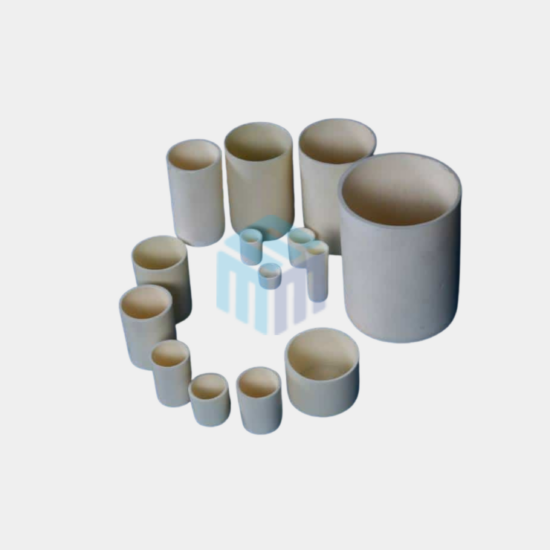
Laser systems often require ceramic components that can maintain dimensional stability, electrical insulation, and mechanical reliability under demanding operating conditions. When standard ceramic parts do not match the equipment design, alumina custom parts can be manufactured according to specific dimensional, surface, and application requirements.
Alumina, or aluminum oxide (Al₂O₃), is widely used in technical ceramics because it offers a combination of electrical insulation, hardness, wear resistance, thermal stability, and chemical resistance. Alumina grades can range from general-purpose compositions to high-purity materials selected for more demanding applications.
For laser equipment, however, simply specifying “alumina ceramic” is usually not enough. The final component may need defined dimensions, controlled thickness, tight tolerances, a particular surface finish, holes or slots, and possibly a coating or metallization.
This guide explains how engineers can specify alumina ceramic components, including size, thickness, surface finish, and coating requirements, when ordering custom parts for laser systems.
Why Alumina Is Used for Laser System Components
Laser equipment can contain components that need to electrically isolate conductors, support optical or electronic assemblies, withstand elevated temperatures, or maintain dimensional stability during operation.
Alumina is commonly selected for technical ceramic applications because different grades can provide combinations of:
- Electrical insulation
- Dielectric strength
- Mechanical strength
- Hardness
- Wear resistance
- Thermal stability
- Chemical resistance
- Dimensional stability
Alumina is one of the most widely used technical ceramics, with grades ranging from approximately 80% to more than 99% alumina content. Higher-purity grades can provide enhanced wear and corrosion resistance.
For laser-related assemblies, the correct grade should therefore be selected based on the actual operating environment rather than choosing a material solely because it is labeled “alumina.”
What Are Alumina Custom Parts?
Alumina custom parts are ceramic components manufactured according to customer-defined drawings, dimensions, tolerances, material grades, and finishing requirements.
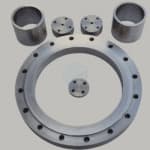
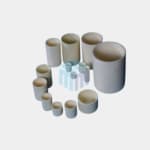
Depending on the laser system, these parts may include:
- Ceramic spacers
- Insulating plates
- Ceramic mounts
- Laser system supports
- Electrical isolators
- Ceramic substrates
- Precision rings
- Washers
- Tubes
- Bushings
- Nozzles
- Custom fixtures
- Insulating blocks
- Components with holes or slots
These alumina ceramic parts can be manufactured using different forming and machining methods depending on geometry, quantity, tolerance, and material requirements.
For precision applications, secondary operations such as grinding, lapping, polishing, laser machining, or other finishing processes may be required.
Key Specifications for Custom Alumina Parts
Choosing the right specifications is essential when designing custom alumina parts for laser systems. The component must meet the system’s dimensional, thermal, electrical, and mechanical requirements while also fitting accurately within the assembly.
Before placing an order, define the material grade, size, thickness, tolerances, surface finish, coatings, and operating conditions. Providing these details clearly helps ensure consistent manufacturing, proper fit, and reliable performance in the intended laser application.
Step 1: Specify the Overall Size
The first step in designing custom alumina ceramic parts is to define the overall dimensions.
Depending on the component, this may include:
- Overall length
- Overall width
- Outside diameter
- Inside diameter
- Height
- Hole diameter
- Slot dimensions
- Distance between holes
- Edge radius
- Corner radius
For rectangular laser-system components, specify the length × width × thickness.
For cylindrical components, specify:
Outside diameter × inside diameter × length
For rings or washers, specify:
OD × ID × thickness
Avoid providing only nominal dimensions such as “50 mm ceramic plate” if the component must interface precisely with another part.
A detailed drawing or CAD file gives the manufacturer a much clearer basis for evaluating manufacturability.
Step 2: Define the Required Thickness
Thickness can have a major influence on mechanical stability, thermal behavior, electrical insulation, and manufacturing feasibility.
For example, a thin alumina substrate may require controlled flatness and surface finish, while a thicker insulating block may require different machining considerations.
The thickness specification should therefore include:
- Nominal thickness
- Thickness tolerance
- Whether the tolerance applies before or after finishing
- Flatness requirement
- Parallelism requirement, where applicable
For precision laser equipment, specifying only the nominal thickness may leave too much ambiguity.
Step 3: Specify Dimensional Tolerances
Not every dimension needs the same tolerance.
Applying extremely tight tolerances to every feature can increase machining requirements and cost without providing a functional benefit.
Ceramic manufacturers can use grinding, lapping, polishing, laser machining, and other processes to achieve tighter dimensional requirements where necessary.
Step 4: Specify Surface Finish
Surface finish is often overlooked when ordering alumina ceramic components.
For some laser-system applications, an as-fired surface may be adequate. In other applications, the component may need grinding, lapping, or polishing.
Surface finish may influence:
- Contact with mating components
- Flatness
- Adhesive bonding
- Coating quality
- Metallization
- Particle generation
- Optical or reflective interfaces
- Electrical performance
- Assembly repeatability
Therefore, instead of simply writing “smooth surface,” specify a measurable requirement such as:
Surface roughness: Ra ≤ X µm
when your application requires a defined finish.
Step 5: Define Flatness and Parallelism
Flatness can be particularly important for ceramic plates and substrates used in precision assemblies.
A component may have the correct length, width, and thickness but still fail to assemble properly if it is not sufficiently flat.
Specify flatness when the part:
- Contacts another precision surface
- Supports an optical assembly
- Acts as a substrate
- Requires uniform bonding
- Needs controlled mechanical alignment
Parallelism may also be required when two opposing surfaces need to remain accurately aligned.
These requirements should be included separately from surface roughness because flatness and roughness are different characteristics.
Step 6: Choose the Alumina Grade
The term “alumina” covers a range of compositions.
Common commercial grades may include approximately 96%, 98%, 99%, and 99.5%+ alumina, although exact grades and compositions vary by manufacturer.
Higher-purity alumina can be selected where the application requires specific combinations of electrical, mechanical, thermal, or chemical performance.
When requesting custom alumina products, specify the required grade or the performance characteristics that the material must meet.
Step 7: Consider Machined Features
Laser systems may require ceramic components with complex geometries.
Possible features include:
- Precision holes
- Slots
- Grooves
- Steps
- Counterbores
- Countersinks
- Threads
- Recesses
- Chamfers
- Radii
- Custom profiles
Alumina is a hard ceramic material, so machining methods must be selected according to the geometry and tolerance.
Manufacturers may use grinding, diamond machining, lapping, polishing, laser cutting, laser drilling, or other specialized processes.
Step 8: Specify Coatings or Metallization
Some laser-system components may require a surface coating or metallization for a specific electrical, mechanical, thermal, or assembly function.
Possible requirements may include:
- Metalized surfaces
- Conductive coatings
- Bonding layers
- Wear-resistant coatings
- Specialized surface treatments
- Ceramic-compatible coatings
The coating specification should identify:
- Coating material
- Coated surface
- Coating thickness
- Required adhesion
- Surface preparation
- Operating temperature
- Electrical requirements
- Environmental exposure
Not every alumina component needs a coating. In some applications, modifying the ceramic composition itself may be preferable to applying a secondary coating.
Engineered ceramic materials where electrical surface properties can be modified through the material or specialized coating approaches, depending on the application.
Step 9: Consider Laser Machining and Edge Requirements
Laser processing can introduce specific edge and feature requirements.
If a component will be laser machined, drilled, or assembled into a precision system, specify:
- Hole location
- Hole diameter
- Edge condition
- Chamfers
- Corner radius
- Kerf requirements where applicable
- Surface damage limits
- Chipping limits
- Heat-affected areas, where relevant
The laser machining can be used for precise hole locations, edge definition, custom shapes, and sizes. Its laser-processing guidance also addresses features such as machined slots, drilled holes, locating holes, chamfered corners, and scribe lines.
Step 10: Provide the Operating Conditions
A custom alumina ceramic parts supplier needs to understand how the component will be used.
Include:
- Operating temperature
- Thermal cycling
- Vacuum exposure
- Atmospheric conditions
- Chemical exposure
- Electrical voltage
- Frequency, where applicable
- Mechanical loading
- Contact materials
- Cleaning process
- Laser-system environment
This information can affect the recommended alumina grade, thickness, finish, machining method, and coating.
Conclusion
Specifying alumina ceramic customized parts for laser systems requires more than providing basic dimensions. Material grade, size, thickness, tolerances, surface finish, flatness, machined features, coatings, and operating conditions can all affect the final component’s suitability.
A well-defined drawing helps prevent ambiguity and allows the alumina custom parts supplier to evaluate manufacturing feasibility before production. For precision laser systems, it is especially important to distinguish between critical and non-critical requirements so that the component achieves the necessary performance without adding unnecessary manufacturing complexity.
Whether you need simple insulating spacers or complex custom alumina ceramic parts, providing complete technical specifications is the foundation for obtaining consistent, application-specific components.
Looking for Custom Alumina Ceramic Parts?
M-Kube Enterprise LLC provides alumina custom parts, alumina ceramic components, and custom alumina products for demanding industrial and technical applications.
If you need alumina customised solutions based on a drawing, CAD file, specific dimensions, surface finish, tolerance, or coating requirement
📞 Call us: +1-732-808-1999 📧 Email: info@mkubeenterprise.com today with your component specifications. Our team can help evaluate the material, geometry, finishing requirements, and custom manufacturing options for your application.