
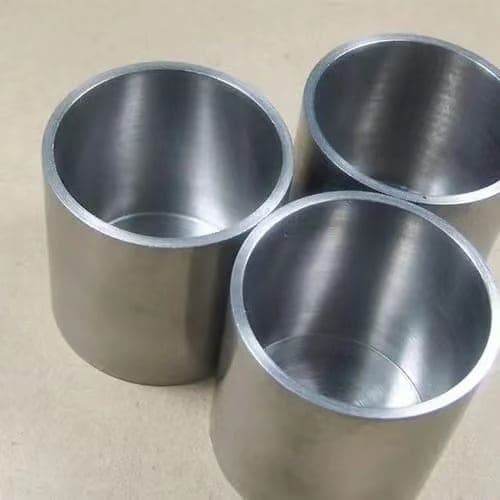
Titanium crucibles are rapidly becoming the preferred choice in modern foundries, especially where high-purity melting, corrosion resistance, and ultra-clean metallurgical results are required. If your process involves reactive metals, rare-earth materials, or precision alloying, then transitioning to titanium may be one of the smartest investments your facility can make.
In this guide, we break down why foundries across the US are shifting to titanium crucibles, how they improve melt quality, and what to consider before purchasing one.
Why Are Titanium Crucibles Used for High-Purity Melting?
Before diving into the specifics, let’s understand why titanium is so attractive to industries focused on precision melting. Unlike graphite, alumina, or steel crucibles, titanium maintains structural stability and prevents chemical contamination, especially in demanding conditions where purity is non-negotiable.
With growing demand for controlled, contamination-free processes, it’s no surprise that searches for titanium crucible, high purity titanium crucible, and titanium crucible price are at an all-time high.
How Do Titanium Crucibles Improve Melt Quality?
A titanium crucible isn’t just durable—it actively contributes to cleaner and more stable metallurgical results. Here’s why foundries rely on them for purity-sensitive melting.
- Titanium Prevents Contamination in High-Purity Melting
Foundries working with rare earths, high-purity alloys, and reactive materials often struggle with impurity pickup from traditional crucibles. Titanium’s low reactivity means it does not leach oxides or carbon into the melt, making it ideal for:
- High-value specialty alloys
- Semiconductor-grade metals
- Precision laboratory analysis
- Melting reactive and oxygen-sensitive elements
- Rare-earth and battery materials
This is why more facilities are replacing graphite or quartz crucibles with titanium crucibles for a cleaner melting environment.
- Exceptional Resistance to Corrosion & Thermal Shock
Titanium naturally forms a stable oxide layer that shields it from aggressive chemicals. This layer makes it exceptionally durable against:
- Halide salts
- Acidic fluxes
- High-temperature oxidation
This unique behavior gives titanium a significant advantage over steel or ceramic crucibles, especially during prolonged high-temperature operations.
- Longer Lifespan Reduces Operational Costs
While the titanium crucible price is typically higher upfront, its extended lifespan makes it cost-effective. Foundries report:
- Lower replacement frequency
- Reduced furnace downtime
- Reliable structural stability over time
This durability makes titanium especially valuable in 24/7 production environments.
Where Titanium Crucibles Deliver the Biggest Advantages
Titanium crucibles are used across a range of industries where purity, consistency, and chemical resistance are essential.
- Metallurgical Processing
Titanium crucibles excel in high-precision melting tasks such as:
- Vacuum induction melting
- Argon-atmosphere melting
- Controlled alloying of reactive metals
Foundries looking for titanium crucible for metallurgy appreciate the stable melt chemistry titanium ensures.
- Laboratory & Analytical Applications
Research labs and testing facilities choose titanium crucible for laboratory use because they withstand extreme thermal conditions without altering sample composition—a critical factor in:
- High-purity sample preparation
- Trace metal analysis
- Thermogravimetric experiments
- Semiconductor & Battery Manufacturing
As demand grows for ultrapure materials, titanium’s contamination-free melting behavior becomes indispensable.
Industries benefitting include:
- Semiconductor wafer production
- Energy storage materials
- Advanced ceramics manufacturing
- Precision powder synthesis
Factors That Affect Titanium Crucible Performance
The performance and service life of a titanium crucible depend on the combination of material properties, operating conditions, and furnace environment. Important factors include:
- Titanium Grade and Purity: The selected grade should match the required chemical resistance, mechanical properties, and contamination-control requirements.
- Operating Temperature: Excessive temperatures can accelerate oxidation, deformation, or loss of mechanical strength.
- Furnace Atmosphere: Vacuum, inert, or controlled atmospheres can affect titanium surface stability and overall crucible performance, particularly at elevated temperatures.
- Material Compatibility: The molten metal, chemical compound, or processed material must be compatible with titanium under the actual operating conditions.
- Crucible Wall Thickness: Appropriate wall thickness provides the required mechanical strength while maintaining the desired capacity and heat-transfer characteristics.
- Thermal Cycling: Repeated heating and cooling can introduce thermal stresses and contribute to deformation or cracking over time.
- Crucible Geometry: Diameter, height, shape, and bottom configuration can influence heating uniformity, material loading, and mechanical stability.
- Heating Method: Induction, resistance, or other heating methods may impose different thermal and electromagnetic conditions on the crucible.
- Mechanical Loading: Excessive charge weight, vibration, or improper support can increase mechanical stress.
- Surface Condition: Scratches, contamination, chemical residues, or physical damage can affect subsequent processing and crucible life.
- Handling and Installation: Careful installation and handling help prevent dents, deformation, and other damage before operation.
For consistent performance, the titanium crucible should be specified according to the material being processed, operating temperature, atmosphere, charge capacity, thermal cycle, and required purity level rather than selected by size alone.
How to Choose the Right Titanium Crucible for High-Purity Melting
Before you buy titanium crucible online, evaluate these essential factors:
- Purity Level of Titanium
For high-end metallurgy or laboratory work, always choose ≥ 99.6% purity titanium. Lower-grade titanium may contain trace metals that affect the melt.
- Wall Thickness & Dimensional Accuracy
Uniform walls ensure predictable heating. A thicker crucible improves lifespan but slows heating, so choose based on your furnace type.
- Compatibility With Your Heating System
Titanium crucibles work best with:
- Induction furnaces
- Resistance furnaces
- Vacuum furnaces
- Controlled atmosphere systems
If you use high-oxygen environments, confirm your temperature and process compatibility.
- Supplier Reliability
When selecting a titanium crucible supplier, ensure they offer:
- Material certification (ASTM/ISO)
- Dimensional customization
- Furnace compatibility guidance
- Technical support for metallurgy setups
This ensures you receive a product designed for industrial-grade performance—not a generic metal cup with no quality assurance.
Conclusion
As US foundries and research laboratories demand cleaner, more precise melting performance, titanium crucibles have quickly become the industry standard. Their unmatched chemical stability, resistance to corrosion, and long operational life make them ideal for high-purity melting applications. Whether you’re developing advanced alloys, preparing laboratory samples, or operating high-tech production lines, investing in titanium crucibles ensures a higher level of reliability and purity in every melt. Achieve cleaner melts and longer crucible life. Partner with M-kube Enterprise LLC for premium titanium crucibles designed for high-purity applications.
References:
1) A review on crucibles for induction melting of titanium alloys (ScienceDirect)