
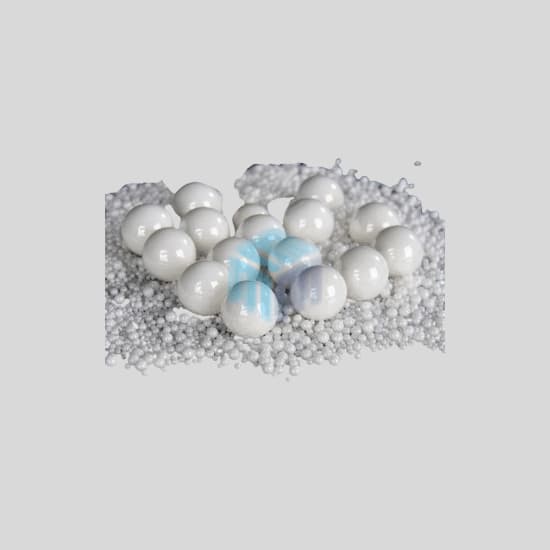
Frequent replacement of grinding media can be frustrating — not only does it interrupt production, but it also adds hidden costs through contamination, product inconsistency, and downtime. If your current grinding media wears out too quickly, it’s time to understand why and how zirconia grinding media offers a long-lasting, efficient alternative.
Understanding the Problem: Why Grinding Media Wears Prematurely
Most traditional grinding media — such as glass, alumina, or steel — degrade faster under high-stress or abrasive milling conditions. This wear is influenced by several factors that affect both performance and material quality.
- Low Hardness and Density
Grinding media with lower hardness levels deform or fracture easily, especially under high rotational speeds or heavy load conditions. Materials like glass beads often lack the strength to maintain consistent performance over time.
- Poor Chemical Stability
Reactive or porous media can leach contaminants into the slurry, reacting with materials being milled. This not only compromises purity but also weakens the grinding beads themselves.
- Inconsistent Particle Size and Surface Finish
Uneven or rough bead surfaces cause irregular collisions inside the mill, increasing friction and wear. Over time, this results in both bead fragmentation and damage to the mill lining.
- High Operating Temperatures
Some media cannot handle the heat generated during high-energy milling, leading to softening, cracking, or premature failure.
If these issues sound familiar, switching to zirconia milling media can dramatically change your results.
Read also: Zirconia vs. Alumina vs. Stainless Steel: Which Grinding Media is Best?
How Zirconia Grinding Media Solves These Issues
Zirconia grinding beads—especially Yttria-Stabilized Zirconia (YSZ grinding media)—are engineered for durability, precision, and purity. Their unique properties help eliminate common causes of media wear and improve grinding efficiency.
- Exceptional Hardness and Strength
Zirconia milling media ranks among the hardest grinding materials available, with a Mohs hardness of around 8.5. This extreme hardness allows it to resist deformation, cracking, and chipping even under high-impact forces.
- Superior Density for Higher Kinetic Energy
With a high density (around 6 g/cm³), zirconia milling beads deliver greater impact energy per collision, enabling faster particle reduction and shorter grinding times without increasing media wear.
- Outstanding Chemical Inertness
Unlike alumina or steel, YSZ milling media is chemically inert — it won’t react with your materials, ensuring clean grinding environments and contamination-free results. This is essential for applications in pharmaceuticals, electronics, and advanced ceramics.
- Excellent Thermal Stability
Zirconia maintains its structural integrity at elevated temperatures, making it suitable for both wet and dry milling processes. It resists thermal shock, ensuring a longer operational life in aggressive grinding environments.
Using zirconia grinding media helps overcome wear, contamination, and efficiency issues, resulting in more reliable and high-quality milling outcomes.
Applications That Benefit Most from Zirconia Milling Media
Because of their superior hardness and purity, zirconia grinding media are widely used in industries that demand precision and durability.
- Pharmaceuticals: Nano-grinding of active ingredients with no contamination
- Paints & Coatings: Uniform pigment dispersion
- Ceramics & Electronics: Milling of oxides, nitrides, and carbides
- Battery Materials: High-energy mixing of lithium compounds
- Advanced Composites: Homogeneous blending and fine particle processing
In all these areas, YSZ grinding media ensures minimal wear, reduced downtime, and more consistent particle size distribution.
Tips to Maximize Zirconia Bead Lifespan
Even though zirconia milling beads are highly durable, proper handling and operational practices can further extend their performance:
- Optimize Bead Loading: Maintain a filling rate between 70–85% of mill volume.
- Adjust Agitation Speed: Excessive speed increases unnecessary impact wear.
- Maintain Correct Bead Size Ratio: Use smaller beads for fine grinding and larger ones for coarse dispersion.
- Ensure Cleanliness: Regularly remove broken or worn beads to maintain consistency.
Following these best practices ensures that your zirconia grinding media operates efficiently and lasts longer.
Conclusion
If your current grinding media fails prematurely, the cause often lies in poor hardness, chemical reactivity, or inadequate density. Zirconia grinding beads and YSZ milling media overcome these weaknesses, offering outstanding durability, chemical purity, and efficiency across all milling applications.
By switching to zirconia milling media, you can reduce operational costs, minimize contamination, and achieve consistent high-quality results — batch after batch.
At M-Kube Enterprise LLC, we supply premium zirconia grinding media, zirconia milling beads, and YSZ grinding media designed for high-energy and high-precision applications. Our products deliver exceptional durability, ensuring reduced wear, improved efficiency, and long-term value.
Call +1-732-808-1999 or email info@mkubeenterprise.com to get expert assistance in selecting the ideal zirconia milling media for your specific mill setup.