
Producing high-quality glass requires careful control of temperature, composition, melting, refining, and homogenization. During laboratory and specialty glass production, the materials that come into contact with molten glass are equally important. Conventional ceramic or metallic components can potentially introduce unwanted particles, corrosion products, or other contaminants into the melt.
This is one reason platinum is widely used in demanding glass-melting applications. Platinum and platinum alloys combine a very high melting point with excellent resistance to corrosion and erosion by molten glass and relatively low dissolution into glass melts. These properties make platinum valuable for crucibles, stirrers, tubes, bushings, and other components used in optical and specialty glass production.
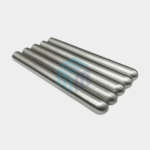
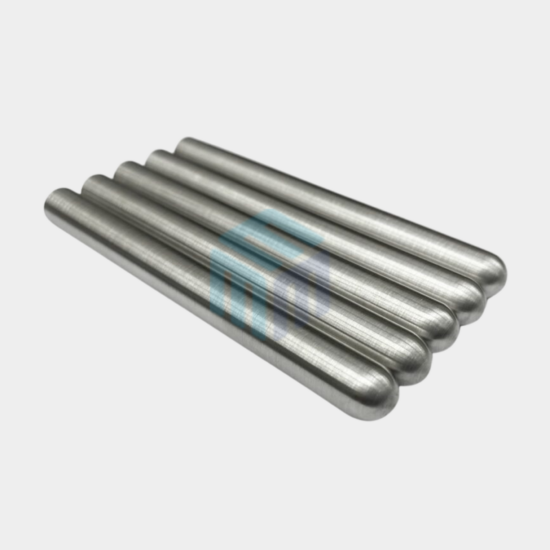
A platinum rod can serve as a stirring or processing component during laboratory and specialty glass melting. When properly designed and operated, platinum stirring components can promote better homogenization while minimizing contamination from the processing equipment itself.
For manufacturers, research laboratories, and glass-processing facilities, understanding the role of High purity platinum rod materials can therefore help improve melt quality and process consistency.
Why Material Selection Matters During Glass Melting
Molten glass is chemically aggressive, particularly at elevated temperatures. Depending on the glass composition, conventional refractory materials can experience corrosion or erosion.
When these materials deteriorate, particles or dissolved species can enter the glass melt.
Potential consequences include:
- Inclusions
- Discoloration
- Streaks
- Bubbles
- Reduced optical transmission
- Chemical impurities
- Reduced product consistency
Platinum alloys are used extensively in glass manufacturing because they resist corrosion and erosion from molten glass and can help reduce defects in the finished product.
This is particularly important for optical glass, laboratory glass, fiber glass, and other applications where even small imperfections can affect product performance.
How Platinum Rods Help Homogenize Molten Glass
One of the most important functions of a platinum rod in glass processing is stirring.
During melting, different components of the batch may not initially be distributed uniformly throughout the molten material. Temperature gradients and differences in composition can also produce regions with different properties.
Controlled stirring helps distribute the melt more evenly.
A platinum stirring rod can help:
- Improve compositional uniformity
- Reduce temperature gradients
- Break up localized concentration differences
- Promote better homogenization
- Reduce streak formation
- Improve repeatability between batches
Glass melts specifically notes that homogenization can be achieved by intermittent stirring using a platinum or silica-glass rod.
For high-quality optical glass, this ability to achieve thorough homogenization can be particularly valuable.
Why Platinum Is Preferred Over Many Conventional Materials
Platinum has several properties that make it suitable for contact with molten glass.
High Melting Point
Platinum has a melting point above 1,700°C, giving it substantial temperature capability for high-temperature glass processing.
This allows platinum components to remain stable in applications where lower-melting materials would not be suitable.
Excellent Corrosion Resistance
Molten glass can attack many refractory materials.
Platinum, by contrast, has excellent resistance to corrosion from many glass melts.
Platinum and its alloys generally show excellent corrosion and erosion resistance and low solubility when in contact with molten glass.
This helps reduce material degradation during extended processing.
Low Dissolution Into Glass
One of the key advantages of platinum is its relatively low dissolution in many glass melts.
This is especially valuable when producing glass where purity and optical quality are critical.
How Platinum Rods Can Reduce Contamination
It is important to understand that platinum does not mean that contamination is impossible.
Rather, the use of high-quality platinum components can significantly reduce contamination originating from the processing material compared with many conventional alternatives.
For example, when ceramic components are exposed to aggressive glass melts, corrosion or erosion can introduce ceramic-derived particles into the glass.
Platinum components can reduce this source of contamination because of their resistance to molten-glass attack.
Research on high-technology optical glass reports that platinum containers and stirrers can support production of glass with high purity and homogeneity, with fewer streaks and bubbles.
High Purity Platinum Rod for Specialty Glass Applications
A High purity platinum rod is particularly useful when minimizing material-derived contamination is a major concern.
High-purity platinum can be used for applications involving:
- Laboratory glass melting
- Optical glass
- Specialty glass
- Research and development
- High-temperature glass processing
- Glass composition studies
- Small-batch production
The required purity and material specification should be selected according to the glass composition and processing conditions.
For critical applications, buyers should request material documentation and confirm the platinum grade before ordering.
Platinum Rods for Optical Glass Production
Optical glass requires exceptionally good control over composition and homogeneity.
Even small inclusions, streaks, bubbles, or color variations can negatively affect optical performance.
Platinum is therefore widely used in high-technology optical glass production.
A technical review published by Johnson Matthey explains that many high-technology optical glasses are melted in platinum containers because platinum offers excellent corrosion and erosion resistance and low solubility in molten glass. The use of platinum containers and stirrers also allows more thorough stirring and improved melt homogeneity.
This makes platinum rods valuable in laboratory and specialty glass melting where consistent homogenization is required.
Platinum Rod vs Platinum Tube
Although both products are manufactured from platinum, platinum rod and platinum tube serve different purposes.
Platinum Rod
A platinum rod is a solid cylindrical component that may be used for:
- Stirring
- Electrode applications
- High-temperature supports
- Laboratory equipment
- Specialized glass-processing tools
Platinum Tube
A platinum tube is a hollow cylindrical component that can be used for:
- High-temperature process systems
- Glass-processing equipment
- Protective assemblies
- Thermocouple-related applications
- Specialty laboratory equipment
The correct configuration depends on whether the application requires a solid stirring/support element or a hollow component for material flow, protection, or process integration.
What Are Platinum Pipes Used For?
Platinum Pipes are specialized components used where high-temperature corrosion resistance and chemical stability are required.
In glass manufacturing, platinum and platinum-alloy tubing can form part of systems used to transport or process molten glass.
Platinum tubing and other fabricated platinum components can be particularly valuable when conventional refractory materials would be vulnerable to erosion.
Platinum Rods and Glass Melt Homogeneity
Homogeneity is one of the most important factors in producing consistent specialty glass.
Without effective mixing, a molten glass batch can develop local differences in:
- Chemical composition
- Temperature
- Viscosity
- Refractive index
A properly designed stirring system helps distribute the melt more uniformly.
The use of platinum for stirring is particularly valuable because the stirring element itself is less susceptible to corrosion and dissolution than many alternative materials.
This can help laboratories produce more consistent glass samples and reduce variability between experimental batches.
Can Platinum Itself Contaminate Glass?
Yes, under certain conditions.
This is an important consideration when designing a platinum glass-melting system.
The research found that contamination can depend on glass composition, melting temperature, atmospheric conditions, and oxidation processes involving the platinum crucible.
Factors to Consider When Selecting Platinum Rods
Before purchasing a platinum rod for sale, consider the following specifications:
- Platinum Purity
- Diameter
- Length
- Surface Finish
- Operating Temperature
- Glass Composition
- Atmosphere
Conclusion
The quality of molten glass depends on much more than the raw materials and furnace temperature. The materials used inside the melting system can also influence contamination, homogenization, corrosion, and ultimately the quality of the finished glass.
Platinum rods are valuable in specialty glass processing because they can provide a chemically stable, high-temperature stirring or processing component. Their resistance to molten-glass corrosion and relatively low dissolution can help reduce contamination, while their use as stirring elements can improve melt homogenization.
For optical and specialty glass, where inclusions, streaks, bubbles, and compositional variations can significantly affect performance, platinum-based processing equipment can provide important advantages.
Whether you require a High purity platinum rod, platinum rods, platinum tube, or specialized Platinum Pipes, selecting the correct purity, dimensions, and configuration is essential for reliable performance.
Looking for High-Quality Platinum Rods?
M-Kube Enterprise LLC supplies high-quality platinum rods, High purity platinum rod products, and platinum components for demanding laboratory, glass-processing, high-temperature, and industrial applications.
Our platinum products can be supplied according to application-specific requirements, including custom dimensions and configurations.
Whether you are looking for platinum rod for sale, comparing platinum rod price, or need a reliable platinum rod supplier for specialty glass processing, M-Kube Enterprise LLC can help you identify the appropriate material and configuration.
📞 Call us: +1-732-808-1999
📧 Email: info@mkubeenterprise.com today for platinum rod specifications, availability, custom requirements, and pricing.