
Environmental X-ray fluorescence (XRF) analysis is a cornerstone technique for detecting and quantifying elemental composition in soils, sediments, industrial wastes, and other environmental matrices. But no matter how advanced your XRF spectrometer is, sample preparation is one of the biggest determinants of accuracy and reproducibility.
When it comes to preparing samples — especially through flux fusion methods — choosing the right crucible material is essential. That’s where platinum crucibles come in. This blog explains why platinum crucibles improve sample purity and analytical quality in environmental XRF workflows and offers guidance on choosing the right crucible for your lab.
Why Sample Prep Matters in Environmental XRF
XRF analysis measures characteristic X-rays emitted from a sample when irradiated. For reliable results, your sample must be:
- Homogeneous, to minimize matrix effects
- Free of contamination, to avoid false signals
- Well fused, especially when using lithium borate flux for major element analysis
Particularly in environmental monitoring — where regulatory limits and public health decisions depend on accurate data — precision matters. Proper sample fusion produces uniform glass beads, which deliver better analytical reliability than loose powders.
What Makes Platinum Crucibles Ideal for XRF Sample Fusion
Exceptional Chemical Inertness
Platinum (Pt) is remarkably resistant to chemical attack — even by aggressive fluxes like lithium tetraborate or metaborate used in fusion preparation. Unlike ceramic or graphite crucibles, which can leach contaminants into your melt, platinum remains non-reactive. This preserves trace elements and prevents interference with XRF signals.
High Thermal Stability
Platinum’s melting point is over 1770 °C, making it capable of withstanding the high temperatures required to melt flux and sample mixtures without deformation or degradation. This thermal resilience helps produce consistent, homogeneous fused beads for analysis.
Minimal Contamination for Sensitive Measurements
In environmental XRF — particularly when detecting trace elements — even tiny contaminants matter. Platinum crucibles virtually eliminate crucible-derived artifacts, ensuring that what you measure truly belongs to the sample. That’s why labs use platinum dish or Pt crucible labware when preparing soils, sediments, and industrial slags for XRF.
Platinum Crucible Designs That Enhance Sample Preparation
Different crucible features support cleaner preparation and better workflow:
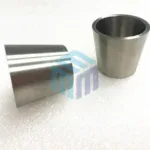
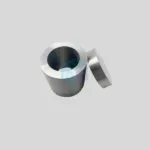
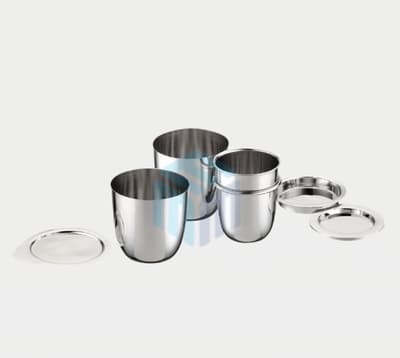
Platinum Crucible With Lid
Lidded crucibles reduce splattering of molten flux and sample material during heating. This improves sample retention and protects both the analyst and instrumentation.
Pt Crucibles in Various Sizes
Standard capacities like 25 ml and 50 ml are common for routine lab workflows — balancing sample throughput and thermal uniformity. Larger sizes are available for high-capacity applications. Smaller crucibles are often used in lower-throughput labs to save on platinum crucible cost and flux volume.
Platinum Dish Labware
In addition to crucibles, platinum dishes are used for ashing, gravimetric analysis, and other preparative techniques that benefit environmental labs. These dishes also provide excellent chemical resistance and heat distribution.
Platinum Alloy Options for Durable Performance
While pure platinum delivers excellent purity, alloys such as Pt-Rh or Pt-Au are also common, offering improved hardness or non-wetting properties that help in fusion and sample removal. These alloy crucibles help extend service life and maintain shape under repeated heating cycles.
Are Platinum Crucibles Worth the Cost?
Platinum crucibles are premium labware — and the platinum crucible price reflects the value of the material. However, the total cost should be viewed in context:
- Long service life: Platinum labware holds up across hundreds of fusion cycles.
- Low contamination risk: Reduces repeat testing and saves on corrective analysis.
- Consistent data quality: More reliable environmental assessments and regulatory compliance.
Cheaper alternatives like ceramic or nickel crucibles may degrade rapidly under fusion conditions, introducing impurities and increasing overall lab costs.
Best Practices for Using Platinum Crucibles
To maximize crucible life and performance:
- Pre-clean before first use to remove manufacturing residues.
- Avoid mechanical shock when handling hot crucibles.
- Match crucible size to your furnace and sample volume.
- Use appropriate flux ratios to minimize stress on the crucible walls.
- Consider recycling programs from crucible suppliers to offset platinum cost.
Conclusion
For environmental labs relying on XRF analysis, the choice of sample prep equipment directly affects data quality. Platinum crucibles — including options like crucibles with lids and different volume capacities — deliver unmatched chemical inertness, thermal resilience, and analytical reliability.
Choosing high-quality platinum labware may mean a higher upfront platinum crucible cost, but the benefits of consistent fusion, minimal sample contamination, and long-term durability make it a smart investment for any lab committed to precise environmental analysis.
We supply premium platinum crucibles and laboratory dishes designed for high-sensitivity elemental analysis workflows.
📞 Call us: +1-732-808-1999
📧 Email: info@mkubeenterprise.com
👉 Contact M-Kube Enterprise LLC today to find the right platinum crucible solution for your lab’s XRF needs!