
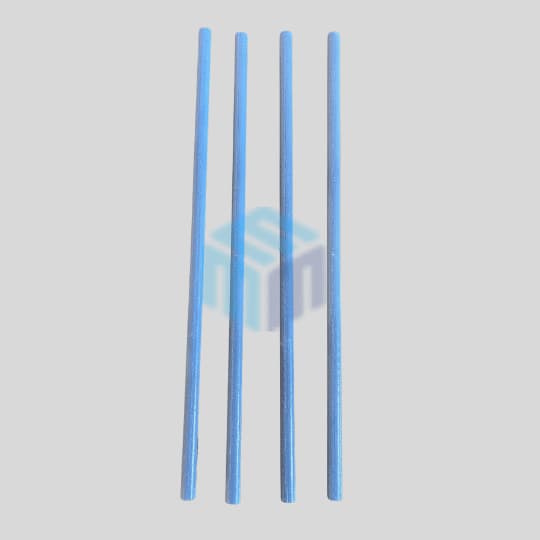
Silicon nitride is widely trusted in high-temperature environments because of its excellent strength, thermal shock resistance, and corrosion stability. But even a high-performance silicon nitride tube can show warning signs if operating conditions aren’t optimized.
If you’re using silicon nitride thermocouple protection tube assemblies, furnace liners, or structural components near 1200–1400°C, recognizing early damage indicators can prevent sudden failures and costly downtime.
Let’s break down the most common issues: thermal shock cracks, surface blisters, and discoloration and how to fix them.
Why Silicon Nitride Tubes Fail (Despite Their Strength)
Silicon nitride (Si₃N₄) is engineered for extreme environments. It offers:
- High fracture toughness (for a ceramic)
- Excellent thermal shock resistance
- Superior wear resistance
- Good oxidation resistance
However, failures typically occur due to:
- Rapid temperature swings
- Gas chemistry changes
- Mechanical misalignment
- Improper installation
- Contaminated atmospheres
Even premium components from an experienced silicon nitride tube supplier can degrade if system conditions are not controlled.
Problem 1: Thermal Shock Cracking
What It Looks Like
- Hairline cracks near the ends
- Radial cracks around mounting points
- Sudden fracture after cooldown
- Audible “ping” sounds during heating cycles
Why It Happens
Although silicon nitride handles thermal gradients better than many ceramics, extreme ramp rates or uneven heating can create internal stress.
Common causes:
- Inserting cold tubes into preheated furnaces
- Fast gas purging at peak temperature
- Localized flame or burner contact
- Uneven furnace hot zones
How to Prevent It
- Use controlled ramp rates (5–10°C/min for large components)
- Preheat tubes gradually
- Avoid direct flame impingement
- Support the tube evenly across its length
When installing a silicon nitride thermocouple protection tube, ensure it has expansion allowance to prevent stress buildup.
Problem 2: Surface Blisters or Bubbling
What It Looks Like
- Raised surface areas
- Small bubble-like protrusions
- Rough patches forming over time
Why It Happens
Blistering usually indicates chemical reactions at the surface. Contributing factors include:
- High oxygen partial pressure
- Contaminants in process gases
- Alkali vapor exposure
- Metallic vapor interaction
At elevated temperatures, silicon nitride forms a protective silica (SiO₂) layer. If the atmosphere fluctuates or contains aggressive species, that layer may become unstable.
How to Prevent It
- Maintain controlled gas purity
- Monitor furnace atmosphere consistency
- Avoid alkali contamination
- Verify compatibility with process metals
If blistering appears repeatedly, consult your silicon nitride tube supplier to evaluate material grade and density.
Problem 3: Surface Discoloration
What It Looks Like
- Gray turning to white or dull brown
- Patchy oxidation areas
- Dark streaking
What It Means
Discoloration is often an oxidation indicator. While silicon nitride is oxidation-resistant, prolonged exposure above 1200°C in air forms silica on the surface.
Possible causes:
- Extended operation in oxidizing environments
- Gas leaks introducing oxygen
- Improper furnace sealing
Not all discoloration means structural failure but it does signal changing surface chemistry.
How to Respond
- Inspect for thickness changes
- Monitor dimensional stability
- Evaluate atmosphere control
- Confirm operating temperature limits
Early detection helps prevent deeper structural degradation.
Silicon Nitride Tubes Installation Errors That Lead to Failure
Beyond thermal and chemical stress, mechanical factors matter.
Common mistakes include:
- Rigid clamping with no expansion gap
- Unsupported long spans
- Misalignment during installation
- Direct metal-to-ceramic contact
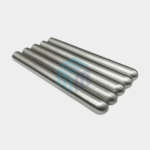
A silicon nitride ceramic rod used as a structural support or probe must have uniform load distribution. Even small stress concentrations can initiate cracks over time.
Conclusion: Early Signs Prevent Major Failures
Silicon nitride is one of the most reliable advanced ceramics available but it’s not immune to misuse.
Thermal shock, blistering, and discoloration are early warning signs not random defects.
By controlling temperature ramp rates, maintaining clean atmospheres, ensuring proper mechanical support, and working with a trusted silicon nitride tube supplier, you can significantly extend component life and maintain consistent high-temperature performance.
Need High-Performance Silicon Nitride Tubes?
Contact 📞: +1-732-808-1999
📧 Email: info@mkubeenterprise.com today to discuss your application and find the right silicon nitride solution for your high-temperature process.