
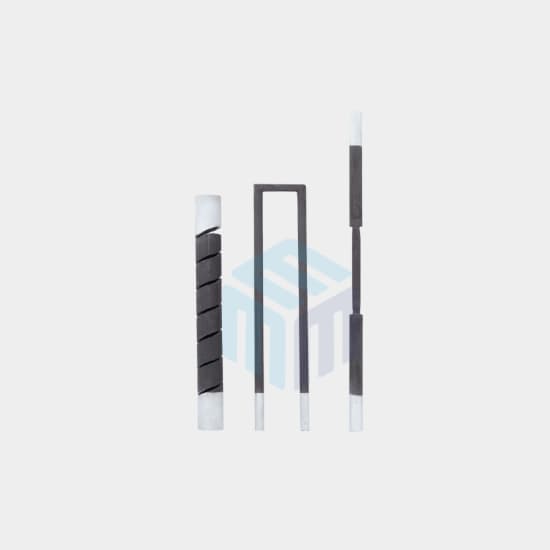
When your furnace struggles with uneven temperature zones or inconsistent ramp rates, the issue may not be power capacity, it may be heating element design. In high-temperature systems, choosing between single spiral and double spiral Silicon Carbide Heating Elements can directly impact thermal distribution, energy efficiency, and element lifespan.
A typical silicon carbide rod heater forms a protective silica layer during operation, which helps extend service life in air.
However, internal geometry single or double spiral changes how heat radiates into the chamber.
Both designs are widely used in silicon carbide heating element furnace systems across ceramics, metallurgy, and materials research. But which one truly offers better heat uniformity?
Let’s break it down in practical terms.
Understanding Single Spiral SiC Heating Elements
Single spiral sic heating elements feature one continuous helical heating path along the active zone of the rod.
Single spiral designs are commonly used in:
- Small to mid-sized furnaces
- Kilns with limited chamber width
- Cost-sensitive installations
Because heat radiates evenly around the rod’s circumference, they perform well in symmetrical furnace layouts.
What Makes Double Spiral SiC Elements Different?
Double spiral silicon carbide heater designs use two intertwined conductive paths inside the heating zone.
This configuration increases surface heating density and distributes current more evenly across the active section.
Why Double Spiral Designs Improve Distribution
The dual spiral path:
- Reduces localized hot spots
- Enhances surface heating uniformity
- Improves resistance balance
- Stabilizes temperature gradients
In larger furnace chambers, double spiral designs often provide more consistent radiant coverage.
Which One Offers Better Thermal Distribution?
In general, double spiral elements offer superior thermal distribution in:
- Wide chamber furnaces
- Multi-zone heating systems
- High-uniformity sintering processes
- Advanced material research systems
Single spiral designs, however, perform effectively when:
- Chamber dimensions are compact
- Load placement is centralized
- Uniformity tolerances are moderate
- Budget constraints are significant
The right choice depends on chamber size, load geometry, and temperature tolerance requirements, not simply on which design is newer or more complex.
Thermal Gradient Control in Real Applications
Thermal problems often arise from:
- Uneven spacing between elements
- Improper installation height
- Chamber airflow interference
- Aging resistance drift
Even the best silicon carbide heating rod design cannot compensate for poor layout planning.
Double spiral elements reduce internal hot spots, but overall furnace uniformity still depends on:
- Element positioning
- Control system calibration
- Load spacing
- Insulation quality
Impact on Lifespan and Stability
Double spiral Silicon Carbide Heating Elements typically experience:
- More balanced resistance growth
- Reduced localized overheating
- Slightly improved operational stability
Single spiral designs may experience slightly faster resistance drift in high-load environments, but they remain highly reliable when properly rated.
If you are comparing silicon carbide heating element price, double spiral units may carry a marginally higher cost due to manufacturing complexity.
However, improved temperature consistency can offset that difference by reducing rework and energy inefficiencies.
Installation Considerations
Single spiral elements are straightforward to install and commonly stocked by SiC heating elements suppliers.
Double spiral elements may require:
- Precise spacing calibration
- Careful voltage matching
- Balanced electrical loading
In retrofits, compatibility with existing power systems must be verified before upgrading to double spiral configurations.
Conclusion: Thermal Distribution Depends on Design and Application
Both single spiral and double spiral Silicon Carbide Heating Elements are proven technologies. The difference lies in how effectively they distribute heat within your specific furnace design.
Double spiral elements generally offer enhanced uniformity in larger or high-precision systems. Single spiral elements remain efficient, reliable, and cost-effective for many standard applications.
Before upgrading, evaluate chamber size, load arrangement, and uniformity requirements. The right design will improve temperature balance without unnecessary expense.
Looking for Reliable SiC Heating Elements?
If you’re searching for experienced SiC heating elements suppliers or comparing silicon carbide heating element price options in the USA, we can help.
Contact 📞: +1-732-808-1999
📧 Email: info@mkubeenterprise.com today to discuss your furnace specifications and find the heating solution that delivers consistent thermal performance.