
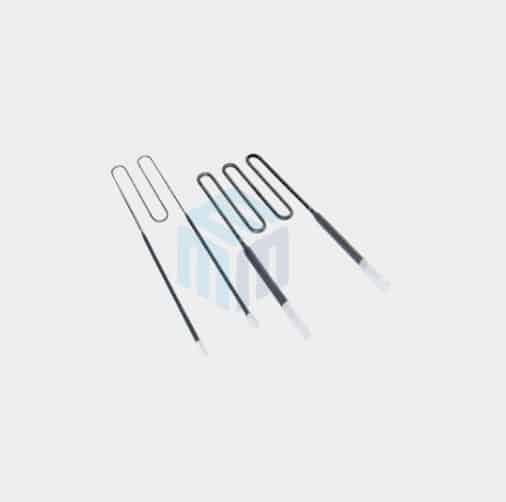
When a furnace starts showing uneven heating, slow ramp rates, or premature element failure, the issue often comes down to element geometry, not just power rating. Choosing the right mosi2 heating element shape can significantly improve temperature uniformity and reduce downtime.
Two of the most common configurations are W-shaped and L-shaped designs. Both are based on the same high-performance material molybdenum disilicide heating element technology but their geometry directly impacts thermal response, heat distribution, and installation flexibility.
Let’s break down which option solves thermal problems faster and in which situations.
Why MoSi₂ Elements Are Used in High-Temperature Furnaces
MoSi₂ (molybdenum disilicide) is widely used in furnaces operating between 1300°C and 1800°C because it offers:
- Excellent oxidation resistance
- Stable resistance over time
- High maximum operating temperature
- Protective silica layer formation
- Long service life in oxidizing atmospheres
Unlike many metallic heating systems, a mosi2 heater forms a dense SiO₂ protective coating during operation, allowing it to survive repeated high-temperature cycles in air.
However, the shape of the element plays a critical role in how efficiently that heat reaches your load.
Understanding W-Shaped MoSi₂ Heating Elements
A W-shaped element typically features two vertical legs connected by a heated zone that extends across the chamber. It is one of the most common configurations for high-temperature box and chamber furnaces.
Why W-Shaped Elements Work Well
The design allows for:
- Balanced heat distribution across wider chambers
- Stable mechanical support from both ends
- Efficient radiation toward the load center
- Reduced hot spots along sidewalls
In applications where uniformity across a larger heating area is essential, W-shaped moly disilicide heating elements often deliver more consistent results.
If your furnace struggles with uneven temperature profiles across horizontal zones, this design can resolve the issue quickly.
When L-Shaped MoSi₂ Elements Make More Sense
An L-shaped mosi2 element has one vertical leg and one horizontal heating section. This configuration is often used in:
- Smaller furnaces
- Compact thermal systems
- Retrofits with limited space
- Side-mounted heating zones
Key Advantages of L-Shaped Elements
The L design allows:
- Easier installation in tight spaces
- Direct heating in targeted areas
- Faster thermal response for localized heating
If your thermal issue is concentrated in a specific zone such as a cold corner or sidewall L-shaped elements can provide a faster correction.
Read also: How Incorrect Sizing and Design of MoSi₂ Heating Elements Leads to Rapid Wear
Which Shape Solves Thermal Problems Faster?
The answer depends on the type of thermal problem you’re experiencing.
If the issue is overall temperature imbalance, especially across larger chambers, W-shaped elements typically restore uniformity faster.
If the issue is localized heating deficiency, such as uneven sidewall radiation or compact chamber inefficiency, L-shaped elements may deliver quicker correction.
It’s less about which is “better” and more about matching geometry to furnace design.
Molybdenum Heating Element Performance Differences at High Temperatures
Both designs operate within the same material limits, typically up to 1800°C in air. Performance differences arise from:
- Radiative coverage area
- Electrical configuration
- Installation alignment
- Load positioning
- Chamber size
An improperly selected element shape can result in:
- Overheating near terminals
- Cold zones in the load area
- Slower ramp-up times
- Reduced element lifespan
When evaluating mosi2 heating element price, consider not only material cost but also operational efficiency gains from correct geometry selection.
Mosi2 Heating Element Installation and Mechanical Stability Considerations
W-shaped elements generally provide better structural balance due to dual-leg anchoring. They are ideal for vertical installations in larger furnaces.
L-shaped elements are easier to install in space-constrained systems and are often preferred for custom or OEM retrofit projects.
Correct alignment, adequate spacing, and proper terminal insulation are critical for both types.
Read also: How to Extend the Life of MoSi₂ Heating Elements in Industrial Furnaces
Cost Considerations: Molybdenum Disilicide Heating Element
The mosi2 heating element price depends on:
- Diameter and length
- Heating zone size
- Shape complexity
- Custom manufacturing requirements
W-shaped elements may have slightly higher fabrication complexity, while L-shaped elements may require more precise placement for optimal efficiency
Conclusion: Geometry Solves Thermal Problems Faster Than Power Alone
When facing uneven heating or inefficient thermal performance, simply increasing wattage isn’t the solution. The right mosi2 heating element shape W or L can restore temperature balance, improve ramp rates, and extend furnace life.
W-shaped elements excel in wide, larger chambers needing balanced radiation. L-shaped elements are ideal for targeted heating and compact designs.
Matching geometry to application is the fastest way to solve thermal problems without unnecessary system modifications.
Need the Right MoSi₂ Heating Element for Your Furnace?
If you’re evaluating molybdenum disilicide heating element options or comparing mosi2 heating element price, our technical team can help you determine the ideal configuration.
Contact 📞: +1-732-808-1999
📧 Email: info@mkubeenterprise.com today to discuss your furnace setup and find the heating element solution that restores efficiency fast.