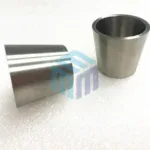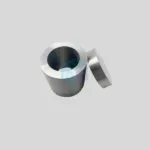

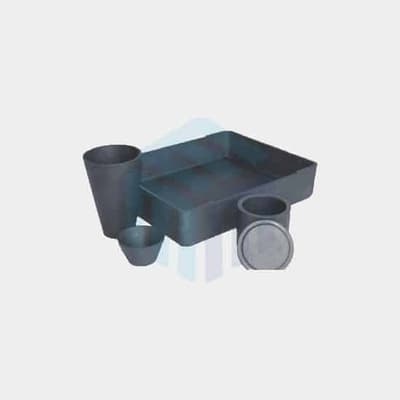
Silicon carbide (SiC) crucibles are essential components in high-temperature material processing industries such as metallurgy, ceramics, and chemical manufacturing. Known for their exceptional thermal conductivity, chemical inertness, and mechanical strength, SiC crucibles are the preferred choice for melting and holding metals and alloys.
However, even high-quality silicon carbide crucibles can fail prematurely—especially when exposed to oxidizing environments. Understanding the underlying causes of degradation and how to mitigate them is key to ensuring maximum crucible lifespan and cost-efficiency in industrial furnaces.
Understanding SiC Crucibles and Their Role in High-Temperature Applications
Before exploring the causes of premature failure, it’s important to understand what makes SiC crucibles unique and why they’re widely used.
Composition and Structure
Silicon carbide crucibles are made by bonding fine SiC grains with additives such as clay, graphite, or silicon metal. The resulting structure combines high thermal shock resistance and excellent heat transfer properties, allowing them to withstand rapid temperature changes.
Common Applications
SiC crucibles are widely used in:
- Metal melting and refining (aluminum, copper, brass, and precious metals)
- Glass and ceramic production
- Material synthesis in research laboratories
- High-temperature chemical reactions and analysis
These crucibles deliver long service life under controlled conditions — but their durability depends heavily on atmospheric composition during operation.
Why Furnace Temperature Control Matters for SiC Crucibles
- Prevents thermal shock and cracking caused by sudden temperature changes
- Extends the service life of SiC crucibles
- Improves melting efficiency and heat transfer
- Reduces oxidation, corrosion, and material wear
- Maintains consistent metal quality during melting
- Lowers energy consumption and operating costs
- Supports safer and more stable furnace operations
How Oxygen Causes SiC Crucible Degradation at High Temperatures
Even though silicon carbide exhibits good oxidation resistance, it can still degrade rapidly when continuously exposed to high oxygen partial pressures and temperatures above 1200°C (2190°F).
Let’s explore the key mechanisms behind this deterioration.
- Formation of Silicon Dioxide (SiO₂) Layer
This layer initially protects the crucible from further oxidation, prolonged exposure causes the layer to thicken and crack, particularly during repeated thermal cycling.
Cracked SiO₂ exposes fresh SiC beneath, accelerating oxidation and weakening the crucible structure over time.
- Carbon Depletion and Grain Separation
Oxidation consumes carbon from the SiC matrix, leading to grain boundary weakening. As a result, the crucible begins to lose its cohesive structure, resulting in:
- Surface spalling and flaking
- Reduced mechanical integrity
- Formation of micro-cracks that expand under thermal stress
This carbon loss is a major factor behind premature SiC crucible failure in air furnaces.
- Volatilization of Silicon Oxide at High Temperatures
Above 1600°C (2910°F), silicon oxide (SiO₂) can vaporize or react with carbon monoxide to form gaseous silicon monoxide (SiO)
This volatilization erodes the protective oxide layer, exposing new SiC to oxygen and initiating a continuous cycle of oxidation and degradation.
- Repeated Thermal Cycling
When a SiC crucible is frequently heated and cooled, differential expansion between the SiO₂ layer and the SiC substrate causes thermal mismatch stresses. Over time, this leads to cracking, delamination, and surface peeling.
- Contaminant-Induced Oxidation
Fluxes, slags, and metallic vapors within the furnace can react with the crucible surface, further accelerating oxidation and corrosion. This chemical attack compromises both surface finish and dimensional stability.
Controlling oxygen exposure and optimizing furnace atmosphere conditions are key to preventing premature SiC crucible degradation and ensuring stable, long-term performance.
Signs Your SiC Crucible Is Failing (Early Warning Signs)
Recognizing early signs of damage can prevent catastrophic failure and material loss.
- Surface Whitening or Glazing
A dull white or glassy layer indicates oxidation and the formation of SiO₂ on the surface.
- Cracks or Flaking on the Inner Wall
Visible cracks or flakes on the crucible wall often suggest carbon depletion or oxide delamination.
- Reduced Heating Efficiency
As oxidation progresses, thermal conductivity decreases, leading to slower heat transfer and energy inefficiency.
- Structural Weakness During Handling
Crucibles that feel brittle or easily chip are likely nearing the end of their service life due to oxidation fatigue.
Timely identification of these oxidation symptoms helps prevent catastrophic failure, ensuring process stability and extending crucible service life.
Why Your SiC Crucible Is Failing Faster Than Expected
If your SiC crucible is failing earlier than expected, the root cause is usually a combination of oxidation, thermal stress, and operational practices rather than a single issue. Understanding these factors can help you identify the problem quickly and extend crucible life.
- High oxygen exposure at elevated temperatures
Silicon carbide reacts with oxygen to form a silica (SiO₂) layer. While this layer can offer some protection, continuous exposure—especially at very high temperatures—causes it to degrade or volatilize, leading to accelerated material loss. - Rapid heating and cooling cycles (thermal shock)
Sudden temperature changes create internal stress within the crucible. Over time, repeated thermal cycling weakens the structure, causing microcracks that eventually grow into visible fractures. - Breakdown of the protective oxide layer
The SiO₂ layer formed during oxidation can crack due to thermal expansion differences. Once this layer is damaged, fresh SiC is exposed to oxygen, speeding up further oxidation and failure. - Contamination from slag, flux, or reactive vapors
Chemical exposure from furnace materials or processed metals can react with the crucible surface, weakening its structure and making it more vulnerable to oxidation and corrosion. - Poor furnace atmosphere control
Inconsistent or uncontrolled furnace environments with excess oxygen significantly increase oxidation rates, reducing the lifespan of SiC crucibles. - Overloading or uneven charge distribution
Excess weight or uneven loading creates mechanical stress, especially at high temperatures, which can lead to deformation or cracking. - Use of low-quality or impure SiC material
Crucibles with lower purity or poor manufacturing quality tend to have weaker grain structures and are more susceptible to oxidation and premature failure. - Improper handling and storage
Physical damage during handling or exposure to moisture before use can introduce flaws that worsen under high-temperature conditions.
In most cases, premature failure is not due to one isolated factor but a combination of thermal, chemical, and mechanical stresses. Identifying and addressing these issues early can significantly improve performance and extend the service life of your SiC crucible.
Best Practices to Prevent SiC Crucible Failure in Oxidizing Conditions
Premature wear can be minimized through careful furnace control, maintenance, and correct crucible selection.
- Operate in Controlled Atmospheres
Use inert gas atmospheres (argon or nitrogen) or reducing environments (carbon monoxide-rich) to minimize oxidation. If operation in air is unavoidable, maintain moderate temperatures below 1400°C (2550°F).
- Use Protective Coatings
Applying oxidation-resistant coatings such as alumina (Al₂O₃) or yttria (Y₂O₃) can shield the crucible from direct oxygen exposure, enhancing service life.
- Avoid Sudden Temperature Fluctuations
Implement gradual heating and cooling cycles to reduce thermal stress and prevent oxide layer cracking.
- Maintain Furnace Cleanliness
Avoid contamination from fluxes, slags, or reactive vapors that could chemically attack the crucible surface.
- Choose the Right Grade of SiC Crucible
Different grades offer varying resistance to oxidation. High-purity silicon carbide crucibles with finer grain structures are generally more stable in oxidative conditions.
Adopting these best practices helps significantly reduce oxidation-related wear, ensuring consistent performance, longer crucible life, and higher process reliability.
Why Choose M-Kube for Silicon Carbide Crucibles
At M-Kube Enterprise LLC, we provide high-quality silicon carbide crucibles engineered for long service life, high-temperature stability, and superior oxidation resistance.
Our product range includes:
- Standard and custom SiC crucible sizes
- Crucibles for high-temperature furnaces
- Oxidation- and corrosion-resistant grades for metallurgical and research use
Whether you need SiC crucibles for laboratory use or industrial-scale melting, M-Kube Enterprise LLC delivers consistent quality and expert technical support.
Conclusion: Protecting SiC Crucibles from Oxidative Degradation
Premature failure of silicon carbide crucibles in oxidizing environments is largely preventable with the right operational practices and material selection. Oxidation, carbon depletion, and thermal cycling are the primary culprits behind reduced crucible life.
By maintaining controlled furnace atmospheres, choosing high-grade SiC crucibles, and following careful heating protocols, industries can extend crucible lifespan, improve process efficiency, and lower operational costs.
Looking for high-performance SiC crucibles that last longer in oxidizing conditions?
Contact M-Kube Enterprise LLC today for premium silicon carbide crucibles tailored to your process requirements.
Call us at +1-732-808-1999
Email: info@mkubeenterprise.com