
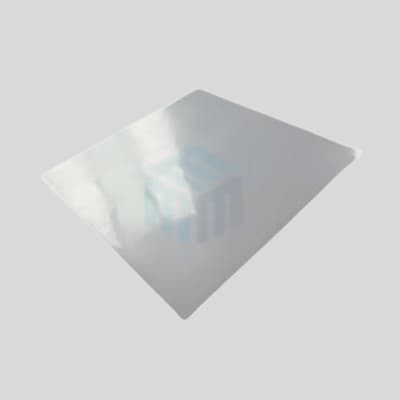
In advanced engineering and high-performance manufacturing, even microscopic defects can influence the durability and reliability of a finished component. This is why polished zirconia sheets—also called zirconia sheets, ZrO₂ ceramic sheet, or zirconia polished sheets—have become essential for industries demanding zero-defect surfaces and long-term performance.
If you work with electronics, semiconductor substrates, precision instruments, biomedical parts, or thermal-shock-resistant components, understanding how polishing impacts zirconia’s mechanical behavior is crucial. This guide breaks down how polished zirconia sheets reduce micro-cracks, why surface finishing matters, and how they extend component lifespan.
Why Surface Quality Matters for Zirconia Components
Zirconia (ZrO₂) is already known for exceptional toughness, high flexural strength, and outstanding wear resistance. But its true performance is unlocked when the surface is refined and polished. Even minor flaws—far smaller than what the naked eye can detect—can compromise the structural strength of zirconia.
Polished zirconia sheets provide:
- Higher crack resistance
- Better surface uniformity
- Improved fatigue performance
- Enhanced scratch and wear resistance
- Longer operational lifespan
This is why industries increasingly prefer highly polished zirconia sheet, zirconia polished plate, and polished zirconia substrate instead of unpolished ceramic alternatives.
How Polished Zirconia Sheets Prevent Micro-Cracks
1. Polishing Removes Surface Defects That Act as Crack Initiators
Raw zirconia surfaces contain tiny fissures or grain-boundary irregularities created during sintering and machining. These microscopic imperfections act as stress concentrators, making cracks more likely to propagate.
Polishing removes these defects and creates a uniform surface, significantly reducing the probability of crack initiation under mechanical, thermal, or vibrational loads.
2. Dense, Smooth Surfaces Reduce Stress Accumulation
Polished zirconia sheets have extremely low surface roughness—often in the nanometer range. This smoothness distributes stress evenly across the material, preventing localized pressure points that could trigger micro-fractures.
This advantage is critical in:
- Sliding components
- Medical implants
- Semiconductor fixtures
- High-frequency electronics
- Precision measurement devices
When stress distribution is uniform, component lifespan increases dramatically.
3. Stabilized Zirconia Exhibits Transformation Toughening
Zirconia’s unique transformation toughening mechanism allows it to convert from tetragonal to monoclinic structure under stress, absorbing energy and stopping cracks. Polishing enhances this effect by ensuring:
- Better crystal alignment
- Reduced grain pull-out
- Minimized micro-pitting
The result is a zirconia ceramic sheet that resists cracking even under extreme thermal cycling.
4. Polished Substrates Reduce Debris Formation
Unpolished ceramics shed particles during friction or wear, and these particles can cause scratches, frictional hotspots, or micro-indentations. Polished zirconia eliminates this issue, keeping the surface clean and stable—an important advantage for zirconia polished substrate applications in microelectronics or optics.
Key Performance Improvements With Polished Zirconia Sheets
1. Superior Flexural Strength
Polishing increases zirconia’s bending strength by reducing edge and surface discontinuities. This allows zirconia plate and substrate components to operate at higher stress loads safely.
2. Longer Component Lifespan
Polished zirconia maintains its structural integrity for years because fewer defects mean fewer crack propagation points. This leads to:
- Higher fatigue resistance
- Enhanced thermal shock resistance
- Better overall wear behavior
3. Improved Reliability for High-Precision Applications
Industries such as semiconductor, and scientific instrumentation depend on zero-defect ceramic materials. Polished zirconia meets these requirements with superior:
- Consistency
- Dimensional accuracy
- Surface stability
This is why manufacturers increasingly choose zirconia polished sheets over alumina or silicon carbide for precision assemblies.
Where Polished Zirconia Sheets Are Used
Here are the most common applications where polishing makes a noticeable difference:
1. Electronics & Semiconductor Components
Zirconia’s high dielectric strength and smooth polished surfaces make it suitable for:
- Electronic substrates
- Insulators
- MEMS components
- Thermal interface plates
The polished finish prevents electrical leakage and micro-crack formation.
2. Medical & Dental Devices
Due to exceptional biocompatibility and wear resistance, polished zirconia is used in:
- Surgical instruments
- Prosthetic components
- Dental restorations
- Implantable components
Surface polishing ensures safe, long-term material stability.
3. Precision Machinery & Sensors
Polished zirconia components offer tight tolerances and dimensional coherence for:
- Optical mounts
- Positioning devices
- High-speed wear pads
- Fuel sensor housings
Read also: Zirconia Polished Sheets: Everything You Need to Know About Its Benefits & Applications
Conclusion
Polished zirconia sheets offer a powerful advantage in industries where reliability, precision, and longevity are essential. By eliminating microscopic imperfections, they dramatically reduce crack initiation, improve fatigue resistance, and enhance the long-term durability of ceramic components.
As more manufacturers adopt high-performance materials, polished zirconia continues to stand out for its exceptional mechanical strength and stability—making it an indispensable choice for next-generation engineering solutions. Build longer-lasting components. Choose high-quality polished zirconia sheets supplied by M-Kube Enterprise LLC for demanding applications.
References:
1) Zirconia Ceramics Overview (ScienceDirect)